Boreas, Notos, Euros & Zephyros

greek-wind

Abroholos A squall frequent from May through August between Cabo de Sao Tome and Cabo Frio on the coast of Brazil.

Auster Same as OSTRIA

Austru A east or southeast wind in Rumania. They are cold in winter and may be a local name for a foehn wind. (Glossary of Meteorology)

Bali wind A strong east wind at the eastern end of Java.

Barat A heavy northwest squall in Manado Bay on the north coast of the island of Celebes, prevalent from December to February.

Barber A strong wind carrying damp snow or sleet and spray that freezes upon contact with objects, especially the beard and hair.

Bayamo A violent wind blowing from the land on the south coast of Cuba, especially near the Bight of Bayamo.

Bentu de Soli An east wind on the coast of Sardinia.

Bora A cold, northerly wind blowing from the Hungarian basin into the Adriatic Sea. See also FALL WIND.

Borasco A thunderstorm or violent squall, especially in the Mediterranean.

Boreas A ancient Greek name for north winds. (also borras) The term may originally have meant “wind from the mountains” and thus the present term BORA. (Glossary of Meteorology)

Brickfielder: A wind from the desert in Southern Australia. Precedes the passage of a frontal zone of a low passing by. Has the same dusty character as the Harmattan. (Evert Wesker, Amsterdam, The Netherlands)

Brisa, Briza 1. A northeast wind which blows on the coast of South America or an east wind which blows on Puerto Rico during the trade wind season. 2. The northeast monsoon in the Philippines.

Brisote The northeast trade wind when it is blowing stronger than usual on Cuba.

Brubu A name for a squall in the East Indies.

Bull’s Eye Squall A squall forming in fair weather, characteristic of the ocean off the coast of South Africa. It is named for the peculiar appearance of the small isolated cloud marking the top of the invisible vortex of the storm.

Cape Doctor The strong southeast wind which blows on the South African coast. Also called the DOCTOR.

Caver, Kaver A gentle breeze in the Hebrides.

Chinook A type of foehn wind. Refers to the warm downslope wind in the Rocky Mountains that may occur after an intense cold spell when the temperature could rise by 20 to 40 degrees Fahrenheit in a matter of minutes. Also known as the Snow Eater. (Weather Channel Glossary)

Chubasco A violent squall with thunder and lightning, encountered during the rainy season along the west coast of Central America.

Churada A severe rain squall in the Mariana Islands during the northeast monsoon. They occur from November to April or May, especially from January through March.

Cierzo See MISTRAL.

Contrastes Winds a short distance apart blowing from opposite quadrants, frequent in the spring and fall in the western Mediterranean.

Cordonazo The “Lash of St. Francis.” Name applied locally to southerly hurricane winds along the west coast of Mexico. It is associated with tropical cyclones in the southeastern North Pacific Ocean. These storms may occur from May to November, but ordinarily affect the coastal areas most severely near or after the Feast of St. Francis, October 4.

Coromell A night land breeze prevailing from November to May at La Paz, near the southern extremity of the Gulf of California.

Cyclone A severe tropical storm (i.e., winds >64 knots) in the Indian Ocean and Bay of Bengal. See also Hurricane and Typhoon. The term is also applied to closed circulations in the mid latitudes and also popularly to small scale circulations such as tornadoes.

galo-dos-ventos

Diablo Northern California version of Santa Ana winds. These winds occur below canyons in the East Bay hills (Diablo range) and in extreme cases can exceed 60 mph. They develop due to high pressure over Nevada and lower pressure along the central California coast. (NWS San Francisco Glossary)

Doctor 1. A cooling sea breeze in the Tropics. 2. See HARMATTAN. 3. The strong SE wind which blows on the south African coast. Usually called CAPE DOCTOR.

Elephanta A strong southerly or southeasterly wind which blows on the Malabar coast of India during the months of September and October and marks the end of the southwest monsoon.

Etesian A refreshing northerly summer wind of the Mediterranean, especially over the Aegean Sea.

Euros The Greek name for the rainy, stormy southeast wind. (Glossary of Meteorology)

Foehn A warm dry wind on the lee side of a mountain range, whose temperature is increased as the wind descends down the slope. It is created when air flows downhill from a high elevation, raising the temperature by adiabatic compression. Examples include the Chinook wind and the Santa Ana wind. Classified as a katabatic wind. (Weather Channel Glossary)

Fremantle Doctor A cooling seabreeze in Western Australia,often made note of during hot summer-time cricket matches. (Ian Staples, Australia)

Gregale A strong northeast wind of the central Mediterranean.

Haboob A strong wind and sandstorm (or duststorm) in the northern and central Sudan, especially around Khartum, where the average number is about 24 per year. The name come from the Arabic word, “habb”, meaning wind. (Bill Mork, California State Climatologist)

Harmattan The dry, dusty trade wind blowing off the Sahara Desert across the Gulf of Guinea and the Cape Verde Islands. Sometimes called the DOCTOR, because of its supposed healthful properties.

wind-biruta-small

Hurricane A severe tropical storm (i.e., winds >64 knots) in the Atlantic, Caribbean, Gulf of Mexico and Eastern Pacific. The word is believed to originate from the Caribbean Indian storm god “Huracan”. See also Typhoon and Cyclone.

Knik Wind A strong southeast wind in the vicinity of Palmer, Alaska, most frequent in the winter.

Kona Storm A storm over the Hawaiian Islands, characterized by strong southerly or southwesterly winds and heavy rains.

Leste A hot, dry, easterly wind of the Madeira and Canary Islands.

Levanter A strong easterly wind of the Mediterranean, especially in the Strait of Gibraltar, attended by cloudy, foggy, and sometimes rainy weather especially in winter.

Levantera A persistent east wind of the Adriatic, usually accompanied by cloudy weather.

Levanto A hot southeasterly wind which blows over the Canary Islands.

Leveche A warm wind in Spain, either a foehn or a hot southerly wind in advance of a low pressure area moving from the Sahara Desert. Called a SIROCCO in other parts of the Mediterranean area.

Maestro A northwesterly wind with fine weather which blows, especially in summer, in the Adriatic. It is most frequent on the western shore. This wind is also found on the coasts of Corsica and Sardinia.

Maria A fictional wind popularized in “Paint Your Wagon” (Lerner and Lowe, 1951) and by the Kingston Trio (1959), whose name may have originated with the 1941 book “Storm” by George R. Stewart. (Jan Null, Golden Gate Weather Services)

Matanuska Wind A strong, gusty, northeast wind which occasionally occurs during the winter in the vicinity of Palmer, Alaska.

Mistral A cold, dry wind blowing from the north over the northwest coast of the Mediterranean Sea, particularly over the Gulf of Lions. Also called CIERZO. See also FALL WIND.

Nashi, N’aschi A northeast wind which occurs in winter on the Iranian coast of the Persian Gulf, especially near the entrance to the gulf, and also on the Makran coast. It is probably associated with an outflow from the central Asiatic anticyclone which extends over the high land of Iran. It is similar in character but less severe than the BORA.

Norte A strong cold northeasterly wind which blows in Mexico and on the shores of the Gulf of Mexico. It results from an outbreak of cold air from the north. It is the Mexican extension of a norther.

Nor’easter A northeast wind, particularly a strong wind or gale; an unusually strong storm preceded by northeast winds off the coast of New England. Also called Northeaster. (Glossary of Weather and Climate)

Nor’wester This is a very warm wind which can blow for days on end in the province of Canterbury New Zealand. The effect is especially felt in the city of Christchurch. The wind comes in from the Tasman Sea, drys as it rises over the Southern Alps, heats as it decends, crosses the Canterbury Plains, then blows through Christchurch.. (Kerry Fitzpatrick)

Norther A cold strong northerly wind in the Southern Plains of the United States, especially in Texas, which results in a drastic drop in air temperatures. Also called a Blue Norther. (Glossary of Weather and Climate)

Ostria A warm southerly wind on the Bulgarian coast; considered a precursor of bad weather. (Glossary of Meteorology)

Pali A local name for strong winds which blow through the Pali Pass above Honolulu, HI. (Michael Polansky, San Francisco)

Pampero A west or southwest wind in Southern Argentina. This wind (often violently) picks up during the passage of a cold
front of an active low passing by. (Evert Wesker, Amsterdam, The Netherlands)

Papagayo A violet northeasterly fall wind on the Pacific coast of Nicaragua and Guatemala. It consists of the cold air mass of a norte which has overridden the mountains of Central America. See also TEHUANTEPECER.

Santa Ana A strong, hot, dry wind blowing out into San Pedro Channel from the southern California desert through Santa Ana Pass.

Shamal A summer northwesterly wind blowing over Iraq and the Persian Gulf, often strong during the day, but decreasing at night.

Sharki A southeasterly wind which sometimes blows in the Persian Gulf.

Sirocco A warm wind of the Mediterranean area, either a foehn or a hot southerly wind in advance of a low pressure area moving from the Sahara or Arabian deserts. Called LEVECHE in Spain.

Squamish A strong and often violent wind occurring in many of the fjords of British Columbia. Squamishes occur in those fjords oriented in a northeast-southwest or east-west direction where cold polar air can be funneled westward. They are notable in Jervis, Toba, and Bute inlets and in Dean Channel and Portland Canal. Squamishes lose their strength when free of the confining fjords and are not noticeable 15 to 20 miles offshore.

Suestado A storm with southeast gales, caused by intense cyclonic activity off the coasts of Argentina and Uruguay, which affects the southern part of the coast of Brazil in the winter.

Sumatra A squall with violent thunder, lightning, and rain, which blows at night in the Malacca Straits, especially during the southwest monsoon. It is intensified by strong mountain breezes.

Sundowner Warm downslope winds that periodically occur along a short segment of the Southern California coast in the vicinity of Santa Barbara. The name refers to their typical onset (on the populated coastal plain) in the late afternoon or early evening, though they can occur at any time of the day. In extreme cases, wind speeds can be of gale force or higher, and temperatures over the coastal plain and even at the coast itself can rise significantly above 37.8 degrees C (100 degrees F). (Warren Blier, SOO, NWS San Francisco)

Taku Wind A strong, gusty, east-northeast wind, occurring in the vicinity of Juneau, Alaska, between October and March. At the mouth of the Taku River, after which it is named, it sometimes attains hurricane force.

Tehuantepecer A violent squally wind from north or north-northeast in the Gulf of Tehuantepec (south of southern Mexico) in winter. It originates in the Gulf of Mexico as a norther which crosses the isthmus and blows through the gap between the Mexican and Guatamalan mountains. It may be felt up to 100 miles out to sea. See also PAPAGAYO.

Tramontana A northeasterly or northerly winter wind off the west coast of Italy. It is a fresh wind of the fine weather mistral type.

Typhoon A severe tropical storm (i.e., winds >64 knots) in the Western Pacific. The word is believed to originate from the Chinese word “ty-fung”. See also Hurricane and Cyclone.

Vardar A cold fall wind blowing from the northwest down the Vardar valley in Greece to the Gulf of Salonica. It occurs when atmospheric pressure over eastern Europe is higher than over the Aegean Sea, as is often the case in winter. Also called VARDARAC.

Warm Braw A foehn wind in the Schouten Islands north of New Guinea.

White Squall A sudden, strong gust of wind coming up without warning, noted by whitecaps or white, broken water; usually seen in whirlwind form in clear weather in the tropics.

Williwaw A sudden blast of wind descending from a mountainous coast to the sea, in the Strait of Magellan or the Aleutian Islands.

Willy-willy A tropical cyclone (with winds 33 knots or greater) in Australia, especially in the southwest. (Glossary of Weather and Climate) More recent common usage is for dust-devils.

Zephyros The ancient Greek name for the west wind, which generally light and beneficial. It has evolved into “zephyr” which denotes a soft gentle breeze. (Glossary of Meteorology)

wind-oriental-small
Wind, as illustrated in the medieval handbook Tacuinum Sanitatis (14th century)

the garden of kronos

garden-of-kronos
“The Garden of Kronos”
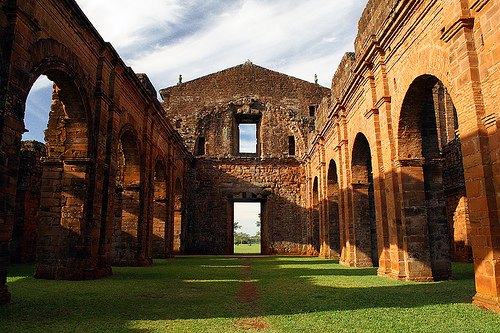
Archeological site of the indian-jesuit reduction of St. Lourenço Mártir. Located near the town of St. Luiz Gonzaga, southern Brasil ///Sí­tio arqueológico da redução guarani-jesuí­ta de São Lourenço Mártir. Localizada nas proximidades da cidade de São Luiz Gonzaga-RS.

______________________________________________________________________________

The Theogony of Hesiod
translated by Hugh G. Evelyn-White [1914]

(ll. 1-25) From the Heliconian Muses let us begin to sing, who hold the great and holy mount of Helicon, and dance on soft feet about the deep-blue spring and the altar of the almighty son of Cronos, and, when they have washed their tender bodies in Permessus or in the Horse’s Spring or Olmeius, make their fair, lovely dances upon highest Helicon and move with vigorous feet. Thence they arise and go abroad by night, veiled in thick mist, and utter their song with lovely voice, praising Zeus the aegis- holder and queenly Hera of Argos who walks on golden sandals and the daughter of Zeus the aegis-holder bright-eyed Athene, and Phoebus Apollo, and Artemis who delights in arrows, and Poseidon the earth-holder who shakes the earth, and reverend Themis and quick-glancing1 Aphrodite, and Hebe with the crown of gold, and fair Dione, Leto, Iapetus, and Cronos the crafty counsellor, Eos and great Helius and bright Selene, Earth too, and great Oceanus, and dark Night, and the holy race of all the other deathless ones that are for ever. And one day they taught Hesiod glorious song while he was shepherding his lambs under holy Helicon, and this word first the goddesses said to me — the Muses of Olympus, daughters of Zeus who holds the aegis:

(ll. 26-28) `Shepherds of the wilderness, wretched things of shame, mere bellies, we know how to speak many false things as though they were true; but we know, when we will, to utter true things.’

(ll. 29-35) So said the ready-voiced daughters of great Zeus, and they plucked and gave me a rod, a shoot of sturdy laurel, a marvellous thing, and breathed into me a divine voice to celebrate things that shall be and things there were aforetime; and they bade me sing of the race of the blessed gods that are eternally, but ever to sing of themselves both first and last. But why all this about oak or stone?2

(ll. 36-52) Come thou, let us begin with the Muses who gladden the great spirit of their father Zeus in Olympus with their songs, telling of things that are and that shall be and that were aforetime with consenting voice. Unwearying flows the sweet sound from their lips, and the house of their father Zeus the loud-thunderer is glad at the lily-like voice of the goddesses as it spread abroad, and the peaks of snowy Olympus resound, and the homes of the immortals. And they uttering their immortal voice, celebrate in song first of all the reverend race of the gods from the beginning, those whom Earth and wide Heaven begot, and the gods sprung of these, givers of good things. Then, next, the goddesses sing of Zeus, the father of gods and men, as they begin and end their strain, how much he is the most excellent among the gods and supreme in power. And again, they chant the race of men and strong giants, and gladden the heart of Zeus within Olympus, — the Olympian Muses, daughters of Zeus the aegis-holder.

(ll. 53-74) Them in Pieria did Mnemosyne (Memory), who reigns over the hills of Eleuther, bear of union with the father, the son of Cronos, a forgetting of ills and a rest from sorrow. For nine nights did wise Zeus lie with her, entering her holy bed remote from the immortals. And when a year was passed and the seasons came round as the months waned, and many days were accomplished, she bare nine daughters, all of one mind, whose hearts are set upon song and their spirit free from care, a little way from the topmost peak of snowy Olympus. There are their bright dancing-places and beautiful homes, and beside them the Graces and Himerus (Desire) live in delight. And they, uttering through their lips a lovely voice, sing the laws of all and the goodly ways of the immortals, uttering their lovely voice. Then went they to Olympus, delighting in their sweet voice, with heavenly song, and the dark earth resounded about them as they chanted, and a lovely sound rose up beneath their feet as they went to their father. And he was reigning in heaven, himself holding the lightning and glowing thunderbolt, when he had overcome by might his father Cronos; and he distributed fairly to the immortals their portions and declared their privileges.

(ll. 75-103) These things, then, the Muses sang who dwell on Olympus, nine daughters begotten by great Zeus, Cleio and Euterpe, Thaleia, Melpomene and Terpsichore, and Erato and Polyhymnia and Urania and Calliope3, who is the chiefest of them all, for she attends on worshipful princes: whomsoever of heaven-nourished princes the daughters of great Zeus honour, and behold him at his birth, they pour sweet dew upon his tongue, and from his lips flow gracious words. All the people look towards him while he settles causes with true judgements: and he, speaking surely, would soon make wise end even of a great quarrel; for therefore are there princes wise in heart, because when the people are being misguided in their assembly, they set right the matter again with ease, persuading them with gentle words. And when he passes through a gathering, they greet him as a god with gentle reverence, and he is conspicuous amongst the assembled: such is the holy gift of the Muses to men. For it is through the Muses and far-shooting Apollo that there are singers and harpers upon the earth; but princes are of Zeus, and happy is he whom the Muses love: sweet flows speech from his mouth. For though a man have sorrow and grief in his newly-troubled soul and live in dread because his heart is distressed, yet, when a singer, the servant of the Muses, chants the glorious deeds of men of old and the blessed gods who inhabit Olympus, at once he forgets his heaviness and remembers not his sorrows at all; but the gifts of the goddesses soon turn him away from these.

(ll. 104-115) Hail, children of Zeus! Grant lovely song and celebrate the holy race of the deathless gods who are for ever, those that were born of Earth and starry Heaven and gloomy Night and them that briny Sea did rear. Tell how at the first gods and earth came to be, and rivers, and the boundless sea with its raging swell, and the gleaming stars, and the wide heaven above, and the gods who were born of them, givers of good things, and how they divided their wealth, and how they shared their honours amongst them, and also how at the first they took many-folded Olympus. These things declare to me from the beginning, ye Muses who dwell in the house of Olympus, and tell me which of them first came to be.

(ll. 116-138) Verily at the first Chaos came to be, but next wide-bosomed Earth, the ever-sure foundations of all4 the deathless ones who hold the peaks of snowy Olympus, and dim Tartarus in the depth of the wide-pathed Earth, and Eros (Love), fairest among the deathless gods, who unnerves the limbs and overcomes the mind and wise counsels of all gods and all men within them. From Chaos came forth Erebus and black Night; but of Night were born Aether5 and Day, whom she conceived and bare from union in love with Erebus. And Earth first bare starry Heaven, equal to herself, to cover her on every side, and to be an ever-sure abiding-place for the blessed gods. And she brought forth long Hills, graceful haunts of the goddess-Nymphs who dwell amongst the glens of the hills. She bare also the fruitless deep with his raging swell, Pontus, without sweet union of love. But afterwards she lay with Heaven and bare deep-swirling Oceanus, Coeus and Crius and Hyperion and Iapetus, Theia and Rhea, Themis and Mnemosyne and gold-crowned Phoebe and lovely Tethys. After them was born Cronos the wily, youngest and most terrible of her children, and he hated his lusty sire.

(ll. 139-146) And again, she bare the Cyclopes, overbearing in spirit, Brontes, and Steropes and stubborn-hearted Arges6, who gave Zeus the thunder and made the thunderbolt: in all else they were like the gods, but one eye only was set in the midst of their fore-heads. And they were surnamed Cyclopes (Orb-eyed) because one orbed eye was set in their foreheads. Strength and might and craft were in their works.

(ll. 147-163) And again, three other sons were born of Earth and Heaven, great and doughty beyond telling, Cottus and Briareos and Gyes, presumptuous children. From their shoulders sprang an hundred arms, not to be approached, and each had fifty heads upon his shoulders on their strong limbs, and irresistible was the stubborn strength that was in their great forms. For of all the children that were born of Earth and Heaven, these were the most terrible, and they were hated by their own father from the first.

And he used to hide them all away in a secret place of Earth so soon as each was born, and would not suffer them to come up into the light: and Heaven rejoiced in his evil doing. But vast Earth groaned within, being straitened, and she made the element of grey flint and shaped a great sickle, and told her plan to her dear sons. And she spoke, cheering them, while she was vexed in her dear heart:

(ll. 164-166) `My children, gotten of a sinful father, if you will obey me, we should punish the vile outrage of your father; for he first thought of doing shameful things.’

(ll. 167-169) So she said; but fear seized them all, and none of them uttered a word. But great Cronos the wily took courage and answered his dear mother:

(ll. 170-172) `Mother, I will undertake to do this deed, for I reverence not our father of evil name, for he first thought of doing shameful things.’

(ll. 173-175) So he said: and vast Earth rejoiced greatly in spirit, and set and hid him in an ambush, and put in his hands a jagged sickle, and revealed to him the whole plot.

(ll. 176-206) And Heaven came, bringing on night and longing for love, and he lay about Earth spreading himself full upon her.
_________________________________________________________________________________

vaen

“Vaen”
Archeological site of the indian-jesuit reduction of St. Miguel Arcanjo, declared World Heritage Site by Unesco in 1983 (vaen = arrival, in the guarani language)///Sí­tio arqueológico da redução jesuí­ta de São Miguel Arcanjo, declarado Patrimônio Mundial da Humanidade em 1983 pela UNESCO (vaen = chegada, em guarani).

_________________________________________________________________________________

Then the son from his ambush stretched forth his left hand and in his right took the great long sickle with jagged teeth, and swiftly lopped off his own father’s members and cast them away to fall behind him. And not vainly did they fall from his hand; for all the bloody drops that gushed forth Earth received, and as the seasons moved round she bare the strong Erinyes and the great Giants with gleaming armour, holding long spears in their hands and the Nymphs whom they call Meliae8 all over the boundless earth. And so soon as he had cut off the members with flint and cast them from the land into the surging sea, they were swept away over the main a long time: and a white foam spread around them from the immortal flesh, and in it there grew a maiden. First she drew near holy Cythera, and from there, afterwards, she came to sea-girt Cyprus, and came forth an awful and lovely goddess, and grass grew up about her beneath her shapely feet. Her gods and men call Aphrodite, and the foam-born goddess and rich-crowned Cytherea, because she grew amid the foam, and Cytherea because she reached Cythera, and Cyprogenes because she was born in billowy Cyprus, and Philommedes9 because sprang from the members. And with her went Eros, and comely Desire followed her at her birth at the first and as she went into the assembly of the gods. This honour she has from the beginning, and this is the portion allotted to her amongst men and undying gods, — the whisperings of maidens and smiles and deceits with sweet delight and love and graciousness.

(ll. 207-210) But these sons whom be begot himself great Heaven used to call Titans (Strainers) in reproach, for he said that they strained and did presumptuously a fearful deed, and that vengeance for it would come afterwards.

(ll. 211-225) And Night bare hateful Doom and black Fate and Death, and she bare Sleep and the tribe of Dreams. And again the goddess murky Night, though she lay with none, bare Blame and painful Woe, and the Hesperides who guard the rich, golden apples and the trees bearing fruit beyond glorious Ocean. Also she bare the Destinies and ruthless avenging Fates, Clotho and Lachesis and Atropos10, who give men at their birth both evil and good to have, and they pursue the transgressions of men and of gods: and these goddesses never cease from their dread anger until they punish the sinner with a sore penalty. Also deadly Night bare Nemesis (Indignation) to afflict mortal men, and after her, Deceit and Friendship and hateful Age and hard-hearted Strife.

(ll. 226-232) But abhorred Strife bare painful Toil and Forgetfulness and Famine and tearful Sorrows, Fightings also, Battles, Murders, Manslaughters, Quarrels, Lying Words, Disputes, Lawlessness and Ruin, all of one nature, and Oath who most troubles men upon earth when anyone wilfully swears a false oath.

(ll. 233-239) And Sea begat Nereus, the eldest of his children, who is true and lies not: and men call him the Old Man because he is trusty and gentle and does not forget the laws of righteousness, but thinks just and kindly thoughts. And yet again he got great Thaumas and proud Phoreys, being mated with Earth, and fair-cheeked Ceto and Eurybia who has a heart of flint within her.

(ll. 240-264) And of Nereus and rich-haired Doris, daughter of Ocean the perfect river, were born children11, passing lovely amongst goddesses, Ploto, Eucrante, Sao, and Amphitrite, and Eudora, and Thetis, Galene and Glauce, Cymothoe, Speo, Thoe and lovely Halie, and Pasithea, and Erato, and rosy-armed Eunice, and gracious Melite, and Eulimene, and Agaue, Doto, Proto, Pherusa, and Dynamene, and Nisaea, and Actaea, and Protomedea, Doris, Panopea, and comely Galatea, and lovely Hippothoe, and rosy-armed Hipponoe, and Cymodoce who with Cymatolege12 and Amphitrite easily calms the waves upon the misty sea and the blasts of raging winds, and Cymo, and Eione, and rich-crowned Alimede, and Glauconome, fond of laughter, and Pontoporea, Leagore, Euagore, and Laomedea, and Polynoe, and Autonoe, and Lysianassa, and Euarne, lovely of shape and without blemish of form, and Psamathe of charming figure and divine Menippe, Neso, Eupompe, Themisto, Pronoe, and Nemertes13 who has the nature of her deathless father. These fifty daughters sprang from blameless Nereus, skilled in excellent crafts.

(ll. 265-269) And Thaumas wedded Electra the daughter of deep- flowing Ocean, and she bare him swift Iris and the long-haired Harpies, Aello (Storm-swift) and Ocypetes (Swift-flier) who on their swift wings keep pace with the blasts of the winds and the birds; for quick as time they dart along.

(ll 270-294) And again, Ceto bare to Phoreys the fair-cheeked Graiae, sisters grey from their birth: and both deathless gods and men who walk on earth call them Graiae, Pemphredo well-clad, and saffron-robed Enyo, and the Gorgons who dwell beyond glorious Ocean in the frontier land towards Night where are the clear- voiced Hesperides, Sthenno, and Euryale, and Medusa who suffered a woeful fate: she was mortal, but the two were undying and grew not old. With her lay the Dark-haired One14 in a soft meadow amid spring flowers. And when Perseus cut off her head, there sprang forth great Chrysaor and the horse Pegasus who is so called because he was born near the springs (pegae) of Ocean; and that other, because he held a golden blade (aor) in his hands. Now Pegasus flew away and left the earth, the mother of flocks, and came to the deathless gods: and he dwells in the house of Zeus and brings to wise Zeus the thunder and lightning. But Chrysaor was joined in love to Callirrhoe, the daughter of glorious Ocean, and begot three-headed Geryones. Him mighty Heracles slew in sea-girt Erythea by his shambling oxen on that day when he drove the wide-browed oxen to holy Tiryns, and had crossed the ford of Ocean and killed Orthus and Eurytion the herdsman in the dim stead out beyond glorious Ocean.

(ll. 295-305) And in a hollow cave she bare another monster, irresistible, in no wise like either to mortal men or to the undying gods, even the goddess fierce Echidna who is half a nymph with glancing eyes and fair cheeks, and half again a huge snake, great and awful, with speckled skin, eating raw flesh beneath the secret parts of the holy earth. And there she has a cave deep down under a hollow rock far from the deathless gods and mortal men. There, then, did the gods appoint her a glorious house to dwell in: and she keeps guard in Arima beneath the earth, grim Echidna, a nymph who dies not nor grows old all her days.

(ll. 306-332) Men say that Typhaon the terrible, outrageous and lawless, was joined in love to her, the maid with glancing eyes. So she conceived and brought forth fierce offspring; first she bare Orthus the hound of Geryones, and then again she bare a second, a monster not to be overcome and that may not be described, Cerberus who eats raw flesh, the brazen-voiced hound of Hades, fifty-headed, relentless and strong. And again she bore a third, the evil-minded Hydra of Lerna, whom the goddess, white-armed Hera nourished, being angry beyond measure with the mighty Heracles. And her Heracles, the son of Zeus, of the house of Amphitryon, together with warlike Iolaus, destroyed with the unpitying sword through the plans of Athene the spoil-driver. She was the mother of Chimaera who breathed raging fire, a creature fearful, great, swift-footed and strong, who had three heads, one of a grim-eyed lion; in her hinderpart, a dragon; and in her middle, a goat, breathing forth a fearful blast of blazing fire. Her did Pegasus and noble Bellerophon slay; but Echidna was subject in love to Orthus and brought forth the deadly Sphinx which destroyed the Cadmeans, and the Nemean lion, which Hera, the good wife of Zeus, brought up and made to haunt the hills of Nemea, a plague to men. There he preyed upon the tribes of her own people and had power over Tretus of Nemea and Apesas: yet the strength of stout Heracles overcame him.

(ll. 333-336) And Ceto was joined in love to Phorcys and bare her youngest, the awful snake who guards the apples all of gold in the secret places of the dark earth at its great bounds. This is the offspring of Ceto and Phoreys.

(ll. 334-345) And Tethys bare to Ocean eddying rivers, Nilus, and Alpheus, and deep-swirling Eridanus, Strymon, and Meander, and the fair stream of Ister, and Phasis, and Rhesus, and the silver eddies of Achelous, Nessus, and Rhodius, Haliacmon, and Heptaporus, Granicus, and Aesepus, and holy Simois, and Peneus, and Hermus, and Caicus fair stream, and great Sangarius, Ladon, Parthenius, Euenus, Ardescus, and divine Scamander.

(ll. 346-370) Also she brought forth a holy company of daughters15 who with the lord Apollo and the Rivers have youths in their keeping — to this charge Zeus appointed them — Peitho, and Admete, and Ianthe, and Electra, and Doris, and Prymno, and Urania divine in form, Hippo, Clymene, Rhodea, and Callirrhoe, Zeuxo and Clytie, and Idyia, and Pasithoe, Plexaura, and Galaxaura, and lovely Dione, Melobosis and Thoe and handsome Polydora, Cerceis lovely of form, and soft eyed Pluto, Perseis, Ianeira, Acaste, Xanthe, Petraea the fair, Menestho, and Europa, Metis, and Eurynome, and Telesto saffron-clad, Chryseis and Asia and charming Calypso, Eudora, and Tyche, Amphirho, and Ocyrrhoe, and Styx who is the chiefest of them all. These are the eldest daughters that sprang from Ocean and Tethys; but there are many besides. For there are three thousand neat-ankled daughters of Ocean who are dispersed far and wide, and in every place alike serve the earth and the deep waters, children who are glorious among goddesses. And as many other rivers are there, babbling as they flow, sons of Ocean, whom queenly Tethys bare, but their names it is hard for a mortal man to tell, but people know those by which they severally dwell.

(ll. 371-374) And Theia was subject in love to Hyperion and bare great Helius (Sun) and clear Selene (Moon) and Eos (Dawn) who shines upon all that are on earth and upon the deathless Gods who live in the wide heaven.

(ll. 375-377) And Eurybia, bright goddess, was joined in love to Crius and bare great Astraeus, and Pallas, and Perses who also was eminent among all men in wisdom.

(ll. 378-382) And Eos bare to Astraeus the strong-hearted winds, brightening Zephyrus, and Boreas, headlong in his course, and Notus, — a goddess mating in love with a god. And after these Erigenia16 bare the star Eosphorus (Dawn-bringer), and the gleaming stars with which heaven is crowned.

(ll. 383-403) And Styx the daughter of Ocean was joined to Pallas and bare Zelus (Emulation) and trim-ankled Nike (Victory) in the house. Also she brought forth Cratos (Strength) and Bia (Force), wonderful children. These have no house apart from Zeus, nor any dwelling nor path except that wherein God leads them, but they dwell always with Zeus the loud-thunderer. For so did Styx the deathless daughter of Ocean plan on that day when the Olympian Lightener called all the deathless gods to great Olympus, and said that whosoever of the gods would fight with him against the Titans, he would not cast him out from his rights, but each should have the office which he had before amongst the deathless gods. And he declared that he who was without office and rights as is just. So deathless Styx came first to Olympus with her children through the wit of her dear father. And Zeus honoured her, and gave her very great gifts, for her he appointed to be the great oath of the gods, and her children to live with him always. And as he promised, so he performed fully unto them all.

But he himself mightily reigns and rules.

(ll. 404-452) Again, Phoebe came to the desired embrace of Coeus.

Then the goddess through the love of the god conceived and brought forth dark-gowned Leto, always mild, kind to men and to the deathless gods, mild from the beginning, gentlest in all Olympus. Also she bare Asteria of happy name, whom Perses once led to his great house to be called his dear wife. And she conceived and bare Hecate whom Zeus the son of Cronos honoured above all. He gave her splendid gifts, to have a share of the earth and the unfruitful sea. She received honour also in starry heaven, and is honoured exceedingly by the deathless gods. For to this day, whenever any one of men on earth offers rich sacrifices and prays for favour according to custom, he calls upon Hecate. Great honour comes full easily to him whose prayers the goddess receives favourably, and she bestows wealth upon him; for the power surely is with her. For as many as were born of Earth and Ocean amongst all these she has her due portion. The son of Cronos did her no wrong nor took anything away of all that was her portion among the former Titan gods: but she holds, as the division was at the first from the beginning, privilege both in earth, and in heaven, and in sea. Also, because she is an only child, the goddess receives not less honour, but much more still, for Zeus honours her. Whom she will she greatly aids and advances: she sits by worshipful kings in judgement, and in the assembly whom she will is distinguished among the people. And when men arm themselves for the battle that destroys men, then the goddess is at hand to give victory and grant glory readily to whom she will. Good is she also when men contend at the games, for there too the goddess is with them and profits them: and he who by might and strength gets the victory wins the rich prize easily with joy, and brings glory to his parents. And she is good to stand by horsemen, whom she will: and to those whose business is in the grey discomfortable sea, and who pray to Hecate and the loud-crashing Earth-Shaker, easily the glorious goddess gives great catch, and easily she takes it away as soon as seen, if so she will. She is good in the byre with Hermes to increase the stock. The droves of kine and wide herds of goats and flocks of fleecy sheep, if she will, she increases from a few, or makes many to be less. So, then. albeit her mother’s only child17, she is honoured amongst all the deathless gods. And the son of Cronos made her a nurse of the young who after that day saw with their eyes the light of all-seeing Dawn. So from the beginning she is a nurse of the young, and these are her honours.

______________________________________________________________________________

path-of-the-guarani
“The Path of the Guarani”
This shot was taken while leaving the ruins of the reduction of St. Joao Batista. Our goal – 20 km ahead of us – was the archeological site of the reduction of St. Miguel Arcanjo. This dust road follows the tracing of the jesuit and guarani indians ancient roads, that provided transport and communication between the so-called ‘Seven People of the Missions’ (the seven indian-jesuit villages located, nowadays, in modern Brasil)///Saí­da de São João Batista, em direção ao sí­tio arqueológico da Redução de São Miguel Arcanjo (na cidade de São Miguel das Missões-RS). Esta estrada de chão – cerca de 20 km – segue o traçado dos antigos caminhos jesuí­tas e indí­genas de transporte e comunicação entre os Sete Povos das Missões.

______________________________________________________________________________

(ll. 453-491) But Rhea was subject in love to Cronos and bare splendid children, Hestia18, Demeter, and gold-shod Hera and strong Hades, pitiless in heart, who dwells under the earth, and the loud-crashing Earth-Shaker, and wise Zeus, father of gods and men, by whose thunder the wide earth is shaken. These great Cronos swallowed as each came forth from the womb to his mother’s knees with this intent, that no other of the proud sons of Heaven should hold the kingly office amongst the deathless gods. For he learned from Earth and starry Heaven that he was destined to be overcome by his own son, strong though he was, through the contriving of great Zeus19. Therefore he kept no blind outlook, but watched and swallowed down his children: and unceasing grief seized Rhea. But when she was about to bear Zeus, the father of gods and men, then she besought her own dear parents, Earth and starry Heaven, to devise some plan with her that the birth of her dear child might be concealed, and that retribution might overtake great, crafty Cronos for his own father and also for the children whom he had swallowed down. And they readily heard and obeyed their dear daughter, and told her all that was destined to happen touching Cronos the king and his stout-hearted son. So they sent her to Lyetus, to the rich land of Crete, when she was ready to bear great Zeus, the youngest of her children. Him did vast Earth receive from Rhea in wide Crete to nourish and to bring up. Thither came Earth carrying him swiftly through the black night to Lyctus first, and took him in her arms and hid him in a remote cave beneath the secret places of the holy earth on thick-wooded Mount Aegeum; but to the mightily ruling son of Heaven, the earlier king of the gods, she gave a great stone wrapped in swaddling clothes. Then he took it in his hands and thrust it down into his belly: wretch! he knew not in his heart that in place of the stone his son was left behind, unconquered and untroubled, and that he was soon to overcome him by force and might and drive him from his honours, himself to reign over the deathless gods.

(ll. 492-506) After that, the strength and glorious limbs of the prince increased quickly, and as the years rolled on, great Cronos the wily was beguiled by the deep suggestions of Earth, and brought up again his offspring, vanquished by the arts and might of his own son, and he vomited up first the stone which he had swallowed last. And Zeus set it fast in the wide-pathed earth at goodly Pytho under the glens of Parnassus, to be a sign thenceforth and a marvel to mortal men20. And he set free from their deadly bonds the brothers of his father, sons of Heaven whom his father in his foolishness had bound. And they remembered to be grateful to him for his kindness, and gave him thunder and the glowing thunderbolt and lightening: for before that, huge Earth had hidden these. In them he trusts and rules over mortals and immortals.

(ll. 507-543) Now Iapetus took to wife the neat-ankled mad Clymene, daughter of Ocean, and went up with her into one bed. And she bare him a stout-hearted son, Atlas: also she bare very glorious Menoetius and clever Prometheus, full of various wiles, and scatter-brained Epimetheus who from the first was a mischief to men who eat bread; for it was he who first took of Zeus the woman, the maiden whom he had formed. But Menoetius was outrageous, and far-seeing Zeus struck him with a lurid thunderbolt and sent him down to Erebus because of his mad presumption and exceeding pride. And Atlas through hard constraint upholds the wide heaven with unwearying head and arms, standing at the borders of the earth before the clear-voiced Hesperides; for this lot wise Zeus assigned to him. And ready- witted Prometheus he bound with inextricable bonds, cruel chains, and drove a shaft through his middle, and set on him a long- winged eagle, which used to eat his immortal liver; but by night the liver grew as much again everyway as the long-winged bird devoured in the whole day. That bird Heracles, the valiant son of shapely-ankled Alcmene, slew; and delivered the son of Iapetus from the cruel plague, and released him from his affliction — not without the will of Olympian Zeus who reigns on high, that the glory of Heracles the Theban-born might be yet greater than it was before over the plenteous earth. This, then, he regarded, and honoured his famous son; though he was angry, he ceased from the wrath which he had before because Prometheus matched himself in wit with the almighty son of Cronos. For when the gods and mortal men had a dispute at Mecone, even then Prometheus was forward to cut up a great ox and set portions before them, trying to befool the mind of Zeus. Before the rest he set flesh and inner parts thick with fat upon the hide, covering them with an ox paunch; but for Zeus he put the white bones dressed up with cunning art and covered with shining fat. Then the father of men and of gods said to him:

(ll. 543-544) `Son of Iapetus, most glorious of all lords, good sir, how unfairly you have divided the portions!’

(ll. 545-547) So said Zeus whose wisdom is everlasting, rebuking him. But wily Prometheus answered him, smiling softly and not forgetting his cunning trick:

(ll. 548-558) `Zeus, most glorious and greatest of the eternal gods, take which ever of these portions your heart within you bids.’ So he said, thinking trickery. But Zeus, whose wisdom is everlasting, saw and failed not to perceive the trick, and in his heart he thought mischief against mortal men which also was to be fulfilled. With both hands he took up the white fat and was angry at heart, and wrath came to his spirit when he saw the white ox-bones craftily tricked out: and because of this the tribes of men upon earth burn white bones to the deathless gods upon fragrant altars. But Zeus who drives the clouds was greatly vexed and said to him:

(ll. 559-560) `Son of Iapetus, clever above all! So, sir, you have not yet forgotten your cunning arts!’

(ll. 561-584) So spake Zeus in anger, whose wisdom is everlasting; and from that time he was always mindful of the trick, and would not give the power of unwearying fire to the Melian21 race of mortal men who live on the earth. But the noble son of Iapetus outwitted him and stole the far-seen gleam of unwearying fire in a hollow fennel stalk. And Zeus who thunders on high was stung in spirit, and his dear heart was angered when he saw amongst men the far-seen ray of fire. Forthwith he made an evil thing for men as the price of fire; for the very famous Limping God formed of earth the likeness of a shy maiden as the son of Cronos willed. And the goddess bright-eyed Athene girded and clothed her with silvery raiment, and down from her head she spread with her hands a broidered veil, a wonder to see; and she, Pallas Athene, put about her head lovely garlands, flowers of new-grown herbs. Also she put upon her head a crown of gold which the very famous Limping God made himself and worked with his own hands as a favour to Zeus his father. On it was much curious work, wonderful to see; for of the many creatures which the land and sea rear up, he put most upon it, wonderful things, like living beings with voices: and great beauty shone out from it.

(ll. 585-589) But when he had made the beautiful evil to be the price for the blessing, he brought her out, delighting in the finery which the bright-eyed daughter of a mighty father had given her, to the place where the other gods and men were. And wonder took hold of the deathless gods and mortal men when they saw that which was sheer guile, not to be withstood by men.

(ll. 590-612) For from her is the race of women and female kind: of her is the deadly race and tribe of women who live amongst mortal men to their great trouble, no helpmeets in hateful poverty, but only in wealth. And as in thatched hives bees feed the drones whose nature is to do mischief — by day and throughout the day until the sun goes down the bees are busy and lay the white combs, while the drones stay at home in the covered skeps and reap the toil of others into their own bellies — even so Zeus who thunders on high made women to be an evil to mortal men, with a nature to do evil. And he gave them a second evil to be the price for the good they had: whoever avoids marriage and the sorrows that women cause, and will not wed, reaches deadly old age without anyone to tend his years, and though he at least has no lack of livelihood while he lives, yet, when he is dead, his kinsfolk divide his possessions amongst them. And as for the man who chooses the lot of marriage and takes a good wife suited to his mind, evil continually contends with good; for whoever happens to have mischievous children, lives always with unceasing grief in his spirit and heart within him; and this evil cannot be healed.

(ll. 613-616) So it is not possible to deceive or go beyond the will of Zeus; for not even the son of Iapetus, kindly Prometheus, escaped his heavy anger, but of necessity strong bands confined him, although he knew many a wile.

(ll. 617-643) But when first their father was vexed in his heart with Obriareus and Cottus and Gyes, he bound them in cruel bonds, because he was jealous of their exceeding manhood and comeliness and great size: and he made them live beneath the wide-pathed earth, where they were afflicted, being set to dwell under the ground, at the end of the earth, at its great borders, in bitter anguish for a long time and with great grief at heart. But the son of Cronos and the other deathless gods whom rich-haired Rhea bare from union with Cronos, brought them up again to the light at Earth’s advising. For she herself recounted all things to the gods fully, how that with these they would gain victory and a glorious cause to vaunt themselves. For the Titan gods and as many as sprang from Cronos had long been fighting together in stubborn war with heart-grieving toil, the lordly Titans from high Othyrs, but the gods, givers of good, whom rich-haired Rhea bare in union with Cronos, from Olympus. So they, with bitter wrath, were fighting continually with one another at that time for ten full years, and the hard strife had no close or end for either side, and the issue of the war hung evenly balanced. But when he had provided those three with all things fitting, nectar and ambrosia which the gods themselves eat, and when their proud spirit revived within them all after they had fed on nectar and delicious ambrosia, then it was that the father of men and gods spoke amongst them:

(ll. 644-653) `Hear me, bright children of Earth and Heaven, that I may say what my heart within me bids. A long while now have we, who are sprung from Cronos and the Titan gods, fought with each other every day to get victory and to prevail. But do you show your great might and unconquerable strength, and face the Titans in bitter strife; for remember our friendly kindness, and from what sufferings you are come back to the light from your cruel bondage under misty gloom through our counsels.’

(ll. 654-663) So he said. And blameless Cottus answered him again: `Divine one, you speak that which we know well: nay, even of ourselves we know that your wisdom and understanding is exceeding, and that you became a defender of the deathless ones from chill doom. And through your devising we are come back again from the murky gloom and from our merciless bonds, enjoying what we looked not for, O lord, son of Cronos. And so now with fixed purpose and deliberate counsel we will aid your power in dreadful strife and will fight against the Titans in hard battle.’

(ll. 664-686) So he said: and the gods, givers of good things, applauded when they heard his word, and their spirit longed for war even more than before, and they all, both male and female, stirred up hated battle that day, the Titan gods, and all that were born of Cronos together with those dread, mighty ones of overwhelming strength whom Zeus brought up to the light from Erebus beneath the earth. An hundred arms sprang from the shoulders of all alike, and each had fifty heads growing upon his shoulders upon stout limbs. These, then, stood against the Titans in grim strife, holding huge rocks in their strong hands. And on the other part the Titans eagerly strengthened their ranks, and both sides at one time showed the work of their hands and their might. The boundless sea rang terribly around, and the earth crashed loudly: wide Heaven was shaken and groaned, and high Olympus reeled from its foundation under the charge of the undying gods, and a heavy quaking reached dim Tartarus and the deep sound of their feet in the fearful onset and of their hard missiles. So, then, they launched their grievous shafts upon one another, and the cry of both armies as they shouted reached to starry heaven; and they met together with a great battle-cry.
_________________________________________________________________________________
onirique

“Onirique”

Archeological site of the indian-jesuit reduction of St. Lourenço Mártir. Located near the town of St. Luiz Gonzaga, southern Brasil///Sí­tio arqueológico da redução guarani-jesuí­ta de São Lourenço Mártir. Localizada nas proximidades da cidade de São Luiz Gonzaga-RS.

_________________________________________________________________________________

(ll. 687-712) Then Zeus no longer held back his might; but straight his heart was filled with fury and he showed forth all his strength. From Heaven and from Olympus he came forthwith, hurling his lightning: the bold flew thick and fast from his strong hand together with thunder and lightning, whirling an awesome flame. The life-giving earth crashed around in burning, and the vast wood crackled loud with fire all about. All the land seethed, and Ocean’s streams and the unfruitful sea. The hot vapour lapped round the earthborn Titans: flame unspeakable rose to the bright upper air: the flashing glare of the thunder- stone and lightning blinded their eyes for all that there were strong. Astounding heat seized Chaos: and to see with eyes and to hear the sound with ears it seemed even as if Earth and wide Heaven above came together; for such a mighty crash would have arisen if Earth were being hurled to ruin, and Heaven from on high were hurling her down; so great a crash was there while the gods were meeting together in strife. Also the winds brought rumbling earthquake and duststorm, thunder and lightning and the lurid thunderbolt, which are the shafts of great Zeus, and carried the clangour and the warcry into the midst of the two hosts. An horrible uproar of terrible strife arose: mighty deeds were shown and the battle inclined. But until then, they kept at one another and fought continually in cruel war.

(ll. 713-735) And amongst the foremost Cottus and Briareos and Gyes insatiate for war raised fierce fighting: three hundred rocks, one upon another, they launched from their strong hands and overshadowed the Titans with their missiles, and buried them beneath the wide-pathed earth, and bound them in bitter chains when they had conquered them by their strength for all their great spirit, as far beneath the earth to Tartarus. For a brazen anvil falling down from heaven nine nights and days would reach the earth upon the tenth: and again, a brazen anvil falling from earth nine nights and days would reach Tartarus upon the tenth. Round it runs a fence of bronze, and night spreads in triple line all about it like a neck-circlet, while above grow the roots of the earth and unfruitful sea. There by the counsel of Zeus who drives the clouds the Titan gods are hidden under misty gloom, in a dank place where are the ends of the huge earth. And they may not go out; for Poseidon fixed gates of bronze upon it, and a wall runs all round it on every side. There Gyes and Cottus and great-souled Obriareus live, trusty warders of Zeus who holds the aegis.

(ll. 736-744) And there, all in their order, are the sources and ends of gloomy earth and misty Tartarus and the unfruitful sea and starry heaven, loathsome and dank, which even the gods abhor.

It is a great gulf, and if once a man were within the gates, he would not reach the floor until a whole year had reached its end, but cruel blast upon blast would carry him this way and that. And this marvel is awful even to the deathless gods.

(ll. 744-757) There stands the awful home of murky Night wrapped in dark clouds. In front of it the son of Iapetus22 stands immovably upholding the wide heaven upon his head and unwearying hands, where Night and Day draw near and greet one another as they pass the great threshold of bronze: and while the one is about to go down into the house, the other comes out at the door.

And the house never holds them both within; but always one is without the house passing over the earth, while the other stays at home and waits until the time for her journeying come; and the one holds all-seeing light for them on earth, but the other holds in her arms Sleep the brother of Death, even evil Night, wrapped in a vaporous cloud.

(ll. 758-766) And there the children of dark Night have their dwellings, Sleep and Death, awful gods. The glowing Sun never looks upon them with his beams, neither as he goes up into heaven, nor as he comes down from heaven. And the former of them roams peacefully over the earth and the sea’s broad back and is kindly to men; but the other has a heart of iron, and his spirit within him is pitiless as bronze: whomsoever of men he has once seized he holds fast: and he is hateful even to the deathless gods.

(ll. 767-774) There, in front, stand the echoing halls of the god of the lower-world, strong Hades, and of awful Persephone. A fearful hound guards the house in front, pitiless, and he has a cruel trick. On those who go in he fawns with his tail and both is ears, but suffers them not to go out back again, but keeps watch and devours whomsoever he catches going out of the gates of strong Hades and awful Persephone.

(ll. 775-806) And there dwells the goddess loathed by the deathless gods, terrible Styx, eldest daughter of back-flowing23 Ocean. She lives apart from the gods in her glorious house vaulted over with great rocks and propped up to heaven all round with silver pillars. Rarely does the daughter of Thaumas, swift- footed Iris, come to her with a message over the sea’s wide back.

But when strife and quarrel arise among the deathless gods, and when any of them who live in the house of Olympus lies, then Zeus sends Iris to bring in a golden jug the great oath of the gods from far away, the famous cold water which trickles down from a high and beetling rock. Far under the wide-pathed earth a branch of Oceanus flows through the dark night out of the holy stream, and a tenth part of his water is allotted to her. With nine silver-swirling streams he winds about the earth and the sea’s wide back, and then falls into the main24; but the tenth flows out from a rock, a sore trouble to the gods. For whoever of the deathless gods that hold the peaks of snowy Olympus pours a libation of her water is forsworn, lies breathless until a full year is completed, and never comes near to taste ambrosia and nectar, but lies spiritless and voiceless on a strewn bed: and a heavy trance overshadows him. But when he has spent a long year in his sickness, another penance and an harder follows after the first. For nine years he is cut off from the eternal gods and never joins their councils of their feasts, nine full years. But in the tenth year he comes again to join the assemblies of the deathless gods who live in the house of Olympus. Such an oath, then, did the gods appoint the eternal and primaeval water of Styx to be: and it spouts through a rugged place.

(ll. 807-819) And there, all in their order, are the sources and ends of the dark earth and misty Tartarus and the unfruitful sea and starry heaven, loathsome and dank, which even the gods abhor.

And there are shining gates and an immoveable threshold of bronze having unending roots and it is grown of itself25. And beyond, away from all the gods, live the Titans, beyond gloomy Chaos. But the glorious allies of loud-crashing Zeus have their dwelling upon Ocean’s foundations, even Cottus and Gyes; but Briareos, being goodly, the deep-roaring Earth-Shaker made his son-in-law, giving him Cymopolea his daughter to wed.

(ll. 820-868) But when Zeus had driven the Titans from heaven, huge Earth bare her youngest child Typhoeus of the love of Tartarus, by the aid of golden Aphrodite. Strength was with his hands in all that he did and the feet of the strong god were untiring. From his shoulders grew an hundred heads of a snake, a fearful dragon, with dark, flickering tongues, and from under the brows of his eyes in his marvellous heads flashed fire, and fire burned from his heads as he glared. And there were voices in all his dreadful heads which uttered every kind of sound unspeakable; for at one time they made sounds such that the gods understood, but at another, the noise of a bull bellowing aloud in proud ungovernable fury; and at another, the sound of a lion, relentless of heart; and at anothers, sounds like whelps, wonderful to hear; and again, at another, he would hiss, so that the high mountains re-echoed. And truly a thing past help would have happened on that day, and he would have come to reign over mortals and immortals, had not the father of men and gods been quick to perceive it. But he thundered hard and mightily: and the earth around resounded terribly and the wide heaven above, and the sea and Ocean’s streams and the nether parts of the earth. Great Olympus reeled beneath the divine feet of the king as he arose and earth groaned thereat. And through the two of them heat took hold on the dark-blue sea, through the thunder and lightning, and through the fire from the monster, and the scorching winds and blazing thunderbolt. The whole earth seethed, and sky and sea: and the long waves raged along the beaches round and about, at the rush of the deathless gods: and there arose an endless shaking. Hades trembled where he rules over the dead below, and the Titans under Tartarus who live with Cronos, because of the unending clamour and the fearful strife. So when Zeus had raised up his might and seized his arms, thunder and lightning and lurid thunderbolt, he leaped form Olympus and struck him, and burned all the marvellous heads of the monster about him. But when Zeus had conquered him and lashed him with strokes, Typhoeus was hurled down, a maimed wreck, so that the huge earth groaned. And flame shot forth from the thunder- stricken lord in the dim rugged glens of the mount26, when he was smitten. A great part of huge earth was scorched by the terrible vapour and melted as tin melts when heated by men’s art in channelled27 crucibles; or as iron, which is hardest of all things, is softened by glowing fire in mountain glens and melts in the divine earth through the strength of Hephaestus28. Even so, then, the earth melted in the glow of the blazing fire. And in the bitterness of his anger Zeus cast him into wide Tartarus.

(ll. 869-880) And from Typhoeus come boisterous winds which blow damply, except Notus and Boreas and clear Zephyr. These are a god-sent kind, and a great blessing to men; but the others blow fitfully upon the seas. Some rush upon the misty sea and work great havoc among men with their evil, raging blasts; for varying with the season they blow, scattering ships and destroying sailors. And men who meet these upon the sea have no help against the mischief. Others again over the boundless, flowering earth spoil the fair fields of men who dwell below, filling them with dust and cruel uproar.

(ll. 881-885) But when the blessed gods had finished their toil, and settled by force their struggle for honours with the Titans, they pressed far-seeing Olympian Zeus to reign and to rule over them, by Earth’s prompting. So he divided their dignities amongst them.

(ll. 886-900) Now Zeus, king of the gods, made Metis his wife first, and she was wisest among gods and mortal men. But when she was about to bring forth the goddess bright-eyed Athene, Zeus craftily deceived her with cunning words and put her in his own belly, as Earth and starry Heaven advised. For they advised him so, to the end that no other should hold royal sway over the eternal gods in place of Zeus; for very wise children were destined to be born of her, first the maiden bright-eyed Tritogeneia, equal to her father in strength and in wise understanding; but afterwards she was to bear a son of overbearing spirit, king of gods and men. But Zeus put her into his own belly first, that the goddess might devise for him both good and evil.

(ll. 901-906) Next he married bright Themis who bare the Horae (Hours), and Eunomia (Order), Dike (Justice), and blooming Eirene (Peace), who mind the works of mortal men, and the Moerae (Fates) to whom wise Zeus gave the greatest honour, Clotho, and Lachesis, and Atropos who give mortal men evil and good to have.

(ll. 907-911) And Eurynome, the daughter of Ocean, beautiful in form, bare him three fair-cheeked Charites (Graces), Aglaea, and Euphrosyne, and lovely Thaleia, from whose eyes as they glanced flowed love that unnerves the limbs: and beautiful is their glance beneath their brows.

(ll. 912-914) Also he came to the bed of all-nourishing Demeter, and she bare white-armed Persephone whom Aidoneus carried off from her mother; but wise Zeus gave her to him.

(ll. 915-917) And again, he loved Mnemosyne with the beautiful hair: and of her the nine gold-crowned Muses were born who delight in feasts and the pleasures of song.

(ll. 918-920) And Leto was joined in love with Zeus who holds the aegis, and bare Apollo and Artemis delighting in arrows, children lovely above all the sons of Heaven.

(ll. 921-923) Lastly, he made Hera his blooming wife: and she was joined in love with the king of gods and men, and brought forth Hebe and Ares and Eileithyia.

(ll. 924-929) But Zeus himself gave birth from his own head to bright-eyed Tritogeneia29, the awful, the strife-stirring, the host-leader, the unwearying, the queen, who delights in tumults and wars and battles. But Hera without union with Zeus — for she was very angry and quarrelled with her mate — bare famous Hephaestus, who is skilled in crafts more than all the sons of Heaven.

(ll. 929a-929t)30 But Hera was very angry and quarrelled with her mate. And because of this strife she bare without union with Zeus who holds the aegis a glorious son, Hephaestus, who excelled all the sons of Heaven in crafts. But Zeus lay with the fair- cheeked daughter of Ocean and Tethys apart from Hera…. ((LACUNA)) ….deceiving Metis (Thought) although she was full wise. But he seized her with his hands and put her in his belly, for fear that she might bring forth something stronger than his thunderbolt: therefore did Zeus, who sits on high and dwells in the aether, swallow her down suddenly. But she straightway conceived Pallas Athene: and the father of men and gods gave her birth by way of his head on the banks of the river Trito. And she remained hidden beneath the inward parts of Zeus, even Metis, Athena’s mother, worker of righteousness, who was wiser than gods and mortal men. There the goddess (Athena) received that31 whereby she excelled in strength all the deathless ones who dwell in Olympus, she who made the host-scaring weapon of Athena. And with it (Zeus) gave her birth, arrayed in arms of war.

(ll. 930-933) And of Amphitrite and the loud-roaring Earth-Shaker was born great, wide-ruling Triton, and he owns the depths of the sea, living with his dear mother and the lord his father in their golden house, an awful god.

(ll. 933-937) Also Cytherea bare to Ares the shield-piercer Panic and Fear, terrible gods who drive in disorder the close ranks of men in numbing war, with the help of Ares, sacker of towns: and Harmonia whom high-spirited Cadmus made his wife.

(ll. 938-939) And Maia, the daughter of Atlas, bare to Zeus glorious Hermes, the herald of the deathless gods, for she went up into his holy bed.

(ll. 940-942) And Semele, daughter of Cadmus was joined with him in love and bare him a splendid son, joyous Dionysus, — a mortal woman an immortal son. And now they both are gods.

(ll. 943-944) And Alemena was joined in love with Zeus who drives the clouds and bare mighty Heracles.

(ll. 945-946) And Hephaestus, the famous Lame One, made Aglaea, youngest of the Graces, his buxom wife.

(ll. 947-949) And golden-haired Dionysus made brown-haired Ariadne, the daughter of Minos, his buxom wife: and the son of Cronos made her deathless and unageing for him.

(ll. 950-955) And mighty Heracles, the valiant son of neat-ankled Alemena, when he had finished his grievous toils, made Hebe the child of great Zeus and gold-shod Hera his shy wife in snowy Olympus. Happy he! For he has finished his great works and lives amongst the dying gods, untroubled and unaging all his days.

(ll. 956-962) And Perseis, the daughter of Ocean, bare to unwearying Helios Circe and Aeetes the king. And Aeetes, the son of Helios who shows light to men, took to wife fair-cheeked Idyia, daughter of Ocean the perfect stream, by the will of the gods: and she was subject to him in love through golden Aphrodite and bare him neat-ankled Medea.

(ll. 963-968) And now farewell, you dwellers on Olympus and you islands and continents and thou briny sea within. Now sing the company of goddesses, sweet-voiced Muses of Olympus, daughter of Zeus who holds the aegis, — even those deathless one who lay with mortal men and bare children like unto gods.

(ll. 969-974) Demeter, bright goddess, was joined in sweet love with the hero Iasion in a thrice-ploughed fallow in the rich land of Crete, and bare Plutus, a kindly god who goes everywhere over land and the sea’s wide back, and him who finds him and into whose hands he comes he makes rich, bestowing great wealth upon him.

(ll. 975-978) And Harmonia, the daughter of golden Aphrodite, bare to Cadmus Ino and Semele and fair-cheeked Agave and Autonoe whom long haired Aristaeus wedded, and Polydorus also in rich- crowned Thebe.

(ll. 979-983) And the daughter of Ocean, Callirrhoe was joined in the love of rich Aphrodite with stout hearted Chrysaor and bare a son who was the strongest of all men, Geryones, whom mighty Heracles killed in sea-girt Erythea for the sake of his shambling oxen.

(ll. 984-991) And Eos bare to Tithonus brazen-crested Memnon, king of the Ethiopians, and the Lord Emathion. And to Cephalus she bare a splendid son, strong Phaethon, a man like the gods, whom, when he was a young boy in the tender flower of glorious youth with childish thoughts, laughter-loving Aphrodite seized and caught up and made a keeper of her shrine by night, a divine spirit.

(ll. 993-1002) And the son of Aeson by the will of the gods led away from Aeetes the daughter of Aeetes the heaven-nurtured king, when he had finished the many grievous labours which the great king, over bearing Pelias, that outrageous and presumptuous doer of violence, put upon him. But when the son of Aeson had finished them, he came to Iolcus after long toil bringing the coy-eyed girl with him on his swift ship, and made her his buxom wife. And she was subject to Iason, shepherd of the people, and bare a son Medeus whom Cheiron the son of Philyra brought up in the mountains. And the will of great Zeus was fulfilled.

(ll. 1003-1007) But of the daughters of Nereus, the Old man of the Sea, Psamathe the fair goddess, was loved by Aeacus through golden Aphrodite and bare Phocus. And the silver-shod goddess Thetis was subject to Peleus and brought forth lion-hearted Achilles, the destroyer of men.

(ll. 1008-1010) And Cytherea with the beautiful crown was joined in sweet love with the hero Anchises and bare Aeneas on the peaks of Ida with its many wooded glens.

(ll. 1011-1016) And Circe the daughter of Helius, Hyperion’s son, loved steadfast Odysseus and bare Agrius and Latinus who was faultless and strong: also she brought forth Telegonus by the will of golden Aphrodite. And they ruled over the famous Tyrenians, very far off in a recess of the holy islands.

(ll. 1017-1018) And the bright goddess Calypso was joined to Odysseus in sweet love, and bare him Nausithous and Nausinous.

(ll. 1019-1020) These are the immortal goddesses who lay with mortal men and bare them children like unto gods.

(ll. 1021-1022) But now, sweet-voiced Muses of Olympus, daughters of Zeus who holds the aegis, sing of the company of women.

[original version in greek – versão original em grego]

______________________________________________________________________________
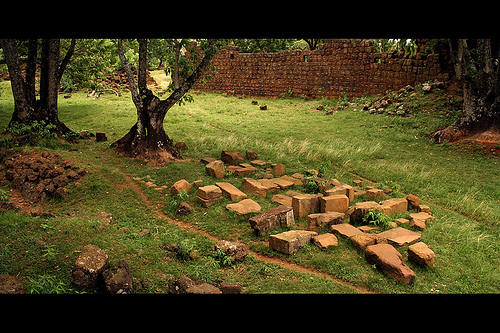
summer-of-doriath
“The Summer of Doriath”
Shot taken in the archeological site of the indian-jesuit reduction of St. Joao Batista. Read more about it here. The lower part of the grass is where the ancient blacksmith and carpenterôs workshop courtyard were. The terrain elevation behind the trees is the ruin of a sandstone wall, separating this courtyard from the rest of the village///Sí­tio arqueológico da redução jesuí­tica de São João Batista. Leia mais a respeito aqui. A parte baixa da grama é o antigo pátio das oficinas metalúrgicas e de marcenaria da redução. A elevação atrás das árvores é um antigo muro de pedras que separava essa porção do restante do povoado.

Photos: Mathieu Bertrand Struck
Creative Commons License

a quote Quoted .

kriz.jpg

{
(…)
Conjugate deterritorialized flows. Follow the plants: you start by delimiting a first line consisting of circles of convergence around successive singularities; then you see whether inside that line new circles of convergence establish themselves, with new points located outside the limits and in other directions.(…)

glermz.jpg

The map is open and connectable in all ot is dimensions; it is detachable, reversible, susceptible to constant modification. It can be torn, reversed, adapted to any kind of mounting, reworked by an individual, group, or social formation. It can be drawn on a wall, conceived of as a work of art, constructed as a political action or as a meditation.
(…)
}
Deleuze & Guattari in A Thousand Plateaus: Capitalism and Schizophrenia [University of Minnesota Press, 1987]

krunotanja.jpg

Surface Tension_Copenhagen / LiteraturHaus – SÃ?¸ndag 15/4

compass_handweb.jpg

Sí¸ndag 15/4
Kl. 20.00
Surface Tension_Copenhagen
I forlí¦ngelse af udstillingen Surface Tension_Copenhagen vil den
brasilianske teaterinstruktí¸r og komponist Octávio Camargo sammen med
kunstnerne Ken Ehrlich og Brandon LaBelle gí¦ste LiteraturHaus. Med brug af
performative metoder samt tale, lyd og rum iscenesí¦ttes dramatiske og
sociale sproglige eksperimenter. Yderligere vises video og handlinger fra de
arbejder, der er skabt ude I byrummet som en del af udstillingen
Entré 30 kr

de galeno ao homem da cobra

White_indian_conjuror_small

“Chamanes et psychanalystes”
CLAUDE LÉVI-STRAUSS (1949)
Source: J. Narby et Fr. Huxley, Chamanes au fil du temps, Albin Michel, 2002

L’anthropologue français Claude Lévi-Strauss fit remarquer l’interface entre le chamanisme et la psychanalyse dans un petit article intitulé í« L’efficacité symbolique í». Son analyse se réfí¨re í  la description d’une séance de guérison chamanique chez les Indiens Cuna du Panama. Lévi-Strauss cristallise la différence entre le praticien symboliste et le psychanalyste : ce dernier écoute, tandis que le chamane parle.

La cure consisterait donc í  rendre pensable une situation donnée d’abord en termes affectifs et acceptables pour l’esprit des douleurs que le corps se refuse í  tolérer. Que la mythologie du chaman ne corresponde pas í  une réalité objective n’a pas d’importance : la malade y croit, et elle est membre d’une société qui y croit. Les esprits protecteurs et les esprits malfaisants, les monstres surnaturels et les animaux magiques font partie d’un systí¨me cohérent qui fonde la conception indigí¨ne de l’univers. La malade les accepte, ou, plus exactement, elle ne les a jamais mis en doute. Ce qu’elle n’accepte pas, ce sont des douleurs incohérentes et arbitraires, qui, elles, constituent un élément étranger í  son systí¨me, mais que, par l’appel au mythe, le chaman va replacer dans un ensemble oí¹ tout se tient.

Mais la malade, ayant compris, ne fait pas que se résigner: elle guérit. Et rien de tel ne se produit chez nos malades, quand on leur a expliqué la cause de leurs désordres en invoquant des sécrétions, des microbes ou des virus. On nous accusera peut-être de paradoxe si nous répondons que la raison en est que les microbes existent, et que les monstres n’existent pas. Et cependant, la relation entre microbe et maladie est extérieure í  l’esprit du patient, c’est une relation de cause í  effet ; tandis que la relation entre monstre et maladie est intérieure í  ce même esprit, conscient ou inconscient : c’est une relation de symbole í  chose symbolisée, ou, pour employer le vocabulaire des linguistes, de signifiant í  signifié. Le chaman fournit í  sa malade un langage, dans lequel peuvent s’exprimer immédiatement des états informulés, et autrement informulables. Et c’est le passage í  cette expression verbale (qui permet, en même temps, de vivre sous une forme ordonnée et intelligible une expérience actuelle, mais, sans cela, anarchique et ineffable) qui provoque le déblocage du processus physiologique, c’est-í -dire la réorganisation, dans un sens favorable, de la séquence dont la malade subit le déroulement.

A cet égard, la cure chamanique se place í  moitié entre notre médecine organique et des thérapeutiques psychologiques comme la psychanalyse. Son originalité provient de ce qu’elle applique í  un trouble organique une méthode trí¨s voisine de ces dernií¨res. Comment cela est-il possible ? Une comparaison plus serrée entre chamanisme et psychanalyse (et qui ne comporte, dans notre pensée, aucune intention désobligeante pour celle-ci) permettra de préciser ce point.

Dans les deux cas, on se propose d’amener í  la conscience des conflits et des résistances restés jusqu’alors inconscients, soit en raison de leur refoulement par d’autres forces psychologiques, soit – dans le cas de l’accouchement – í  cause de leur nature propre, qui n’est pas psychique, mais organique, ou même simplement mécanique. Dans les deux cas aussi, les conflits et les résistances se dissolvent, non du fait de la connaissance, réelle ou supposée, que la malade en acquiert progressivement, mais parce que cette connaissance rend possible une expérience spécifique, au cours de laquelle les conflits se réalisent dans un ordre et sur un plan qui permettent leur libre déroulement et conduisent í  leur dénouement. Cette expérience vécue reçoit, en psychanalyse, le nom d’abréaction. On sait qu’elle a pour condition l’intervention non provoquée de l’analyste, qui surgit dans les conflits du malade, par le double mécanisme du transfert, comme un protagoniste de chair et de sang, et vis-í -vis duquel ce dernier peut rétablir et expliciter une situation initiale restée informulée.

shamanic_drum

Tous ces caractí¨res se retrouvent dans la cure chamanique. Lí  aussi, il s’agit de susciter une expérience, et, dans la mesure oí¹ cette expérience s’organise, des mécanismes placés en dehors du contrôle du sujet se rí¨glent spontanément pour aboutir í  un fonctionnement ordonné. Le chaman a le même double rôle que le psychanalyste : un premier rôle – d’auditeur pour le psychanalyste, et d’orateur pour le chaman – établit une relation immédiate avec la conscience (et médiate avec l’inconscient) du malade. C’est le rôle de l’incantation proprement dite. Mais le chaman ne fait pas que proférer l’incantation : il en est le héros, puisque c’est lui qui péní¨tre dans les organes menacés í  la tête du bataillon surnaturel des esprits, et qui libí¨re l’âme captive. Dans ce sens, il s’incarne, comme le psychanalyste objet du transfert, pour devenir, grâce aux représentations induites dans l’esprit du malade, le protagoniste réel du conflit que celui-ci expérimente í  mi-chemin entre le monde organique et le monde psychique. Le malade atteint de névrose liquide un mythe individuel en s’opposant í  un psychanalyste réel; l’accouchée indigí¨ne surmonte un désordre organique véritable en s’identifiant í  un chaman mythiquement transposé.

Le parallélisme n’exclut donc pas des différences. On ne s’en étonnera pas, si l’on prête attention au caractí¨re, psychique dans un cas, et organique dans l’autre, du trouble qu’il s’agit de guérir. En fait, la cure chamanique semble être un exact équivalent de la cure psychanalytique, mais avec une inversion de tous les termes. Toutes deux visent í  provoquer une expérience ; et toutes deux y parviennent en reconstituant un mythe que le malade doit vivre, ou revivre. Mais, dans un cas, c’est un mythe individuel que le malade construit í  l’aide d’éléments tirés de son passé ; dans l’autre, c’est un mythe social, que le malade reçoit de l’extérieur, et qui ne correspond pas í  un état personnel ancien. Pour préparer l’abréaction qui devient alors une í« adréaction í», le psychanalyste écoute, tandis que le chaman parle.

shaman

http://conserto.organismo.art.br

eixo2.jpg

Iní­cio da montagem da Sala kernel

Re-alocação fí­sica do espaço
Habilitação dos pontos lógicos de rede e disponibilização de IPs válidos para Montagem de servidor (pelos técnicos da celepar)

Instalação de ponto de acesso sem fio (wireless)
Deslocamento de seis computadores do laboratório para a sala kernel
Atualização da versão das distribuições linux (debian sarge para etch) instaladas nas estações citadas
Configuração das estações para propositos especí­ficos de áudio, gráfico, ví­deo e streaming

Estação para streaming (metronomo e pulso maestro + impressora matricial)
Criação do website conserto.organismo.art.br
Criação de identidade visual, montagem do “template” e produção de conteúdo)
Documentação em foto e ví­deo de etapas do processo
Inicio da montagem de laboratório de í udio (equipamento da orquestra organismo). microfones, mesa de som, teclado midi, instrumentos musicais

Ações em andamento

– Recitação da obra de Erico Verí­ssimo “O tempo e o Vento” por Salvio Nienkí¶tter ( recitação da obra completa durante a mostra )
– Rodada de discuções sobre o Forum Social do Mercosul (via rede com Newton Goto)
– Recepção e entrevista com os artistas croatas Kruno Jost e Tanja Topolovec – Kruno Jost desenvolve pesquisa sobre os circuitos de arte e tecnologia no Brasil. Link para a sua página na web (http://www.uke.hr/brazil/)
– Experimentações e primeiras derivações da série dodecafônica “contrato” em seus desdobramentos retrógrado, invertido e retrógrado invertido

Motetos

“Entardecia e padre Alonzo terminava a sua aula de música. Um dos estudantes tocara ao órgão, havia pouco, uma sonatina. Depois o quarteto executara uma sarabanda, e agora o í­ndio Rafael ali estava a tocar em sua clarineta a pavana de um compositor italiano. Havia na redução excelentes organistas, harpistas, corneteiros e clarinetistas. Tocavam composições difí­ceis e até trechos de í²pera italiana. Os instrumentos, em sua maioria, eram fabricados na redução pelos próprios í­ndios, dirigidos pelos padres ”

Érico Verissimo – O tempo e o vento (I vol – O continente)
descrição de um epsódio ocorrido numa das 7 missões em 1747

clausulawebimg.jpg

Perotin and other composers created “clausulae” — polyphonic sections of discant organum that could be inserted as replacement or substitute sections of organum into a larger work. The tenor of clausulae consisted typically of a single word from the chant, so clausulae were not independent pieces. Tenor parts often used the rhythmic modes and included repetitions.

When, in the late 12th century, some unknown composers began adding new text to the duplum of a clausula, an independent piece was created apart from the liturgy. The texted line was called the “motetus.” (The French “mot” = word, indicating the presence of text different from the cantus firmus.) The pieces themselves, called “motets,” became the predominant source of interest for composers and vehicles for experimentation during the late Middle Ages. The motet drove sacred music towards secularization when occasionally a secular cantus firmus replaced the liturgical tenor as the spine of a piece. Initially the motetus was Latin, but increasingly the added lines (motetus, triplum, etc.) were secular, most often French. This music was retrospectively named “Ars Antiqua” by theorists of “Ars Nova” which followed.

The cantus firmus was still sacrosanct but without rhythmic obligation, so one could tinker with it rhythmically. “Isorhythmic” works appeared, in which a rhythmic pattern drives the piece and encounters various melodic embodiments.

French secular texts were often substituted for Latin sacred words in motets, and sometimes two and three poems were sung simultaneously. This seems to be the most complex musical form ever to appear on the face of the earth. Motet names consist of the first words of each voice in order from top to bottom voices. Thus, motets have names such as “Plus bele que flor / Quant revient / L’autrier joer / Flos Filius” — since there are four very independent texts, in different languages, for four different musical voices and lines. This particular piece superimposes a description of the shining beauty of Mary onto the evocation of an amorous encounter onto the action of God in summer, the season of love. “A Paris / On parole / Frese nouvele” offers a street-vendor’s call in the tenor (“Fresh strawberries! Nice blackberries!”) and celebrations of the wonders of Parisian life simultaneously.

Johannes de Grocheo, a theorist writing around 1300, observed that a motet “ought not to be performed in the presence of common people, for they would not perceive its subtlety, nor take pleasure in its sound.” Instead, motets should be performed only “in the presence of learned persons and those who seek after subtleties in art.” (Bonds 61)

Also lumped in with late 12th- and 13th-century Ars Antiqua is the “conductus,” a form that became more popular when it became polyphonic. A conductus is similar to a hymn but more rhythmic (triple divisions typically), typically a metrical Latin poem, not a chant melody, rendered in two to four voices and serving as a processional piece (think “Pomp and Circumstance” or the famous wedding marches for now instrumental versions serving a similar kind of function). Though syllabic, a conductus might end with a melisma, called a “cauda” (similar later to “coda”).

Also interesting as a special effect was a technique that, when used extensively, came to lend its name to the musical piece itself: the “hocket.” This is a hiccup effect used as a compositional device that breaks up the melodic line and creates a kind of quick ping-pong acoustical trick.

páginas de origem:
www.wsu.edu/~delahoyd/medieval/motets.html – 5k
musicweb.koncon.nl/overview/clausul – 8k

Pontes de Safena

pontedesafena.gif

Juramento de Hipócrates

” Eu juro, por Apolo médico, por Esculápio, Hí­gia e Panacea, e tomo por testemunhas todos os deuses e todas as deusas, cumprir segundo meu poder e minha razão, a promessa que se segue: estimar, tanto quanto a meus pais, aquele que me ensinou esta arte; fazer vida comum e, se necessário for, com ele partilhar meus bens; ter seus filhos por meus próprios irmãos; ensinar-lhes esta arte, se eles tiverem necessidade de aprendê-la, sem remuneração e nem compromisso escrito; fazer participar dos preceitos, das lições e de todo o resto do ensino, meus filhos, os de meu mestre e os discí­pulos inscritos segundo os regulamentos da profissão, porém, só a estes.
Aplicarei os regimes para o bem do doente segundo o meu poder e entendimento, nunca para causar dano ou mal a alguém.
A ninguém darei por comprazer, nem remédio mortal nem um conselho que induza a perda. Do mesmo modo não darei a nenhuma mulher uma substância abortiva.
Conservarei imaculada minha vida e minha arte. Não praticarei a talha, mesmo sobre um calculoso confirmado; deixarei essa operação aos práticos que disso cuidam.
Em toda a casa, aí­ entrarei para o bem dos doentes, mantendo-me longe de todo o dano voluntário e de toda a sedução sobretudo longe dos prazeres do amor, com as mulheres ou com os homens livres ou escravizados.
àquilo que no exercí­cio ou fora do exercí­cio da profissão e no conví­vio da sociedade, eu tiver visto ou ouvido, que não seja preciso divulgar, eu conservarei inteiramente secreto.
Se eu cumprir este juramento com fidelidade, que me seja dado gozar felizmente da vida e da minha profissão, honrado para sempre entre os homens; se eu dele me afastar ou infringir, o contrário aconteça.”

— DIALÉTICA —- ser ou não ser eis a questão:

Não ao ato médico

Sim ao ato médico

—->

O PLS no 25/2002 – A LEI DO ATO MÉDICO

O PLS no 25/2002 objetiva tão-somente regulamentar os atos médicos, fortalecendo o conceito de equipe de saúde e respeitando as esferas de competência de cada profissional. Em nenhuma linha encontraremos violações de direitos adquiridos, arrogância ou prepotência em relação aos demais membros da equipe. Ninguém trabalha pela saúde da população sozinho, e muito menos sem a presença do médico. A análise do conteúdo dos cinco artigos do Projeto mostra a relevância da matéria, permitindo maior compreensão acerca da importância de sua aprovação.

Artigo 1ú – A definição

Art. 1ú – Ato médico é todo procedimento técnico-profissional praticado por médico habilitado e dirigido para:

1. A prevenção primária, definida como a promoção da saúde e a prevenção da ocorrência de enfermidades ou profilaxia;

2. A prevenção secundária, definida como a prevenção da evolução das enfermidades ou execução de procedimentos diagnósticos ou terapêuticos;

3. A prevenção terciária, definida como a prevenção da invalidez ou reabilitação dos enfermos.

O Projeto tem como objetivo definir, em lei, o alcance e o limite do ato médico. Para tanto, este artigo 1ú expõe de maneira clara a definição adotada pela Organização Mundial da Saúde no tocante í s ações médicas que visam ao benefí­cio do indiví­duo e da coletividade, estabelecendo a prevenção, em seus diversos estágios, como parâmetro para a cura e o alí­vio do sofrimento humano.

A definição do ato médico foi elaborada com base nesta ordenação de idéias porque, na medida em que abrange todas as possibilidades de referir procedimentos profissionais na área da saúde, essa classificação pareceu ao autor a melhor maneira de sintetizar clara e lealmente os limites da atividade dos médicos. Com sua utilização, parece ser possí­vel diferenciar o que se deve considerar como atividade privativa dos médicos e quais os procedimentos sanitários que não o são.

Como se vê, o conceito de cura não se opõe ao de prevenção, vez que a cura, quer com o sentido de tratamento quer como resultado dele, está implí­cita na prevenção secundária. Razão pela qual não faz sentido opor a medicina curativa í  medicina preventiva, posto que aquela é parte integrante desta.

O inciso I trata da atenção primária, que cuida de prevenir a ocorrência de doenças, através de métodos profiláticos, e das ações que visem í  promoção da saúde para toda a população. A prevenção primária reúne um conjunto de ações que não são privativas dos médicos; ao contrário, para que obtenham êxito exigem a co-participação de outros profissionais de saúde e até mesmo da população envolvida.

O inciso II, por sua vez, estabelece os atos que são privativos dos médicos. São aqueles que envolvem o diagnóstico de doenças e as indicações terapêuticas, atributos que têm no médico o único profissional habilitado e preparado para exercê-los, além dos odontólogos em sua área de atuação.

Não se incluem, aqui, os diagnósticos fisiológicos (funcionais) e os psicológicos, que são compartilhados com outros profissionais da área de saúde, como os fisioterapeutas e os psicólogos. O diagnóstico fisiológico se refere ao reconhecimento de um estado do desenvolvimento somático ou da funcionalidade de algum órgão ou sistema corporal. O diagnóstico psicológico se refere ao reconhecimento de um estado do desenvolvimento psí­quico ou da situação de ajustamento de uma pessoa. No entanto, quanto se trata do diagnóstico de enfermidades e da indicação de condutas para o tratamento, somente o médico e o odontólogo, este em sua área especí­fica, possuem a habilitação exigida para tais ações. E os médicos veterinários, no que diz respeito aos animais.

O inciso III aborda as atividades de recuperação e reabilitação, também compartilhadas entre a equipe de saúde. Não são atos privativos dos médicos. Por medidas ou procedimentos de reabilitação devem ser entendidos os atos profissionais destinados a devolver a integridade estrutural ou funcional perdida ou prejudicada por uma enfermidade (com o sentido de qualquer condição patológica).

Os dois parágrafos que complementam este artigo explicitam quais os atos privativos dos médicos e os compartilhados com outros profissionais:

ç 1ú – As atividades de prevenção de que trata este artigo, que envolvam procedimentos diagnósticos de enfermidades ou impliquem em indicação terapêutica, são atos privativos do profissional médico.

ç 2ú – As atividades de prevenção primária e terciária que não impliquem na execução de diagnósticos e indicações terapêuticas podem ser atos profissionais compartilhados com outros profissionais da área da saúde, dentro dos limites impostos pela legislação pertinente.

Há um consenso indubitável acerca destes conceitos, estabelecidos há milênios pela prática da Medicina. Diante da estupefação de alguns pela inexistência, até hoje, de lei que afirmasse o óbvio, vale esclarecer que nunca houve tal necessidade antes, o que só agora se impõe em virtude do crescimento de outras profissões na área da saúde. Estabelecer limites e definir a abrangência do ato médico passou a constituir um assunto de extremo interesse de toda a sociedade, e não apenas dos médicos.

Artigo 2ú – Atribuições do CFM

Art. 2ú – Compete ao Conselho Federal de Medicina, nos termos do artigo anterior e respeitada a legislação pertinente, definir, por meio de resolução, os procedimentos médicos experimentais, os aceitos e os vedados, para utilização pelos profissionais médicos.

Este artigo estabelece a competência do Conselho Federal de Medicina em definir os atos médicos vedados, os aceitos e os experimentais, í  luz da ética e do conhecimento cientí­fico existente.

Vale ressaltar que o estabelecimento de atribuições em lei para os conselhos federais de fiscalização profissional não constitui inovação para o dos médicos. A análise das leis que regulamentam outras profissões da área de saúde assim o demonstra:

DECRETO no. 88.439/83 – Biomedicina

Art. 12ú – Compete ao Conselho Federal:

XVIII – Definir o limite de competência no exercí­cio profissional, conforme os currí­culos efetivamente realizados.

LEI no 3.820/60 – Farmácia

Art. 6ú – São atribuições do Conselho Federal:

g) expedir as resoluções que se tornarem necessárias para a fiel interpretação e execução da presente lei;

j) deliberar sobre questões oriundas do exercí­cio de atividades afins í s do farmacêutico;

l) ampliar o limite de competência do exercí­cio profissional, conforme o currí­culo escolar ou mediante curso ou prova de especialização realizado ou prestada em escola ou instituto oficial;

m) expedir resoluções, definindo ou modificando atribuições ou competência dos profissionais de Farmácia, conforme as necessidades futuras;

Parágrafo único – As questões referentes í s atividades afins com as outras profissões serão resolvidas através de entendimentos com as entidades reguladoras dessas profissões.

LEI no. 5.766/71 – Psicologia

Art. 6ú – São atribuições do Conselho Federal:

d) definir, nos termos legais, o limite de competência do exercí­cio profissional, conforme os cursos realizados ou provas de especialização prestadas em escolas ou institutos profissionais reconhecidos;

n) propor ao Poder Competente alterações da legislação relativa ao exercí­cio da profissão de Psicólogo;

Artigo 3ú – As atividades de direção e chefia médicas

Art. 3ú – As atividades de coordenação, direção, chefia, perí­cia, auditoria, supervisão, desde que vinculadas, de forma imediata e direta a procedimentos médicos e, ainda, as atividades de ensino dos procedimentos médicos privativos, incluem-se entre os atos médicos e devem ser unicamente exercidos por médicos.

Este artigo preconiza que os cargos de direção e chefia diretamente relacionados aos atos médicos sejam exercidos exclusivamente por médicos. Não há nada de extraordinário nisso. As leis que regulamentam as outras profissões da saúde sempre realçaram este quesito, garantindo-lhes as chefias de enfermagem, nutrição etc. Senão, vejamos:

LEI no. 8.234/91 – Nutrição

Art. 3í° – São atividades privativas dos nutricionistas:

I – direção, coordenação e supervisão de cursos de graduação em nutrição;

V – ensino das disciplinas de nutrição e alimentação nos cursos de graduação da área de saúde e outras afins;

VI – auditorias, consultorias e assessoria em nutrição e dietéticas;

DECRETO no 85.878/81 – Farmácia

Art 1ú – São atribuições privativas dos profissionais farmacêuticos:

II – assessoramento e responsabilidade técnica em:

a) estabelecimentos industriais farmacêuticos em que se fabriquem produtos que tenham indicações e/ou ações terapêuticas, anestésicos ou auxiliares de diagnóstico, ou capazes de criar dependência fí­sica ou psí­quica;

b) órgãos, laboratórios, setores ou estabelecimentos farmacêuticos em que se executem controle e/ou inspeção de qualidade, análise prévia, análise de controle e análise fiscal de produtos que tenham destinação terapêutica, anestésica ou auxiliar de diagnósticos ou capazes de determinar dependência fí­sica ou psí­quica;

IV – a elaboração de laudos técnicos e a realização de perí­cias técnico-legais relacionadas com atividades, produtos, fórmulas, processos e métodos farmacêuticos ou de natureza farmacêutica;

V – o magistério superior das matérias privativas constantes do currí­culo próprio do curso de formação farmacêutica, obedecida a legislação do ensino;

DECRETO no 53.464/64 – Psicologia

Art. 4ú – São funções do Psicólogo:

II – Dirigir serviços de Psicologia em órgãos e estabelecimentos públicos, autárquicos, paraestatais, de economia mista e particulares.

III – Ensinar as cadeiras ou disciplinas de Psicologia nos vários ní­veis de ensino, observadas as demais exigências da legislação em vigor.

VI – Realizar perí­cias e emitir pareceres sobre a matéria de Psicologia.

LEI no 6.965/81 – Fonoaudiologia

Art. 4ú – É da competência do Fonoaudiólogo e de profissionais habilitados na forma da legislação especí­fica:

g) Lecionar teoria e prática fonoaudiológicas;

h) Dirigir serviços de Fonoaudiologia em estabelecimentos públicos, privados, autárquicos e mistos;

LEI N. 7.498/86 – Enfermagem

Art. 11 – O Enfermeiro exerce todas as atividades de Enfermagem cabendo-lhe:

I – privativamente:

a) Direção do órgão de enfermagem integrante da estrutura básica da instituição de saúde, pública e privada, e chefia de serviço e de unidade de enfermagem;

c) Planejamento, organização, coordenação, execução e avaliação dos serviços de assistência de enfermagem;

h) Consultoria, auditoria e emissão de parecer sobre matéria de enfermagem;

Com o intuito de aclarar essa intenção, o parágrafo único deste artigo dissipa todas as dúvidas que poderiam existir:

Parágrafo único – Excetuam-se da exclusividade médica prevista no caput deste artigo as funções de direção administrativa dos estabelecimentos de saúde e as demais atividades de direção, chefia, perí­cia, auditoria ou supervisão que dispensem formação médica como elemento essencial í  realização de seus objetivos ou exijam qualificação profissional de outra natureza.

Uma direção administrativa, uma secretaria ou até mesmo o Ministério da Saúde podem ser cargos exercidos por profissionais não-médicos desde que, em respeito í  lei, haja um responsável técnico médico para responder pelas questões técnicas e éticas que envolvam aquela instância administrativa. Nenhuma novidade neste passado recente de nosso paí­s. Os dois últimos titulares da Pasta da Saúde, por exemplo, foram economistas.
Artigo 4ú – O exercí­cio ilegal da Medicina

Art. 4ú – A infração aos dispositivos desta lei configura crime de exercí­cio ilegal da Medicina, nos termos do Código Penal Brasileiro.

O exercí­cio ilegal da Medicina é crime, tipificado no Código Penal Brasileiro em seu artigo 283. Ressalte-se que este artigo reforça o preceito legal, lembrando que a profissão médica requer habilitação, aqui entendida como a legalização de uma atividade social regulamentada.

Artigo 5ú – O respeito í s outras profissões regulamentadas

Art. 5ú – O disposto nesta lei não se aplica ao exercí­cio da Odontologia e da Medicina Veterinária, nem a outras profissões de saúde regulamentadas por lei, ressalvados os limites de atuação de cada uma delas.

Se alguma dúvida havia acerca da extrapolação de direitos, este artigo a desfaz completamente. O objetivo deste Projeto restringe-se simplesmente a definir a abrangência e os limites dos atos médicos, resguardando as prerrogativas definidas em lei para as outras profissões da área de saúde.

sobre a arte de construir pontes

spring_story_by_3amfromkyoto
. Spring Story – The Vernal Aeration ., by 3amfromkyoto

Lesson II: Forces at Work
In our study of bridges, we use the example of the suspension bridge to identify load, where load comes from, and distinguish between “dead” and “live” loads. Groups of students form a “human suspension bridge” to feel how loads are distributed in the bridge, and to identify the parts of the bridge that experience tension or compression in response to the applied loads.

of_food_appetites_and_the_human_condition_by_3amfromkyoto
. Of Food, Appetites And The Human Condition ., by 3amfromkyoto.

Lesson III: Stress Test
Stress isn�t just that feeling you get when you have a million things to do and only five minutes in which to do them! Engineers calculate stresses in buildings and bridges in order to ensure that the materials aren�t experiencing more stress than they can take, which could result in collapse. In this lesson, students learn what stress means to engineers and, through experimentation, determine failure stresses for a variety of household materials, as the next step in the quest to build a structurally sound model bridge.

Source: The art of bridge construction.

A arte está morta, vou buscar a pá.

Uma coisa é a coisa

chienandalou.jpg

Outra é a palavra coisa

a20fig02.gif

voz1: O que a gente faz não é bom, não é ruim, não é NADA.
a gente não vai ser lembrado por isso(…)
(…)a gente não faz nada do que a gente ja não faz várias vezes(…)

voz2: será que não seria mais útil a gente gravar aquele barulho(…)

voz1: isso pode ser tão redundante quanto essa nossa conversa.

o que está na cara?
– OLHOS DA CARA


amanheceremos.

â$

Eye of the Beholder

0ê semana – ADíGIO

conserto_small

Para quem é oferecido o ConSerto?
ConSerto busca em suas experimentações o diálogo direto com duas categorias de público:

Um mais ativo, o qual de imediato se interessa pelas ações e se propõe a participar presencialmente das jams, performances, curtas e produções em geral. Formadores de opinião, possuem consciência e intenção de ações poéticas. São protagonistas e criadores de um cenário cultural e convergem, de algum modo, com as propostas elaboradas pela Orquestra Organismo. Músicos, atores, artistas, poetas, hackers encontram maneiras de trabalhar com complementariedade de linguagens em um espaço ocupado para criar novos significados seguindo a idéia de código aberto.

Um segundo público interessado prefere agir como observador/contemplador. A ele é dada a oportunidade de protagonizar ações possibilitando a compreensão do processo aberto como algo tão ou mais poético que os “produtos culturais” gerados. Por meio de palestras convocadas sob demanda, estas pessoas podem discutir desde as técnicas das ferramentas até os conceitos envolvidos, assim participando e compreendendo a profundidade do trabalho que está sendo realizado. Busca que este público sinta-se cada vez mais seguro de seu papel como agente cultural, í  vontade para interagir.

(Continue a ler em ConSerto).


zipper_animated_GFDL

Zipper licensed under the GFDL.

Fault tolerance

paris_thunderstorm_1902

El Golem

Si (como afirma el griego en el Cratilo)
el nombre es arquetipo de la cosa
en las letras de ‘rosa’ está la rosa
y todo el Nilo en la palabra ‘Nilo’.

Y, hecho de consonantes y vocales,
habrá un terrible Nombre, que la esencia
cifre de Dios y que la Omnipotencia
guarde en letras y sí­labas cabales.

Adán y las estrellas lo supieron
en el Jardí­n. La herrumbre del pecado
(dicen los cabalistas) lo ha borrado
y las generaciones lo perdieron.

Los artificios y el candor del hombre
no tienen fin. Sabemos que hubo un dí­a
en que el pueblo de Dios buscaba el Nombre
en las vigilias de la juderí­a.

No a la manera de otras que una vaga
sombra insinúan en la vaga historia,
aún está verde y viva la memoria
de Judá León, que era rabino en Praga.

Sediento de saber lo que Dios sabe,
Judá León se dió a permutaciones
de letras y a complejas variaciones
y al fin pronunció el Nombre que es la Clave,

la Puerta, el Eco, el Huésped y el Palacio,
sobre un muí±eco que con torpes manos
labró, para enseí±arle los arcanos
de las Letras, del Tiempo y del Espacio.

El simulacro alzó los soí±olientos
párpados y vio formas y colores
que no entendió, perdidos en rumores
y ensayó temerosos movimientos.

Gradualmente se vio (como nosotros)
aprisionado en esta red sonora
de Antes, Después, Ayer, Mientras, Ahora,
Derecha, Izquierda, Yo, Tú, Aquellos, Otros.

(El cabalista que ofició de numen
a la vasta criatura apodó Golem;
estas verdades las refiere Scholem
en un docto lugar de su volumen.)

El rabí­ le explicaba el universo
“esto es mi pie; esto el tuyo, esto la soga.”
y logró, al cabo de aí±os, que el perverso
barriera bien o mal la sinagoga.

Tal vez hubo un error en la grafí­a
o en la articulación del Sacro Nombre;
a pesar de tan alta hechicerí­a,
no aprendió a hablar el aprendiz de hombre.

Sus ojos, menos de hombre que de perro
y harto menos de perro que de cosa,
seguí­an al rabí­ por la dudosa
penumbra de las piezas del encierro.

Algo anormal y tosco hubo en el Golem,
ya que a su paso el gato del rabino
se escondí­a. (Ese gato no está en Scholem
pero, a través del tiempo, lo adivino.)

Elevando a su Dios manos filiales,
las devociones de su Dios copiaba
o, estúpido y sonriente, se ahuecaba
en cóncavas zalemas orientales.

El rabí­ lo miraba con ternura
y con algún horror. ‘í¿Cómo’ (se dijo)
‘pude engendrar este penoso hijo
y la inacción dejé, que es la cordura?’

‘í¿Por qué di en agregar a la infinita
serie un sí­mbolo más? í¿Por qué a la vana
madeja que en lo eterno se devana,
di otra causa, otro efecto y otra cuita?’

En la hora de angustia y de luz vaga,
en su Golem los ojos detení­a.
í¿Quién nos dirá las cosas que sentí­a
Dios, al mirar a su rabino en Praga?

(Jorge Luis Borges, 1958)

kernel

In Jewish tradition, the golem is most widely known as an artificial creature created by magic, often to serve its creator. The word “golem” appears only once in the Bible (Psalms139:16). In Hebrew, “golem” stands for “shapeless mass.” The Talmud uses the word as “unformed” or “imperfect” and according to Talmudic legend, Adam is called “golem,” meaning “body without a soul” (Sanhedrin 38b) for the first 12 hours of his existence. The golem appears in other places in the Talmud as well. One legend says the prophet Jeremiah made a golem However, some mystics believe the creation of a golem has symbolic meaning only, like a spiritual experience following a religious rite.

The Sefer Yezirah (“Book of Creation”), often referred to as a guide to magical usage by some Western European Jews in the Middle Ages, contains instructions on how to make a golem. Several rabbis, in their commentaries on Sefer Yezirah have come up with different understandings of the directions on how to make a golem. Most versions include shaping the golem into a figure resembling a human being and using God’s name to bring him to life, since God is the ultimate creator of life..

According to one story, to make a golem come alive, one would shape it out of soil, and then walk or dance around it saying combination of letters from the alphabet and the secret name of God. To “kill” the golem, its creators would walk in the opposite direction saying and making the order of the words backwards.

Other sources say once the golem had been physically made one needed to write the letters aleph, mem, tav, which is emet and means “truth,” on the golem’s forehead and the golem would come alive. Erase the aleph and you are left with mem and tav, which is met, meaning “death.”

Another way to bring a golem to life was to write God’s name on parchment and stick it on the golem’s arm or in his mouth. One would remove it to stop the golem.

Often in Ashkenazi Hasidic lore, the golem would come to life and serve his creators by doing tasks assigned to him. The most well-known story of the golem is connected to Rabbi Judah Loew ben Bezalel, the Maharal of Prague (1513-1609). It was said that he created a golem out of clay to protect the Jewish community from Blood Libel and to help out doing physical labor, since golems are very strong. Another version says it was close to Easter, in the spring of 1580 and a Jew-hating priest was trying to incite the Christians against the Jews. So the golem protected the community during the Easter season. Both versions recall the golem running amok and threatening innocent lives, so Rabbi Loew removed the Divine Name, rendering the golem lifeless. A separate account has the golem going mad and running away. Several sources attribute the story to Rabbi Elijah of Chelm, saying Rabbi Loew, one of the most outstanding Jewish scholars of the sixteenth century who wrote numerous books on Jewish law, philosophy, and morality, would have actually opposed the creation of a golem. (Source)


cabbalah

Kernel

Etymology: From Old English cyrnel, dimunitive of corn, seed
Pronunciation: * IPA: /Ã?Ë?kÃ?Å?ínÃ?â?¢l/ (UK) or /Ã?Ë?kínÃ?â?¢l/ (US)
1. The smallest, most basic piece of an object.
2. The very core, or center, of a larger system, upon which everything else is built.
3. (computing) The central part of many computer operating systems which manages the system’s resources and the communication between hardware and software components
4. A single seed, usually of corn.
5. The stone of certain fruits.
6. (mathematics) those elements, in the domain of a function, which the function maps to zero

Taumatawhakatangihangakoauauotamateaturipukakapikimaungahoronukupokaiwhenuakitanatahu

taumataw

Taumatawhakatangihangakoauauotamateapokaiwhenuakitanatahu, ou Taumatawhakatangihangakoauauotamateaturipukakapikimaungahoronukupokaiwhenuakitanatahu é o nome maori para uma colina de 305 metros de altura próxima a Porangahau, sul de Waipukurau na região meridional da Baí­a de Hawke, Nova Zelândia. O nome é freqüentemente abreviado para Taumata pelos locais, para facilitar a conversação. O nome é í s vezes citado como sendo a palavra mais longa em inglês.

taumata
plaquinha indicativa

O nome escrito na placa que assinala a colina é Taumatawhakatangihangakoauauotamateaturipukakapikimaungahoronukupokaiwhenuakitanatahu, o que, numa tradução literal seria algo como A testa [ou cume] da colina [ou lugar], onde Tamatea, o homem de joelhos grandes, que desceu, escalou e engoliu montanhas, [para viajar pela terra], que é conhecido como comedor de terra, tocou flauta nasal para sua amada. Com 85 letras, é um dos maiores nomes de lugares do mundo.

inspirado em bababadalgharaghtakamminarronnkonnbronntonnerronntuonnthunntrovarrhounawnskawntoohoohoordenenthurnukwhikipedia

Cogito não Pára

cogito

Não deverí­amos ter expectativa alguma do que fazemos, o que fazemos não é bom nem ruim, o que fazemos é nada. Os acontecimentos somente fazem parte de um coeficiente infinito: 0=0, pura redundância. Cúmplices de uma farsa, nossa lógica não é limpa, somos exorcizados a golpes inautênticos gerados pela cultura econômica dos excessos. Toda nova informação é formulada por uma expectativa frustrada, absoluta e que aponta para um único sentido/abismo.

paik-buda
paik-buda
sala kernel programação

Desvio ou catástrofe? Delirium tremens. Ser o tormento dos próprios pensamentos, perturbação da nossa própria ordem. O desafio como ruí­do como desafio.
CONFUNDE A TI MESMO

moorman-paik
paik-violoncelista
It’s it! what is It?
CONFUNDORIENTA

Jean Baudrillard, o fotógrafo (27/07/1929 – 06/03/2007)

Entrevista com Jean Baudrillard – 1999

Sheila Leirner – Você está preparando muitas coisas ao mesmo tempo: um grande livro que vai ter a mesma importância de “L’Échange Symbolique et la Mort” de 1976, ou seja, vai amarrar toda a sua produção de lá para cá como um marco; traduz Hí¶lderlin; continua um último “Cool Memories” que começou em 1995 e termina no ano 2000. Qual é o lugar da fotografia no meio de toda essa produção?

Jean Baudrillard.
– Tudo o que eu escrevi sobre a fotografia, a “troca impossí­vel”, o ví­nculo com a imagem e o virtual, etc, juntei em vários lugares, como no “O Paroxista Indiferente” e em outros livros, como os de entrevistas”¦

S.L.
– Desde 1991, essa deve ser a quarta conversa que nós fazemos para a mí­dia brasileira. Hoje, porém, nada de paroxista indiferente, guerra do Golfo, ilusão do fim, crimes perfeitos, complô da arte, confusões com a extrema direita. Gostaria que falássemos sobretudo sobre fotografia, sobre a sua fotografia que poucos conhecem. Há quanto tempo você fotografa?

J.B. – Oh!la!la! Já conversamos tudo isso? (Risadas)

Está bem, minha fotografia já tem uma década, mas ela se cristalizou melhor nos últimos dois ou três anos embora seja uma atividade paralela, pois os textos ficam sempre como ponto de fixação. Com a minha escritura eu faço uma coisa predestinada. Com a foto não. Quer dizer, pensando bem, até que sim”¦ Eu não poderia fazer pintura, escrever romances, rodar filmes. Antes eu exerci uma prática de polí­tica universitária e agora exerço algo imaterial, que é a prática da imagem”¦

S.L.
– Imaterial ? Você diz que fotografar não é tomar o mundo como objeto, mas transformá-lo em objeto !

J.B. – Sim. Quero dizer imaterial, porém não para mim. A minha relação é com o objeto, as situações, a luz e a matéria. Trata-se de uma ligação que não é desencarnada, de certa forma é até carnal. A foto parte do mesmo núcleo que a escritura. A matriz é idêntica. No lugar de idéias, imagens.

S.L.
– Antes você não pensava assim. Lembro-me que há alguns anos dizia não estabelecer nenhuma relação entre escrever e fotografar. E que se existia algo em comum era seguir essa coisa que está do outro lado do sujeito, perto do objeto, essa coisa irredutí­vel, que tem uma ausência própria. Você não procurava captar a realidade dos objetos, não queria interpretá-los, decifrá-los”¦

J.B.
– É verdade. Contudo, o que eu busco agora é tomar os objetos em sua literalidade, antes que comecem a “significar”. É um pouco como a linguagem poética que consegue existir antes de adquirir um sentido. Quando você escreve teoria, é difí­cil chegar lá pois o discurso tem sempre um significado. Mas í s vezes você entra numa linguagem quase poética, mesmo na teoria”¦

S.L.
– A fotografia não seria para você uma espécie de “prova prática”, uma demonstração de tudo aquilo que você propõe em sua teoria?

J.B. – Não ! Isso não ! Demonstração não ! Não tenho nada a demonstrar.

S.L.
– Uma prática dessa teoria ?

J.B. – Uma prática sim. Mas ela não é radical, pois se fosse não deveria nem mesmo ser estética. Eu próprio lastimo, mas acho as minhas fotos belas demais ! (Risadas). Tanto é que as melhores não são belas, as “melhores são as piores”, como se diz. Porém, a meu ver, ali é praticamente impossí­vel chegar a alguma coisa que seja tão radical quanto as idéias que estão na cultura. O radicalismo da fotografia não está na idéia, está na literalidade. Nela, trata-se de encontrar um puro modo de aparição, enquanto que as idéias e a escritura constituem um modo de composição.

S.L. – Se na sua fotografia existe a tentativa de encontrar um puro modo de aparição, a escolha do sujeito não deveria importar. Porém, se “os objetos esperam que você os tome”, “que você os viole ‘sur place'”, como você diz, então porque só os objetos belos pedem essa violação? Porque as suas fotos nunca saem feias?

J.B.
– Para mim não tem belo ou feio, mas eu também não vou pegar os objetos só porque eles são feios. Essa é a estética atual da feiúra, e eu não vou cair nela”¦ O que existe, e isso é importante, preste atenção, é a conjunção entre os objetos e uma finalidade técnica. Chegar í  que a captação se faça quase como uma escrita automática. Agora, há uma escolha dos objetos, é claro”¦

S.L. – Uma escolha estética”¦

J.B. – Sim. Senão eu ficaria só fotografando aquela janela em frente da minha.

S.L.
– Então existe um desejo seu. Não são os objetos que escolhem você, não são eles ” o sonham”, não “é o mundo que lhe reflete”, como você diz.

J.B. – Na verdade essa não é realmente uma escolha estética, é algo baseado na singularidade da imagem, da luz. Eu não sou a favor de fotografar tudo e qualquer coisa. Hoje em dia com a técnica de que se dispõe pode-se fazer ótimas fotos com o que se quiser. Eu não possuo talento técnico, procuro efetivamente algo de singular, um pouco como o “punctum” que Roland Barthes descreve.

S.L.
– O “punctum” ou pontuação é a palavra que designa uma picada, uma marca, algo que vem ferir ou pungir o olhar. Os objetos que você escolhe talvez possuam para você esse “punctum”, mas o resultado de suas fotos é quase sempre indefectivelmente plástico.

J.B. – Você pode pegar objetos que já são estetizados, que são remarcáveis por sua própria qualidade estética. Ou você pode lhes impor uma estética, o que fazem hoje os fotógrafos. No meu caso, trata-se de escolher algo excepcional, porém não por meio de uma forma estética. É o objeto que me acena.

S.L. – Será que você fala de Barthes nesse ensaio “A Câmara Clara”, porque ele distingue a fotografia da arte fotográfica; e você, no fundo, rejeita a sua fotografia como arte ?

J.B.
– Exatamente. Existem grandes fotógrafos, belas fotos que fazem parte da imensa maioria da arte fotográfica. Aqui não se trata de arte. Eu não sou um artista.

S.L.
– Sempre a mesma história !

J.B.
– Então não vale a pena repetir (Risadas).

S.L. – Você sempre diz que não é artista, mas toma os objetos em sua literalidade, em seu “punctum” que você descobre com a sua pura sensibilidade, e, como os poetas, tenta fazê-los existir antes que adquiram um sentido. Você sabe bem que a arte não é apenas uma questão de estética e a arte conceitual está aí­ para provar isso. Pois que só pensa pelos contrários, talvez você seja um artista apesar de você, não?

J.B.
– As vezes essa é a melhor maneira de sê-lo (Risadas)! Mas, veja bem, como você diz, o livro de Barthes não é um livro de fotógrafo. Pode ser visto como um livro metafí­sico, de teoria, de um pensador. A foto o interessa tanto quanto o texto. Que prazer e paixão pode-se ter por uma imagem, e não apenas o prazer estético. Não é nem mesmo do ní­vel do julgamento estético, pois o “punctum” está além dele, é uma forma de sedução instantânea. É um malentendido falar de sujeito e objeto nessas histórias. Mas é preciso pensar também que é um mito que nós possamos estar além do julgamento. Evidentemente existe sempre o julgamento, como existe sempre o discurso, como sempre existe uma escolha, uma afinidade”¦ é como nas relações pessoais. Mas não sou um artista. A minha jogada é muito mais da ordem do fatal do que do conceitual ou do estético.

S.L. – Depois a coisa pode entrar na historia da arte”¦

J.B. – Depois a coisa pode entrar na historia da arte, mas é uma outra existência. O “punctum” é uma matriz que escapa í  toda categoria institucional enquanto ele existe, depois ele cai no mundo, na mundaneidade estética, e ninguém mais é responsável. Mas eu acho que existe um verdadeiro segredo onde as coisas aparecem e se produzem sozinhas, possuem uma forma de poder e de ilusão. A questão que atravessa o livro de Barthes é “onde está a realidade?”. O que você busca, por meio da imagem, é por em jogo essa realidade e verificar, paradoxalmente, que o mundo não é real. Há uma ilusão fundamental que é preciso conseguir captar. Depois, bem, a realidade existe também. Ela existe mas, sou agnóstico, não acredito nela.

S.L.
– Porque não ?

J.B. – Se a realidade existe a gente não precisa acreditar nela. Pois se acreditarmos, ela torna-se um objeto de credo. E se for um credo, então deixa de ser uma realidade objetiva. Se ela é uma realidade objetiva, não precisa que nós acreditemos nela pois é objetiva. Porém, se você acreditar nela, ao contrário, você não a estará honrando como uma objetividade e ela passa a não existir mais. É como Deus, você entende? Se você começa a acreditar nele, ele não existe mais enquanto Deus. Torna-se um objeto de credo. E isso não O honra muito, pois na sua Existência Ele não tem nenhuma necessidade que as pessoas acreditem Nele. A única chance de a realidade existir é nós não acreditarmos nela”¦

S.L. – O fato é que vivemos sob um sistema de valores realistas. Veja o caso de Henri Cartier-Bresson, por exemplo. Há alguns anos, na conversa que tivemos para o Caderno 2, ele declarou que a fotografia é um pequeno “métier” e que o seu processo não o interessa, pois o que lhe importa é a vida e o meio imediato de transcrevê-la. O que você pensa disso?

J.B. – Eu só o encontrei umas duas ou três vezes. Ele tem consciência do seu gênio? É ansioso?

S.L. – Ele é terrivelmente mau-humorado. Não tem consciência disso como fotógrafo, mas tem ansiedade e pensa que possui gênio como pintor e desenhista, que é onde não possui gênio nenhum.

J.B.
– (Risadas) Cartier-Bresson é uma lenda, um mito. Mas a sua fotografia não é a que mais me toca. É uma espécie de arte poético-realista de uma certa época”¦ uma bonita época que aliás teve o seu apogeu no cinema, mas não sei”¦ essa foto não é exatamente especí­fica, ela é mais ou menos bela, mais ou menos bem sucedida, anedótica, descreve uma sociedade. É humanista, conta uma história, faz uma narrativa um pouco retrô. E parte do seu sucesso enorme é que se trata de um retrô.

S.L. – É que nós vivemos em termos de nostalgia estética”¦

J.B.
– É. Mas estamos cheios de ver isso! Estamos cheios de ver esses dois meninos segurando esses dois litros de vinho, essas “obras-primas” ! (Risadas) Que, a meu ver não são nada grandiosas.

S.L.
– Você pensa a mesma coisa de Sebastião Salgado?

J.B. – Não. Ele é admirável se quisermos, mas suscita o problema do voyeurismo sóciopolí­tico. A sua fotografia trata do humanismo da miserabilidade. Tudo isso me provoca um problema quase moral que não tenho vontade de resolver. É a foto-testemunho sobre a qual escrevi também algumas páginas. E aqui igualmente é preciso voltar a Barthes, pois o testemunho é o fim da fotografia. Ele inscreve uma idéia, uma verdade, ele não fotografa o que é, mas o que não deveria ser. Isso é uma posição moral de denegação. Se esta é uma foto moralizante, em relação í  própria imagem ela é um contra-senso. Seria preciso que a imagem pudesse estar lá por sua especificidade e não curto-circuitada por uma idéia moralista, histórica”¦

S.L. – É uma imagem narrativa de quem, ao contrário de você, não é nada agnóstico com relação í  realidade.

J.B. – É uma imagem usurpada. Há um abuso de imagem. Ela serve para exprimir algo, então é avassalada, não é imagem enquanto tal. Pode ser bela, mas é uma mistura de verdade, testemunho, moral e estética. Isso são valores que não me interessam. É a forma que conta. De todo modo, as fotos de Salgado são admiráveis pois tem uma bela composição, são esteticamente excelentes. São mundanas, no sentido em que a miséria do mundo também é mundana. Não devemos falar isso de forma demasiadamente brutal, senão nos tornamos cí­nicos, mas é preciso dizê-lo”¦

S.L. – Voltando a Cartier-Bresson, ele diz também que pode-se fazer qualquer coisa com uma máquina fotográfica, que só é difí­cil descascar uma batata com ela”¦

J.B. – (Risadas) Ele diz isso? Ele é engraçado ! Isso é verdade.

S.L. – Ele afirma ainda que todos são fotógrafos, que há tantos fotógrafos no mundo quanto aparelhos. Você concorda?

J.B. – Sim. Dá para ir ainda mais longe: dos livros sobre fotografia, há também o de Wilheim Flusser, nosso falecido amigo em comum que você convidou para as suas bienais. Flusser é bem mais radical que Cartier-Bresson. Ele diz que o fotógrafo não é senão o operador das possibilidades técnicas da máquina. É um pouco a reedição da fórmula Mac Luhan, “o meio é a mensagem”. Essa teoria é justa.

S.L. – Pensando bem, não ficou na lembrança muita coisa importante escrita sobre a fotografia. Tem você, Barthes, Susan Sontag, Flusser”¦

J.B. – É verdade. Mas você sabia que existe um texto fundamental de Italo Calvino sobre a fotografia que ninguém conhece, que se chama “A aventura de um fotógrafo” e que está num livro que se chama “Aventuras” ? Extraordinário ! Nem é preciso mais escrever sobre a fotografia pois tudo está lá. São dez páginas onde ele conta a história de alguém em seu processo de se tornar um fotógrafo. Esse personagem fotografa obsessivamente a sua amante em todas as posições, ela se cansa, o abandona, e ele começa a fotografar todos os objetos que estão lá no mesmo espaço. Contenta-se em fotografar eternamente tudo, e a história termina num delí­rio”¦

S.L. – Esse paroxismo o seduz ?

J.B. – É verdade que se estivermos possuí­dos pelo demônio da fotografia, a coisa termina num delí­rio, pois uma máquina técnica como essa é delirante em si, lhe dá todas as possibilidades e abre para a loucura!

S.L. – Essa loucura não está relacionada também com o tempo ? Segundo certos fotógrafos, mesmo os mais acadêmicos, existe uma angústia muito grande no delí­rio temporal. Ali, o presente concreto que pede para ser captado acontece numa fração de segundo, o que é desagradável e maravilhoso simultaneamente.

J.B.
– É essa a diferença entre a fotografia e uma atividade estética como o desenho, por exemplo. O “punctum” não está apenas na idéia, está também no tempo. Quer dizer, existe um momento irreversí­vel, imediatamente terminado e os fotógrafos têm razão.

S.L. – Muito embora você esteja no sentido inverso dos fotógrafos acadêmicos, que partem desse “instantâneo”, que é o “punctum” no tempo, para fazer uma obra pictórica e linear, que é oposta a ele”¦

J.B. – Sem dúvida. Para mim a fotografia não acontece senão sob a base da desaparição da vontade estética, apenas como objeto puro”¦

S.L. – Aí­ entra a questão da ficção. Uma vez que você toma o “objeto puro” como personagem “em via de aparição” num mundo em cuja realidade não acredita, você está criando uma ficção para que ele exista. Um cenário artificial, composto por meio da fotografia, para abrigar a sua existência. Isso me remete ao trabalho de fotógrafos como Miguel Rio Branco ou Cindy Sherman, que, sem serem acadêmicos, certamente partem da estética e da subjetividade para chegar í  narração pictórica, í s vezes barroca, dessa realidade.

J.B. – Sim, mas isso é performance ! Nesse momento há um ciclo de atividades que é a construção de coisas e em seguida a representação delas. Eu não vejo onde está o momento original da foto lá dentro. Não é regra geral, mas se a foto consegue apagar o trabalho, fazer uma elipse sobre a construção e a demonstração do objeto, então ela volta a ser fotografia pura e simples. Eu não faço trucagem. Sempre existe um mergulho, uma escolha de luz, uma mis-en-scí¨ne subjetiva, mas eu os separo daquilo que vem de fora, eu mesmo venho de fora”¦ E acontece um encontro entre nós dois. Ao contrário de Rio Branco, não há nada de barroco no meu trabalho.

S.L. – Como é que você trabalha ?

J.B. – O meu método não tem nada a ver com o desses ficcionistas, mas também não tem relação com o de Cartier-Bresson. Eu tiro uma quantidade enorme de fotos e depois jogo fora o que não gosto. Quando fotografo, não controlo a situação e não quero controlá-la. Aí­ é um exercí­cio completamente diferente da escritura. Gosto desse sentido aleatório da fotografia. Mas o importante é saber fazer a elipse. Toda a força da linguagem está nela.

S.L. – E se você tivesse que escolher um fotógrafo com quem sentisse uma afinidade ?

J.B. – Eu escolheria Luigi Ghirri ou Wim Wenders. Temos em comum não fotografar seres humanos. São universos hiper-realistas interessantes, mesmo que tenham se tornado um pouco estereotipados.

S.L. – Você não tem medo de também criar estereótipos com as suas fotos?

J.B.
– Não! Não! Não vejo nada de comum entre minhas fotos. Estão todas numa espécie de desordem de cenas, objetos e ninguém jamais conseguiu encontrar um tema. Isso me deixa muito feliz! Não há personagens, rostos, sociologia, história, nada. Fiz a elipse máxima da coisa”¦ a ponto de me perguntar onde está a realidade lá dentro.

S.L. – Existe uma imagem difí­cil de esquecer que você inventou para a proliferação das obras de arte. Você disse que elas crescem como cogumelos cobrindo o mundo. Não fica assustado em pensar que as suas fotos e os seus textos se proliferam também?

J.B. – (Risadas) Sim, sim. Isso me incomoda. É porisso que eu pratico a “arte da desaparição”, ou seja, a arte de dosar homeopaticamente a existência dos objetos dos quais eliminei as minhas próprias pegadas. Quer dizer, você dá ao mundo objetos sublimes no sentido literal, que não pretendem nada, despojados ao máximo, e que são objetos de aparição/desaparição. Não são produzidos, construí­dos, não pertencem í s instituições em termos de significação, sentido, etc. Pratico uma arte de ilusionista, não sou produtor, criador ou artista. Tudo isso é uma superestrutura completamente paranóica. Por meio da elipse eu reduzo a realidade atravancada a tal ponto que chego í  forma mí­nima. É a forma mais intensa, pois não tem uma existência representativa.

S.L. – Em que outros lugares encontramos formas parecidas a essas procuradas por você?

J.B. – Na música, por exemplo. Existem músicas que se dissipam. Elas não se impõem, elas se resolvem. Tudo se passa em termos de uma resolução perfeita. Não há resí­duos, como os que encontramos nesse mundo do deteriorável. A música é um objeto que possui a magia de aparecer e desaparecer ao mesmo tempo. É preciso essas duas forças reversí­veis, senão a sua obra fica como uma coisa produzida que atravanca a paisagem e se acumula em estoque. E há equivalentes desses objetos, vazios e ao mesmo tempo presentes, no texto ou na imagem.

S.L. – Sabemos o desgaste que sofreu a palavra revolucionário. No entanto, para terminar, se entendermos por ela a capacidade de mudar o sistema de valores, poderí­amos dizer ainda que as suas estratégias no texto e na imagem são revolucionárias ?

J.B. – Eu não tento mudar o sistema de valores. O que eu pretendo é ficar fora do jogo e inventar uma outra regra para ele. Isso não é revolução, pois infelizmente não existe mais uma vontade polí­tica. Eu me coloco num universo paralelo, onde não há contradição violenta contra o sistema dominante, onde, mesmo que a minha posição o coloque em questão, não há nenhuma chance de revolucioná-lo na sua lógica. Estou na singularidade.

Ã?â?Ã?â??Ã?â?¢Ã?¨Ã?â? hi-j-ra ÇÃ?¬Ã?±é

The Digital Artisans Manifesto by Richard Barbrook and Pit Schultz

European Digital Artisans Network 1st May 1997

::::::::::::::::::::::::::::::::::::::::::::::::::::::::::::

mecca-cola.jpg

The Digital Artisans Manifesto

Making The Future

1. We are the digital artisans. We celebrate the Promethean power of our labour and imagination to shape the virtual world. By hacking, coding, designing and mixing, we build the wired future through our own efforts and inventiveness.

2. We are not the passive victims of uncontrollable market forces and technological changes. Without our daily work, there would be no goods or services to trade. Without our animating presence, information technologies would just be inert metal, plastic and silicon. Nothing can happen inside cyberspace without our creative labour. We are the only subjects of history.

3. The emergence of the Net signifies neither the final triumph of economic alienation nor the replacement of humanity by machines. On the contrary, the information revolution is the latest stage in the emancipatory project of modernity. History is nothing but the development of human freedom.

4. We will shape the new information technologies in our own interests. Although they were originally developed to reinforce hierarchical power, the full potential of the Net and computing can only be realised through our autonomous and creative labour. We will transform the machines of domination into the technologies of liberation.

5. We will contribute to the process of democratic emancipation. As digital artisans, we will come together to promote the development of our trade. As citizens, we will participate within republican politics. As Europeans, we will help to break down national and ethnic barriers both inside and outside of our continent.

The Present Moment

6. Freedom today is now often just the choice between commodities rather the ability to determine our own lives. Over the past two hundred years, the factory system has dramatically increased our material wealth at the cost of removing all meaningful participation in work. Even poorer members of European societies can now live better than the kings and aristocrats of earlier times. However the joys of consumerism are usually constrained by the boredom of most jobs.

7. Since 1968, the desire for increased monetary rewards has increasingly been supplemented by demands for increased autonomy at work. In the European Union and elsewhere, neo-liberals have tried to recuperate these aspirations through their policies of marketisation and privatisation. If we are talented workers in the ‘cutting-edge’ industries like hypermedia and computing, we are promised the possibility of becoming hip and rich entrepreneurs by the Californian ideologues. They want to recruit us as members of the ‘virtual class’ which seeks to dominate the hypermedia and computing industries.

8. Yet these neo-liberal panaceas provide no real solutions. Free market policies don’t just brutalise our societies and ignore environmental degradation. Above all, they cannot remove alienation within the workplace. Under neo- liberalism, individuals are only allowed to exercise their own autonomy in deal-making rather than through making things. We cannot express ourselves directly by constructing useful and beautiful virtual artifacts.

9. For those of us who want to be truly creative in hypermedia and computing, the only practical solution is to become digital artisans. The rapid spread of personal computing and now the Net are the technological expressions of this desire for autonomous work. Escaping from the petty controls of the shopfloor and the office, we can rediscover the individual independence enjoyed by craftspeople during proto-industrialism. We rejoice in the privilege of becoming digital artisans.

10. We create virtual artifacts for money and for fun. We work both in the money-commodity economy and in the gift economy of the Net. When we take a contract, we are happy to earn enough to pay for our necessities and luxuries through our labours as digital artisans. At the same time, we also enjoy exercising our abilities for our own amusement and for the wider community. Whether working for money or for fun, we always take pride in our craft skills. We take pleasure in pushing the cultural and technical limits as far forward as possible. We are the pioneers of the modern.

11. The revival of artisanship is not a return to a low-tech and impoverished past. Skilled workers are best able to assert their autonomy precisely within the most technologically advanced industries. The new artisans are better educated and can earn much more money. In earlier stages of modernity, factory labourers symbolised of the promise of industrialism. Today, as digital artisans, we now express the emancipatory potential of the information age. We are the promise of history.

12. We not only admire the individualism of our artisan forebears, but also we will learn from their sociability. We are not petit-bourgeois egoists. We live within the highly collective institutions of the market and the state. For many people, autonomy over their working lives has often also involved accepting the insecurity of short- term contracts and the withdrawal of welfare provisions. We can only mitigate these problems through our own collective action. As digital artisans, we need to come together to promote our common interests.

13. We believe that digital artisans within this continent now need to form their own craft organisation. In early modernity, artisans enhanced their individual autonomy by organising themselves into trade associations. We proclaim that the collective expression of our trade will be: the European Digital Artisans Network (EDAN).

The Aims of EDAN

14. We urge everyone who is working within hypermedia, computing and associated professions on this continent to join EDAN. We call on digital artisans to form branches of the network in each of the member states of the European Union and its associated countries. By forming EDAN, we will also be creating a means of forging links between European digital artisans and those from elsewhere in the world. We will strive for cooperation in work and in play with our fellow artisans in all countries.

15. We believe that the principal task of EDAN is to enhance the exercise of our craft skills. By collaborating together, we can protect ourselves against those who wish to impose their self- interests upon us. By having a strong collective identity, we will enjoy more individual autonomy over our own working lives.

16. EDAN will celebrate our creative genius as digital artisans. The network will act as the collective memory about the achievements of digital artisans within Europe. It will publicise outstanding ‘masterpieces’ of craft skill made by its members among the trade and to the wider public.

17. The network will be the social meeting-place for digital artisans from across Europe. EDAN will organise festivals, conferences and congresses where we can meet to organise, discuss and party. We believe that digital artisans should express their collective identity by regularly celebrating together in private and public.

18. EDAN will collect detailed knowledge about the trade in the different regions of Europe. It will aim to provide information about best practice in contracts, copyright agreements and other business arrangements to its members. The network will also be a source of contacts in each locality for digital artisans looking for work in different areas of Europe.

19. We believe that what cannot be organised by our own autonomous efforts can only be provided through democratic political institutions. The network will lobby for changes in local, national and European legislation which can enhance our working lives as digital artisans. As concerned citizens, we will also support the fullest development of public welfare services.

20. EDAN will campaign for European governments to put more resources into the theoretical and practical education of digital artisans in schools and universities. The network will facilitate links between educational institutions teaching hypermedia and computing across the continent. EDAN also believes that publicly-funded research is necessary for the fullest development of our industry.

21. EDAN will urge the European Union to launch a public works programme to build a broadband fibre- optic network linking all households and businesses. We believe in the principle of universal service: everyone should have Net access at the cheapest possible price. No society can call itself truly democratic until all citizens can directly exercise their right to media freedom over the Net.

22. We will campaign for the creation of ‘electronic public libraries’ where on-line educational and cultural resources are made accessible to everyone for free. Public investment in digital methods of delivering life-long learning is needed to create an information society. The Net should become the encyclopedia of all knowledge: the primary resource for the new Enlightenment.

23. We believe that the role of the hi-tech gift economy should be further enhanced. As the history of the Net has shown, d.i.y. culture is now an essential part of the process of social development. Without hacking, piracy, shareware and open architecture systems, the limitations of the money-commodity economy would have prevented the construction of the Net. EDAN also supports open access as means of people beginning to learn the skills of hypermedia and computing. The promotion of d.i.y. culture within the Net is now a precondition for the successful construction of cyberspace.

24. We are the digital artisans. We are building the information society of the future. We have come together to advance our collective interests and those of our fellow citizens. We are organised as the European Network of Digital Artisans. Join us.

Digital Artisans of Europe Unite!