
Eis aqui as respostas í s perguntas que você me fez sobre o futurismo italiano: O movimento futurista, na Itália, perdeu, completamente, seus traços característicos, depois da guerra. Marinetti dedica-se muito pouco com o movimento. Casou-se e prefere consagrar sua energia í esposa. Monarquistas, comunistas, republicanos e fascistas participam, atualmente, do movimento futurista. Em Milão, onde, recentemente, se fundou um semanário político, Il Principe, que formula, ou procura formular, as teorias desenvolvidas por Maquiavel para a Itália do século XV, a saber: Só um monarca absoluto, um novo César Bórgia, colocando-se í frente dos grupos rivais, pode encerrar a luta, que divide os partidos locais e leva a nação ao caos. Dois futuristas, Bruno Corra e Enrico Settimelli, dirigem o órgão. Marinetti colabora hoje nesse periódico, embora tivesse sido preso por causa de violento discurso contra o rei, que pronunciou em 1920, durante manifestação patriótica, em Roma. Os principais porta-vozes do futurismo de antes da guerra tornaram-se fascistas, í exceção de Giovanni Papini, que se converteu ao catolicismo e escreveu uma história do Cristo. Os futuristas, durante a guerra, foram os mais tenazes partidários da “luta até a vitória final” e do imperialismo. Só um fascista, Aldo Palazzeschi, declarou-se contra a guerra. Rompeu com o movimento e terminou emudecendo como escritor, embora fosse dos mais inteligentes. Marinetti publicou um manifesto para demonstrar que a guerra – sempre, aliás, exaltada por ele – constituía o único remédio higiênico para o universo. Tomou parte no conflito como capitão de um batalhão de carros blindados, aos quais teceu um hino entusiasta no seu último livro, A Alcova de Aço. Escreveu também uma brochura intitulada Fora do Comunismo, na qual desenvolve suas doutrinas políticas – se se pode qualificar de doutrina as fantasias desse homem – que são por vezes espirituosas e sempre estranhas. A seção de Turim do Proletkult, antes da minha partida da Itália, pediu a Marinetti que explicasse, na abertura de uma exposição de quadros futuristas, o sentido do movimento aos operários. Ele aceitou, voluntariamente, o convite. Visitou a exposição com os operários e declarou-se satisfeito com o fato de demonstrarem mais sensibilidade que os burgueses no que concerne í arte futurista. O futurismo, antes da guerra, era muito popular entre os operários. A revista L’Acerbo tinha uma tiragem que atingia a 20.000 exemplares, dos quais quatro quintos circulavam entre operários. Quando de numerosas manifestações de arte futurista, nos teatros das maiores cidades italianas, os operários defendiam os futuristas contra os jovens – semiaristocratas e burgueses – que os atacavam. O grupo futurista de Marinetti não existe mais. Um certo Mario Dessi, um homem sem o menor valor, tanto como intelectual quanto como organizador, agora dirige o seu antigo órgão, Poesia. No Sul, notadamente na Sicília, apareceram muitas folhas futuristas nas quais Marinetti escreve artigos; publicam-nas estudantes que encobrem com o futurismo a sua ignorância da gramática italiana. Os pintores compõem o grupo mais importante entre os futuristas. Há, em Roma, uma exposição permanente de pintura futurista, organizada por um certo Antonio Giulio Bragaglia, fotógrafo falido, produtor de cinema e empresário. O mais conhecido dos pintores futuristas é Giorgio Balla. D’Annunzio, publicamente, nunca tomou posição em relação ao futurismo. Deve-se dizer que o futurismo, na sua origem, manifestava-se, expressamente, contra d’Annunzio. Um dos primeiros livros de Marinetti intitulava-se Les Dieux s’en vont, d’Annunzio reste(1). Ainda que durante a guerra os programas políticos de Marinetti e de d’Annunzio coincidissem em todos os pontos, os futuristas permaneceram anti-d’Annunzio. Eles, praticamente, não mostraram nenhum interesse pelo movimento de Fiúme, embora mais tarde participassem das manifestações.
Pode-se dizer que, depois da conclusão da paz, o movimento futurista perdeu completamente o seu caráter e dissolveu-se em diversas correntes, formadas no transcurso da guerra e em conseqüência dela. Os jovens intelectuais são quase todos reacionários. Os operários, que viram no futurismo elementos de luta contra a velha cultura acadêmica italiana, ossificada e estranha ao povo, hoje devem combater de armas na mão por sua liberdade e demonstram pouco interesse pelas velhas querelas. Nas grandes cidades industriais, o programa do Proletkult, que visa a despertar o espírito criador do operário para a literatura e a arte, absorve a energia daqueles que ainda têm tempo e desejo de ocupar-se com tais questões.
8 de setembro de 1922
António Gramsci
Claudete Pereira Jorge – canto I – 21 e 22 de março, í s 21h

Richard Rebello – canto XVI – 23 e 24 de março, í s 21h
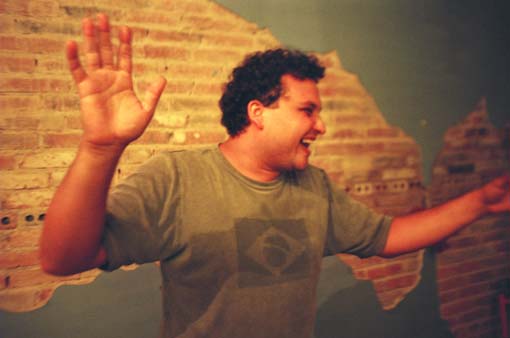
Arte – Solda / fotos – Chico Camargo


Photo by caro…
Some rights reserved
“Para nadie es un secreto que China es un país con “considerable” contaminación. Aún así, es también un país donde se recicla muuuuucho (yo no soy de términos estadisticos como podrán ver)…y todo ese reciclaje no lo hace la gente en sus casas, sino seí±ores como este, que van por la calle arrastrando una carreta, recogiendo botellas de plástico, cartones, bolsas y demás, que luego venden a las plantas de reciclaje. Para mi, este seí±or es un héroe.
_______________________
Itôs not a secret that China has got pollution problems. However, this is a country where a lot of recycling gets done. But unlike other countries, all that recycling is not done by the people at home, but by men like this one, that go around the cities, collecting plastic bottles, cardboard boxes, bags and anything the could sell to the Recycling Plants. In my opinion, this man is a hero“.
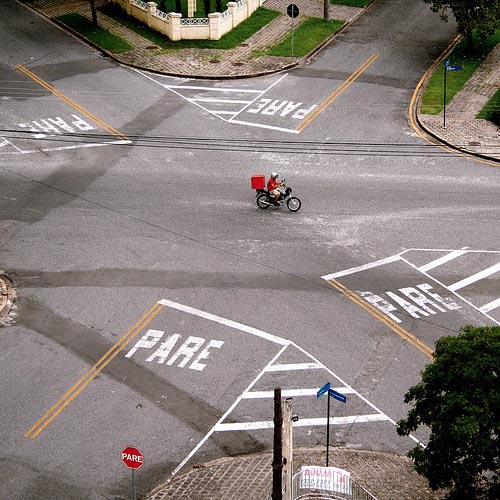
Uncertainty Principle
Photo: Mathieu Bertrand Struck

“The more precisely the position is determined, the less precisely the momentum is known in this instant, and vice versa“.
(Werner Heisenberg, Uncertainty Paper, 1927)
aaaaaaaaaaaaaaaaeoorkoerkoerkeorkeorkeorkerkeorkeorkeorkeorkeorkoa
fgaga
afafffffffffffffffffffffffffffffffffffffffffffffffsopfgopgfopkfkopfkopfsopkfkopgfkopf
opkfkfokpfgopfopgfopfkdopkopfopfgopksdfopkpok
dfspkgdtpogsdfpv,dfosv,sdfov,osdfv,so,os,fsdokgofdksdfopfkoooofok
gfkopdfokpsfkopgfkopdfkopdfklçsdfkfklçfdflçflf
kopgkldflfmopmkopgfmopgfmopgfmopgfmopmopgfmopgfgfgf,gf
kopsdfkopdfkopgflfmloçmlllgfkopfkfôpklgfkgfkpppplçgfmlçgfmlçgfkoegtoekr
gfopgfopppfkkkkkkkkkkffdgfogfpkokkgfpadfasdfkfkfkgfkf
gfkpffffkgfopadflkfalpgfkopfoopkkkasdasdgfgf

Ryan and Dave are the most unique identical twins you’ll ever meet. After tiring of piercing, tattoos, and implants about three years ago, they began exploring much heavier surgical modifications. Dave had spent two and a half years in pre-med at Queens University in Kingston, and using contacts made both there and online he and his twin brother have changed themselves in ways far beyond anything anyone else has ever attempted
.
Alocação dinâmica de memória
Esta página é um pequeno resumo sobre alocação dinâmica de memória, ou seja, alocação que ocorre durante a execução de um programa.
Malloc e free
A função malloc (abreviatura de memory allocation) da biblioteca padrão aloca um bloco de bytes consecutivos na memória do computador e devolve o endereço desse bloco. Eis um exemplo bobo que recebe um caracter e imprime o caracter seguinte da tabela ISO 8859-1:
char *ptr;
ptr = malloc (1);
scanf (“%c”, ptr);
printf (“%c\n”, *ptr + 1); /* não confunda com *(ptr+1) */
free (ptr);
Eis outro exemplo bobo, que calcula a soma de dois números:
int *ptr;
int x;
ptr = malloc (sizeof (int));
scanf (“%d %d”, ptr, &x);
*ptr = *ptr + x;
printf (“%d\n”, *ptr);
free (ptr);
A expressão sizeof (int) dá o número de bytes de um int. No meu computador, esse número é 4.
A função malloc devolve um ponteiro “genérico” ââ?¬â? ou seja, do tipo void * ââ?¬â? para um bloco de bytes consecutivos. No exemplo acima, esse ponteiro é automaticamente convertido em ponteiro-para-int uma vez que a variável ptr é do tipo int *.
A função free libera a porção de memória alocada por malloc. O comando free (ptr) avisa o sistema de que o bloco de bytes apontado por ptr está livre. A próxima chamada de malloc poderá tomar posse desses bytes.
As funções malloc e free estão na biblioteca stdlib. Portanto, diga
#include
no início de qualquer programa que use malloc e free.
A memória não é infinita
Se a memória do computador já estiver toda ocupada, malloc não consegue alocar mais espaço e devolve NULL. Convém verificar essa possibilidade antes de prosseguir:
ptr = malloc (sizeof (int));
if (ptr == NULL) {
printf (“Socorro! malloc devolveu NULL!\n”);
exit (EXIT_FAILURE);
}
A codificação freqüente e repetida desse teste é cansativa para o programador e desvia a atenção do leitor. Por isso, vamos usar a seguinte versão alternativa de malloc:
void *mallocX (unsigned int nbytes)
{
void *ptr;
ptr = malloc (nbytes);
if (ptr == NULL) {
printf (“Socorro! malloc devolveu NULL!\n”);
exit (EXIT_FAILURE);
}
return ptr;
}
A função mallocX não está em nenhuma biblioteca e é desconhecida fora dessas notas de aula. Ela é apenas uma abreviatura conveniente.
Exemplo
Eis como um vetor (= array) com n elementos inteiros pode ser alocado durante a execução de um programa (a propósito, veja observação sobre vetores e endereços em outra página):
int *v;
int n, i;
scanf (“%d”, &n);
v = mallocX (n * sizeof (int));
for (i = 0; i < n; i += 1)
scanf ("%d", &v[i]);
for (i = 0; i < n; i += 1)
printf ("%d ", v[i]);
free (v);
Do ponto de vista conceitual (mas apenas desse ponto de vista) o comando
v = mallocX (100 * sizeof (int));
tem o mesmo efeito que
int v[100];
A propósito, convém lembrar que o padrão ANSI não permite escrever "int v[n]", a menos que n seja uma constante, definida por um #define.


lembra do telejogo? poizé, já dá pra jogar telejogo com o cérebro.
vídeo por Andreas http://www.andreas.de/wordpress

Encontrei estes dias o sítio do Casper Electronics.
Muito foda o trampo desse cara. Ele desconstrói brinquedos e transforma em instrumentos musicais.
Dá uma olhada nos projetos… clica no menuzinho amarelo com o nome das gambiarras que embaixo da pagina tem um playerzinho em flash que toca o som dos instrumentos

Lógica booleana rox…

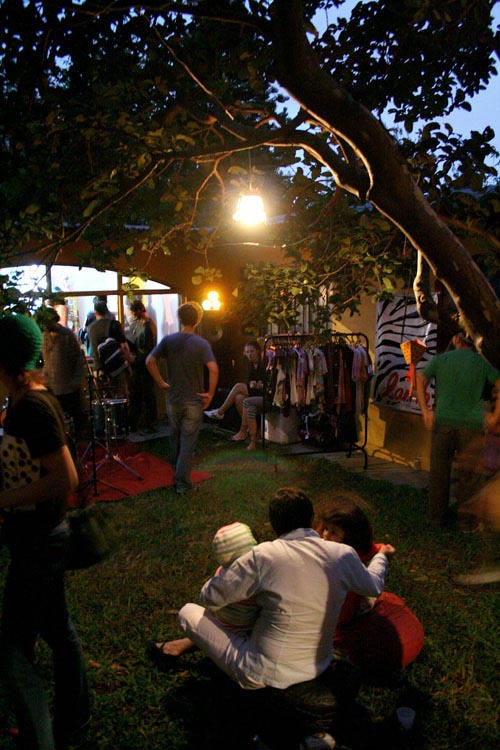
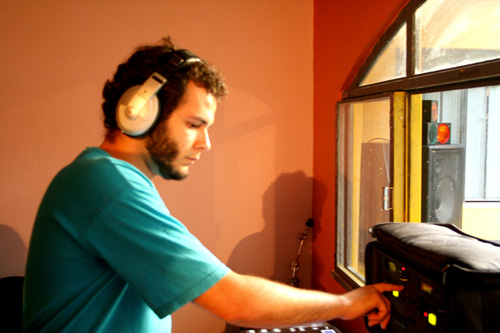
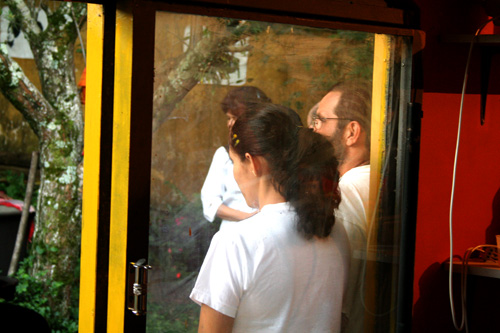
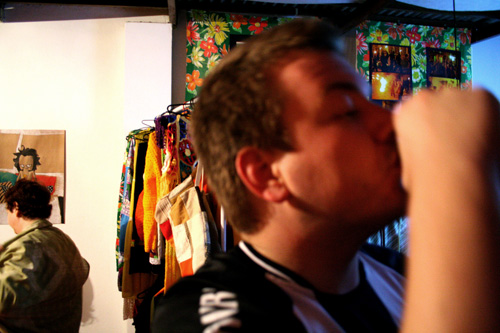
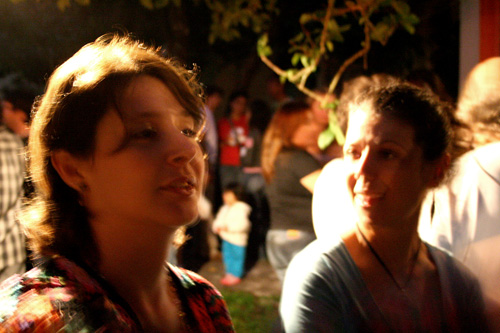
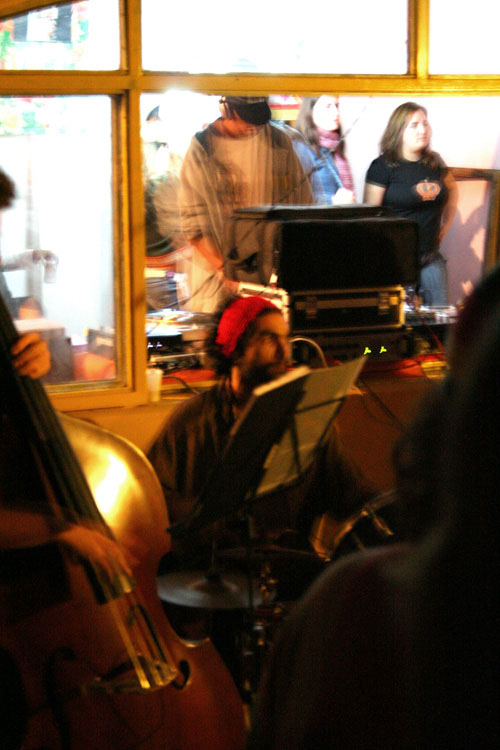
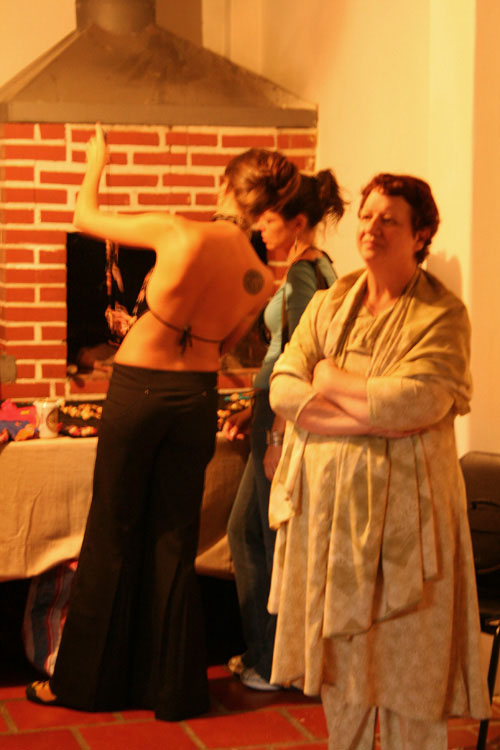
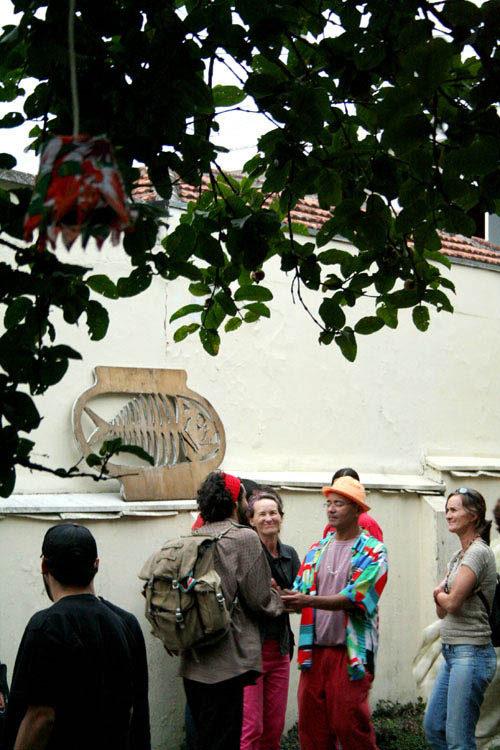
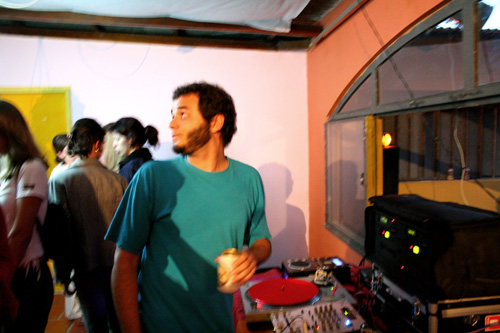
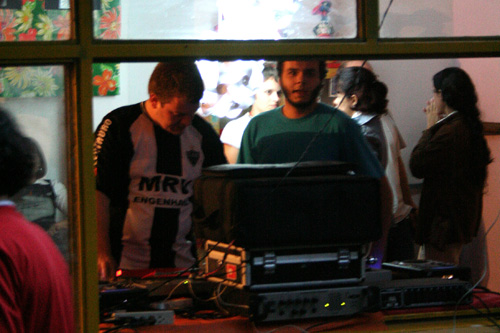
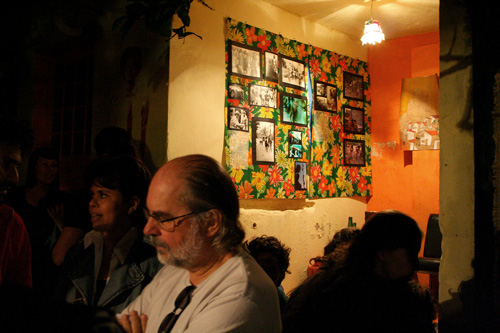
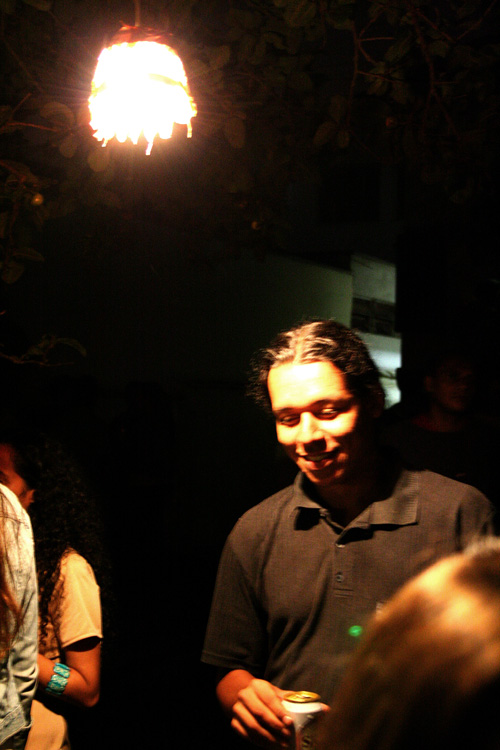
Aconteceu no domingo 12/03 no Quintal da Goiabeira (Rua Atílio Bório, 1832, Curitiba-PR) a última edição do projeto Somzala, projeto voltado para a difusão da cultura black em suas vertentes musicais e gráficas, coordenado pela publicitária e produtora Brenda Santos.
O evento contou com a discotecagem de: Jeff Bass [pré-lançamento do projeto Samba Semi-Novo], Os Irmãos Brothers [groove e funkera sem compromisso], Discotecário Bob [áfrica-brasil] e Lady Dapnhe [fusion e cosa nostra].
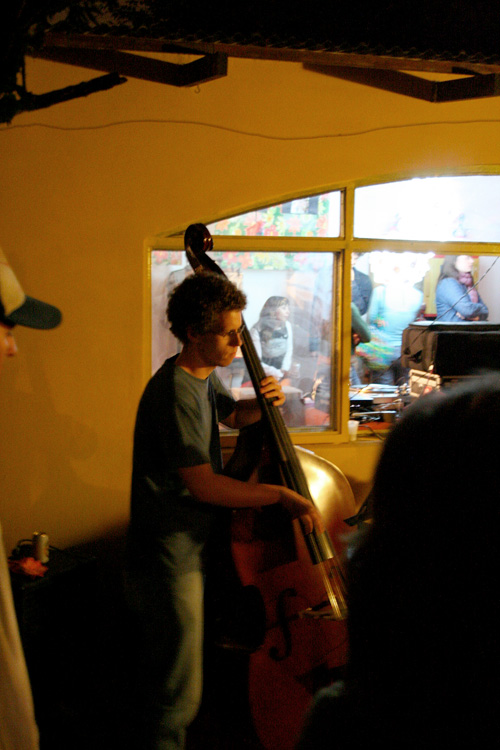
O ‘prato principal’ da noite foi o quarteto de virtuoses Bluishman (Marcelo Oliveira – clarinete e flauta transversal, Lílian Nakahodo – piano, João Marcelo Gomes – contrabaixo acústico e Denis Mariano – bateria e percussão), que prestou uma homenagem ao compositor Moacir Santos.
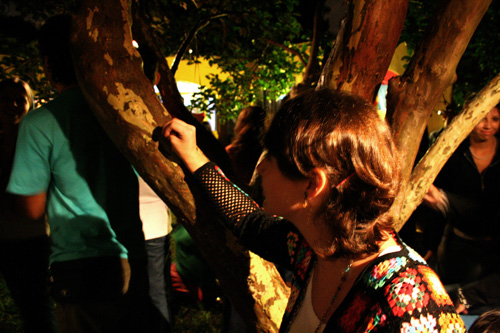
Esta edição do projeto contou também com micro- exposições de Jairo Rodrigues (ilustrações de ícones negros), Ges Braga (fotografia) e Celestino (stencils).

Maiores informações sobre o projeto ‘Somzala’ podem ser obtidas aqui ou pelo telefone (41) 9905.3836.
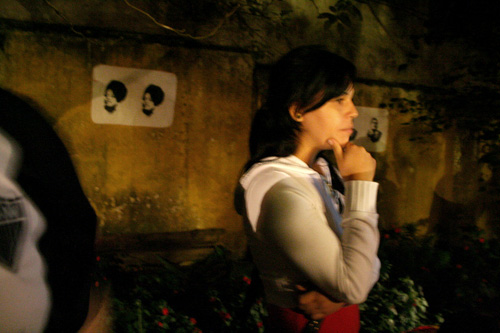
Brenda Santos, coordenadora do projeto.

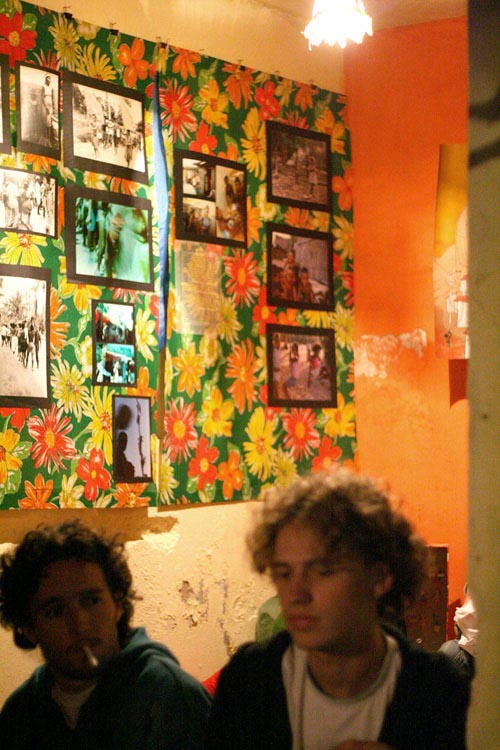



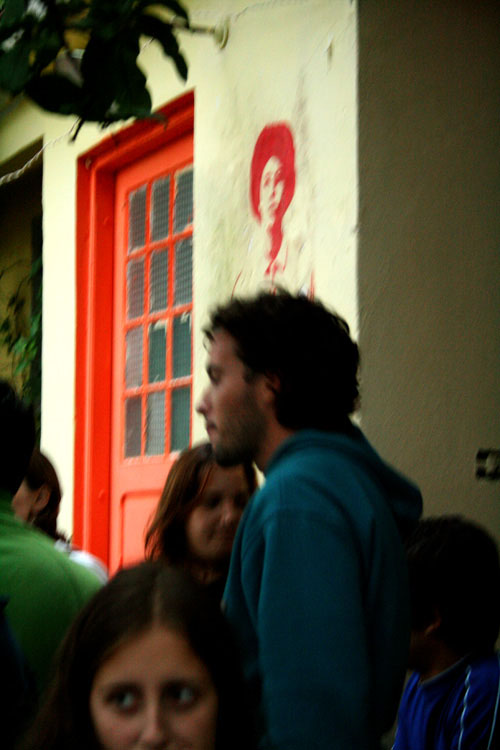
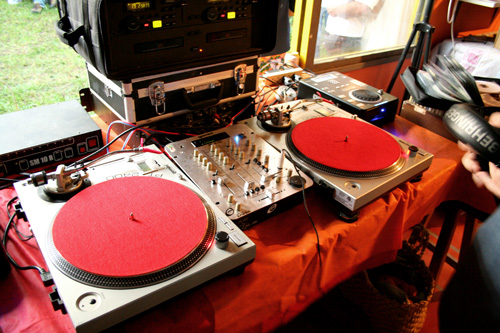
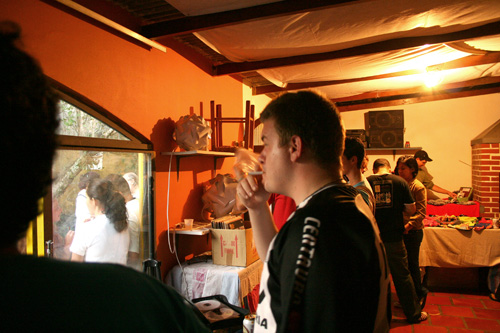
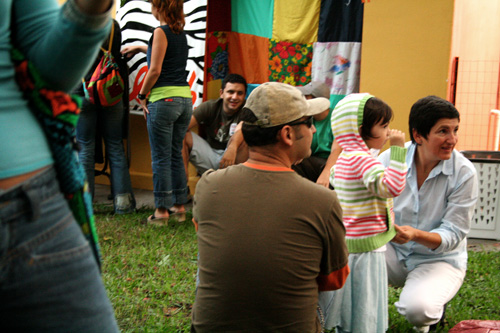


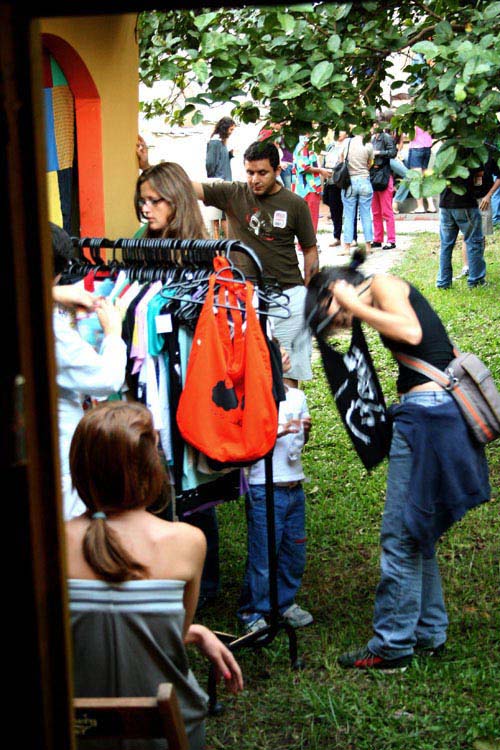
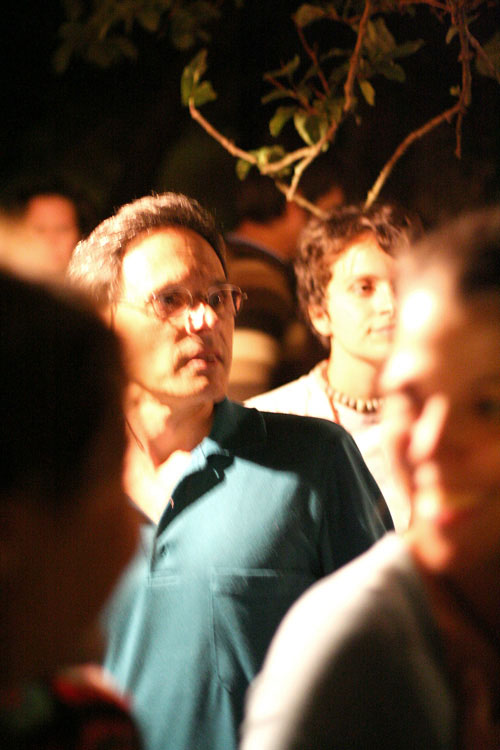
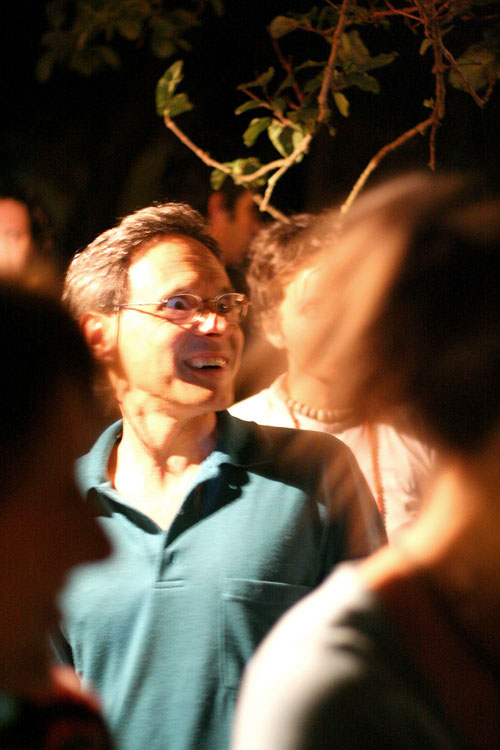
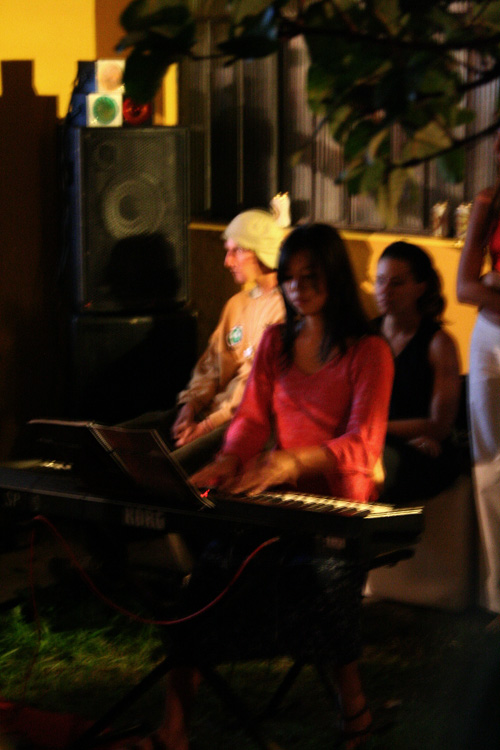
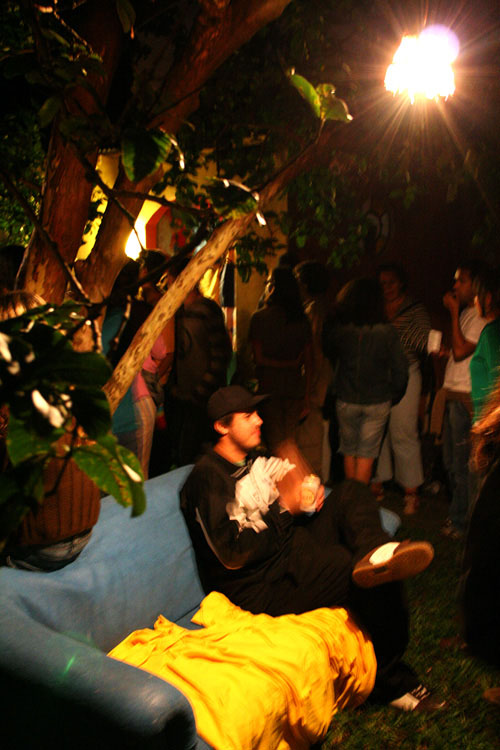
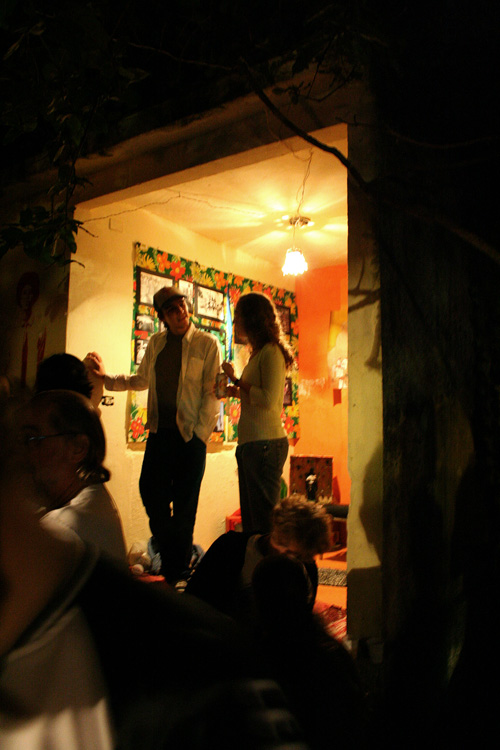
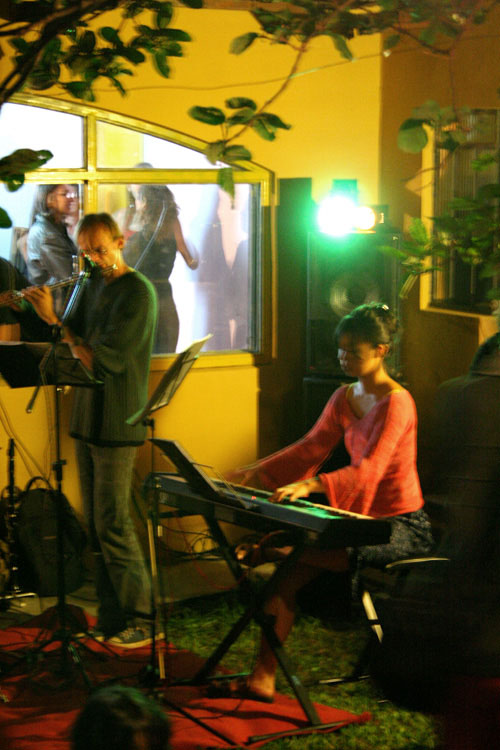
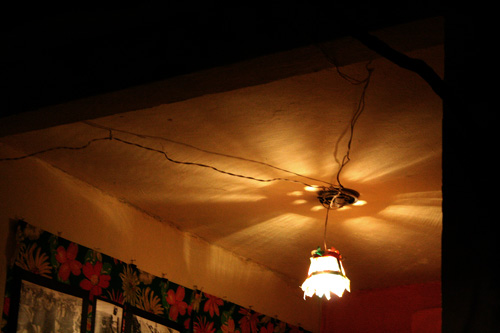
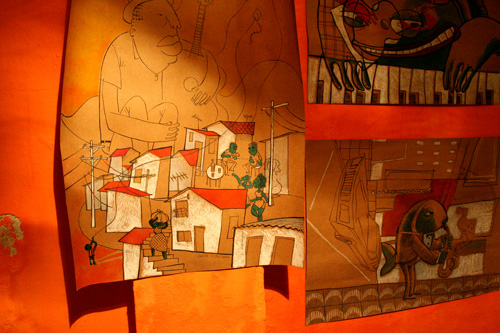
Desenhos de Jairo Rodrigues.
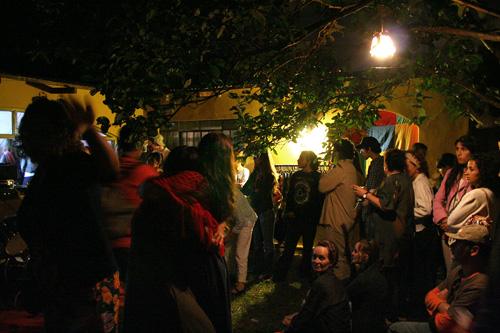
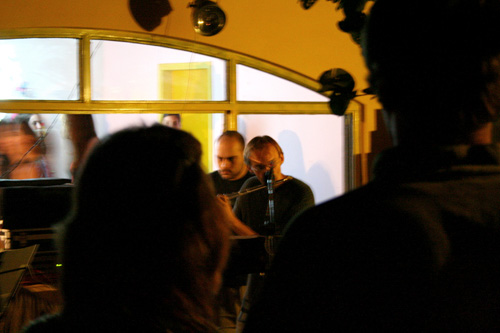
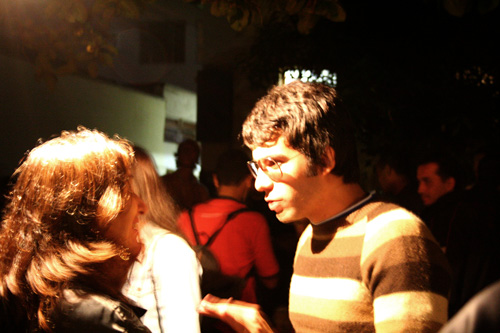
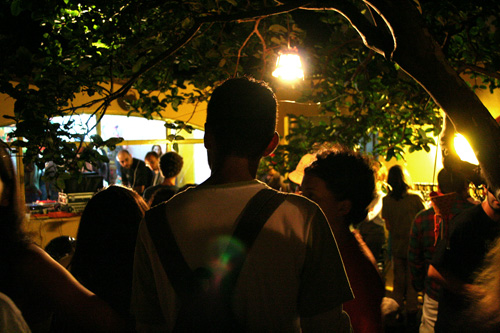
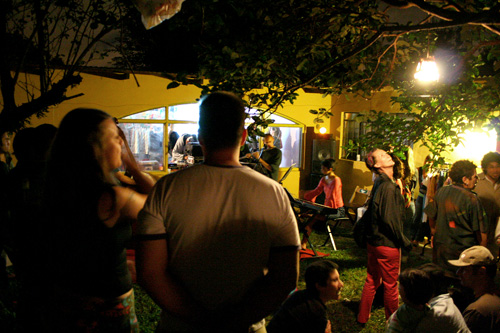
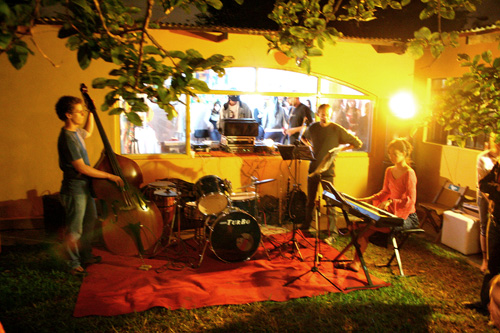
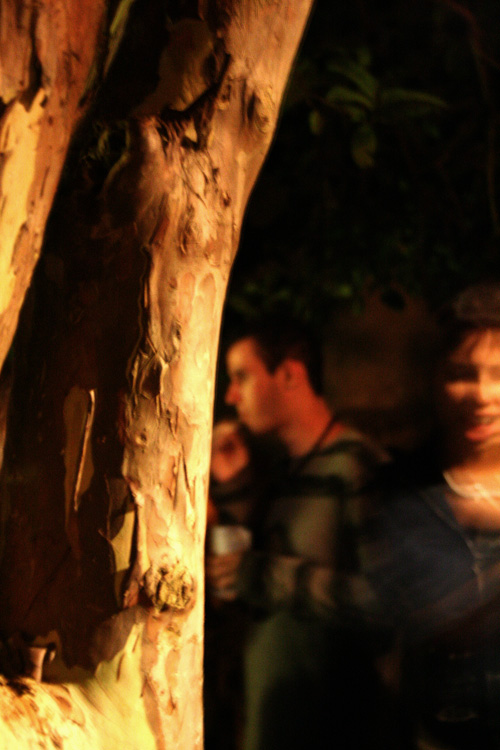
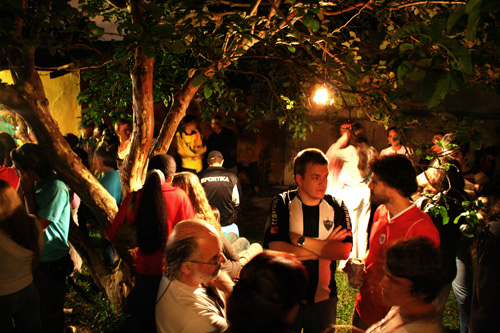
Quintal da Goiabeira, 12/03/06


Tava conversando com Octavio sobre alienação/erudição em referências culturais “urbanas-cosmopolitas-contemporâneas” na “MÚSICA”, e como elas não podem em alguns casos (quase na tentativa de uma genealogia de identidade) simplesmente serem classificadas como parte/resultado da indústria cultural, e é impossível dissociar a dimensão humana envolvida da iconografia espetacular em suas várias dimensões… eu pelo menos considero que meu folclore e noção de subjetividade estão inevitavelmente viciados nessas referências e que talvez assim eu posso tentar definir algum tipo de mapa onde transito…

por pura preguiça e por achar que vale mais a pena discutir isso num boteco, eu vou colar aqui algumas sinapses interessantes que aparecem surfando no allmusic.com e suas quase arbitrárias definições de “genêro musical”, só pra confundir quem duvida desta pluralidade ( não que eu ache que ta tudo perfeitamente definido ali , mas tem referências curiosas).

—–>
Sludgy, abrasive, and punishing, Noise is everything its name promises, expanding on the music’s capacity for sonic assault while almost entirely rejecting the role of melody and songcraft. From the ear-splitting, teeth-rattling attack of Japan’s Merzbow to the thick, grinding intensity of Amphetamine Reptile-label bands like Tar and Vertigo, it’s dark, brutal music that pushes rock to its furthest extremes. By the end of the ’90s, a resurgence in the use of sine waves — originally explored by musique concrí¨te artists in the ’50s — became increasingly frequent among noise artists such as Otomo Yoshihide.
;;;;

Avant-Garde is taken from the French for “vanguard,” which is the part of the armed forces that always stands at the front of the rest of the army. In the case of music, the avant-garde are those individuals who take music to the next step in development or at least take music on a divergent path. The term was first applied only after World War II. In popular idioms it is a term used to describe or refer to free jazz movements but the meaning remains the same: techniques of expression that are new, innovative and radically different from the tradition or the mainstream. Wagner and Debussy can easily be classified as avant-garde relevant to their time but the term did not enter familiar usage until the advent of Stockhausen.

;;;;;;;
Avant-Garde Jazz differs from free jazz in that it has more structure in the ensembles (more of a “game plan”) although the individual improvisations are generally just as free of conventional rules. Obviously there is a lot of overlap between free jazz and avant-garde jazz; most players in one idiom often play in the other “style” too. In the best avant-garde performances it is difficult to tell when compositions end and improvisations begin; the goal is to have the solos be an outgrowth of the arrangement. As with free jazz, the avant-garde came of age in the 1960s and has continued almost unnoticed as a menacing force in the jazz underground, scorned by the mainstream that it influences. Among its founders in the mid-to-late ’50s were pianist Cecil Taylor, altoist Ornette Coleman and keyboardist-bandleader Sun Ra. John Coltrane became the avant-garde’s most popular (and influential) figure, and from the mid-’60s on, the avant-garde innovators made a major impact on jazz, helping to push the music beyond bebop.
;;;;;;;;
Continuing the tradition of the ’50s to ’60s free-jazz mode, Modern Creative musicians may incorporate free playing into structured modes — or play just about anything. Major proponents of modern creative jazz include John Zorn, Henry Kaiser, Eugene Chadbourne, Tim Berne, Bill Frisell, Steve Lacy, Cecil Taylor, Ornette Coleman, and Ray Anderson.

;;;;;;;;
Atonal is music with no key-centeredness, dominant tone or diatonic scale associated with it, and is often considered disconcerting by those who are accustomed to “traditional” harmonies. Melodies, if they can be discerned at all, are generally self-contained and not related externally to any other piece of music, structurally or otherwise. This characteristic can also be ascribed to the harmonies involved in the atonal work. Key-signatures, an exterior structure, are present in tonal music but completely absent in atonal works. In twelve-tone scales for example, each note is given an inherent value equal to that of any other tone. Some twelve-tone composers have required that each note of a twelve-tone scale be used once and only once until all of the tones have been used, then the method continues but the phrase is not repeated. As composers, Berg and Schoenberg are often exemplified as atonal composers.
;;;;;;;;;
The modern eras of composition have been friendly to the composer who broke the rules instead of following them. Speaking in general terms, the music of the last hundred years has not been “generic” — that is, it tends not to fall into conventional genres. Composers have written pieces that are sui generis, or one of a kind. The forms, instruments, and ensembles used in music of the twentieth and twenty-first centuries have a dazzling range that in fact is one of avant-garde music’s chief attractions for those stimulated by the shock of the new. One notorious composition of the twentieth century, in fact, used no instrumental sound at all: John Cage’s 4′ 33″ simply instructs “any number of players” to sit for that length of time without playing their instruments; the “music” consists of the ambient noise on which the audience is thus induced to focus. While the manifestation is extreme, the spirit of Cage’s piece is one that animated many of his contemporaries as they explored the nature of musical sound and shape.
;;;;;;;;
Though it was the questioning spirit of the 1960s that gave full free rein to the avant-garde philosophical imagination, the roots of the movement extend back to the World War I era. The sonic experiments of the Italian futurists inspired a host of efforts to create new instruments and generally to bring new sounds to the musical arena. The 1920s all-percussion works of the Franco-American composer Edgard Varí¨se still sound well ahead of their time, and new 1920s instruments such as the theremin, the vocal-sounding contraption immortalized in the Beach Boys’ “Good Vibrations,” forecast an entire tradition of all-electronic compositions later in the century. The ultra-ambitious German composer Karlheinz Stockhausen was one of the earliest and most successful experimenters with electronic sound.

Though the term “avant garde” carries the implication that a work so described is “ahead of the pack,” the avant garde gave birth to a genuinely popular movement in the last third of the twentieth century. Minimalist music, which in its pure form featured the reiteration and gradual alteration of single musical ideas over long stretches of time, had its beginnings in the heady 1960s. One of the minimalist movement’s earliest figures also became perhaps its most popular: Steve Reich introduced the experimental technique of allowing tape loops to slip slightly out of phase with each other in such works as It’s Gonna Rain (1966), which featured a sermon by a San Francisco street preacher. As listeners from outside traditional classical circles began to tune into minimalism, Reich and other composers began to create larger works. Philip Glass’s stage trilogy of the late 1970s and 1980s, comprising Einstein on the Beach, Satyagraha, and Akhnaten, cemented his reputation as a composer with avant-garde beginnings and a wide popular reach.
;;;;;;;;
As computer-aided composition slowly eclipsed the traditional analog approach to crafting electronica, the palette of possible sounds soon widened immensely, resulting in the advent of the glitch style in the late ’90s. No longer was the artist confined to sequenced percussion, synth, and samples, but rather any imaginable sound, including the uncanny realm of digital glitches — a possibility that was quickly exploited by a generation of youths with the means to create entire albums in their bedroom with only a computer and some software. Where early-’90s analog-toting pioneers such as Aphex Twin and Autechre had envisioned the quickly diminishing areas of electronica that had not yet been explored, and simultaneously, another insular group of pioneers led by Robert Hood and Basic Channel stripped away the elements of electronica that had ultimately become little more than ineffective cliché, a second wave of computer-armed protégés studied these aesthetics and used software to create microscopically intricate compositions harking back to these pioneers. First championed by the ideological German techno figure Achim Szepanski and his stable of record labels — Force Inc, Mille Plateaux, Force Tracks, Ritornell — this tight-knit scene of experimental artists creating cerebral hybrids of experimental techno, minimalism, digital collage, and noise glitches soon found themselves being assembled into a community. Though artists such as Oval, Pole, and Vladislav Delay, among others, had initially been singled out by critics beforehand, Mille Plateaux’s epic Clicks_+_Cuts compilation first defined the underground movement, exploring not only a broad roster of artists but also a wide scope of approaches. The artists on the compilation, along with a small community of visionary artists in the software-savvy San Francisco/Silicon Valley area of California led by the Cytrax label, soon found themselves as the critically hailed leaders of yet another electronica movement. It wasn’t long before the glitch aesthetic began being crossbred with existing genres, resulting in endless variations on the aesthetic, such as MRI’s click-driven house and Kid 606’s noise remix of N.W.A’s “Straight Outta Compton.”

;;;;;;;;;;
Largely defined by its own name, the term microsound largely stems from compositions built on sounds lasting no longer than a thousandth of a second, but generally can last up to a tenth of a second. A cousin to the glitch genre, microsound explores the lower and higher frequencies of the sound spectrum through digital and analog signal processing, granular synthesis, and micromontage. It focuses largely on the arrangement of sound particles within a composition.
;;;;;;;;;;;

The father of Musique Concrí¨te, French composer Pierre Schaeffer, was among the most visionary artists of the postwar era. Through the creation of abstract sound mosaics divorced from conventional musical theory, he pioneered a sonic revolution which continues to resonate across the contemporary cultural landscape, most deeply in the grooves of hip-hop and electronica. Born in 1910, Schaeffer was not a trained musician or composer, but was instead working as a radio engineer when he founded the RTF electronic studio in 1944 to begin his first experiments in what would ultimately be dubbed musique concrí¨te. Working with found fragments of sound — both musical and environmental in origin — he assembled his first tape-machine pieces, collages of noise manipulated through changes in pitch, duration, and amplitude; the end result heralded a radical new interpretation of musical form and perception.

In October 1948, Schaeffer broadcast his first public piece, “Etude aux Chemins de Fer,” over French radio airwaves; although the public reaction ranged from comic disbelief to genuine outrage, many composers and performers were intrigued, among them Pierre Henry, who in 1949 joined the RTF staff, as well as future collaborators Luc Ferrari and Iannis Xenakis. (Olivier Messiaen was also a guest, bringing with him students Karlheinz Stockhausen and Pierre Boulez.) Schaeffer forged on, in 1948 completing “Etude Pathetique,” which in its frenetic mix of sampled voices anticipated the emergence of hip-hop scratching techniques by over a generation; by 1949’s “Suite pour 14 Instruments,” he had turned to neo-classical textures, distorted virtually beyond recognition. In 1950, Schaeffer and Henry collaborated on “Symphonie pour un homme seul,” a 12-movement work employing the sounds of the human body.
Working with the classically trained Henry on subsequent pieces, including “Variations Sur une Flute Mexicaine” and “Orphee 51,” clearly informed Schaeffer’s later projects, as he soon adopted a more accessible musical approach. Together, the two men also co-founded the Groupe de Musique Concrí¨te in 1951; later rechristened the Groupe de Recherches Musicales, or GRM, their studio became the launching pad behind some of the most crucial electronic music compositions of the era, among them Edgard Varí¨se’s “Deserts.” However, by the end of the decade most of the GRM’s members grew increasingly disenchanted with the painstaking efforts required to construct pieces from vinyl records and magnetic tape; after later, tightly constructed works like 1958’s “Etude aux Sons Animes” and the next year’s “Etudes aux Objets,” even Schaeffer himself announced his retirement from music in 1960.
Leaving the GRM in the hands of Francois Bayle, some months later Schaeffer founded the research center of the Office of French Television Broadcasting, serving as its director from 1960 to 1975; in 1967, he also published an essay titled “Musique Concrí¨te: What Do I Know?” which largely dismissed the principles behind his groundbreaking work, concluding that what music now needed was “searchers,” not “auteurs.” In later years, Schaeffer did explore areas of psycho-acoustic research which he dubbed Traite de Objets Musicaux (TOM); these experiments yielded one final piece, the 11-minute “Le Triedre Fertile.” He also hit the lecture circuit and agreed to produce radio presentations. Pierre Schaeffer died in Aix-en-Provence on August 19, 1995
;;;;;;;
;;;;;;;;;
–>
Algumas categorizações do rock – esse veneno da máquina do entretenimento pós-industrial ( que provam que ou os “eruditos-urbanos” deliram ou realmente existem espectros de “profundidade” na música “popular” – destaquei alguns subgenêros que me identifico – ) -> obviamente são definições anglocêntricas… mas como falei… to com preguiça de relativizar… uma excelente referencia de história do rock brasileiro ( e algum panorama do cenário atual) pode ser encontrada em http://www.senhorf.com.br/

Rock Styles
Alternative/Indie-Rock
* Industrial
* Alternative Pop/Rock
* Goth Rock
* Lo-Fi
* Grunge
* Shoegaze
* Britpop
* Post-Rock/Experimental
* Funk Metal
* Indie Rock
* Paisley Underground
* Jangle Pop
* Alternative Country-Rock
* Punk Revival
* Post-Grunge
* Third Wave Ska Revival
* Neo-Psychedelia
* Riot Grrrl
* Space Rock
* Adult Alternative Pop/Rock
* Alternative Dance
* Cocktail
* Dream Pop
* Punk-Pop
* British Trad Rock
* Industrial Dance
* Madchester
* Psychobilly
* Ska-Punk
* Cowpunk
* New Zealand Rock
* Chamber Pop
* Twee Pop
* Emo
* Slowcore
* Electro-Industrial
* Ambient Pop
* C-86
* Indie Pop
* Noise Pop
* Math Rock
Math Rock is a relation to post-rock, a better known indie-rock style that shares similar aesthetics. Where post-rock has distinct jazz influences, math rock is the opposite side of the same coin — it’s dense and complex, filled with difficult time signatures and intertwining phrases. Also, the style is a little more rockist than post-rock, since it’s usually played by small, guitar-led bands. Math rock peaked in the mid-’90s, when groups like Polvo and Chavez had small, dedicated followings among indie rockers on collegiate campuses.
* Queercore
* Sadcore
* Shibuya-Kei
* Skatepunk
* Garage Punk
* Alternative Folk
* Neo-Glam
* College Rock
* Pop Underground
* American Underground
* Indie Electronic
Art-Rock/Experimental

* Prog-Rock/Art Rock
* Kraut Rock
* Noise-Rock
Noise-Rock is an outgrowth of punk rock, specifically the sort of punk that expressed youthful angst and exuberance through the glorious racket of amateurishly played electric guitars. Noise-rock, like its forerunner no wave, aims to be more abrasive, sometimes for comic effect and sometimes to make a statement, but always concentrating on the sheer power of the sound. While most noise-rock bands concentrate on the ear-shattering sounds that can be produced by distorted electric guitars, some also use electronic instrumentation, whether as percussion or to add to the overall cacophony. Some groups are more concerned than others about integrating their sonic explorations into song structures; pioneers Sonic Youth helped bring noise-rock to a wider alternative-rock audience when they began to incorporate melody into their droning sheets of sound. Sonic Youth produced a bevy of imitators, but not all noise-rock resembles their music — ’80s bands like the Swans and Big Black took a much darker, more threatening approach, and the Touch & Go label became a center for crazed, shock-oriented takes on the style in the late ’80s and ’90s. A certain theatrical sub-style of noise-rock, often described as “scuzz-rock” or with similar terms, uses the guitar noise to help create a dirty, decadent, repulsive atmosphere (bands like this include Royal Trux, Pussy Galore, the Dwarves, and the Butthole Surfers).
Post-rock was the dominant form of experimental rock during the ’90s, a loose movement that drew from greatly varied influences and nearly always combined standard rock instrumentation with electronics. Post-rock brought together a host of mostly experimental genres — Kraut-rock, ambient, prog-rock, space rock, math rock, tape music, minimalist classical, British IDM, jazz (both avant-garde and cool), and dub reggae, to name the most prevalent — with results that were largely based in rock, but didn’t rock per se. Post-rock was hypnotic and often droning (especially the guitar-oriented bands), and the brighter-sounding groups were still cool and cerebral — overall, the antithesis of rock’s visceral power. In fact, post-rock was something of a reaction against rock, particularly the mainstream’s co-opting of alternative rock; much post-rock was united by a sense that rock & roll had lost its capacity for real rebellion, that it would never break away from tired formulas or empty, macho posturing. Thus, post-rock rejected (or subverted) any elements it associated with rock tradition. It was far more concerned with pure sound and texture than melodic hooks or song structure; it was also usually instrumental, and if it did employ vocals, they were often incidental to the overall effect. The musical foundation for post-rock crystallized in 1991, with the release of two very different landmarks: Talk Talk’s Laughing Stock and Slint’s Spiderland. Laughing Stock was the culmination of Talk Talk’s move away from synth-pop toward a moody, delicate fusion of ambient, jazz, and minimalist chamber music; Spiderland, meanwhile, was full of deliberate, bass-driven grooves, mumbled poetry, oblique structures, and extreme volume shifts. While those two albums would influence many future post-rock bands, the term itself didn’t appear until critic Simon Reynolds coined it as a way to describe the Talk Talk-inspired ambient experiments of Bark Psychosis. The term was later applied to everything from unclassifiable iconoclasts (Gastr del Sol, Cul de Sac, Main) to more tuneful indie-rock experimenters like Stereolab, Laika, and the Sea and Cake (not to mention a raft of Slint imitators). Post-rock came into its own as a recognizable trend with the Chicago band Tortoise’s second album, 1996’s Millions Now Living Will Never Die, perhaps the farthest-reaching fusion of post-rock’s myriad touchstones. Suddenly there was a way for critics to classify artists as diverse as Labradford, Trans Am, Ui, Flying Saucer Attack, Mogwai, Jim O’Rourke, and their predecessors (though most hated the label). Post-rock quickly became an accepted, challenging cousin of indie rock, centered around the Thrill Jockey, Kranky, Drag City, and Too Pure labels. Ironically, by the end of the decade, post-rock had itself acquired a reputation for sameness; some found the style’s dispassionate intellectuality boring, while others felt that its formerly radical fusions had become predictable, partly because many artists were offering only slight variations on their original ideas. However, even as the backlash set in, a newer wave of bands (the Dirty Three, Rachel’s, Godspeed You Black Emperor!, Sigur Rós) gained wider recognition for their distinctive sounds, suggesting that the style wasn’t exhausted after all.
No Wave was a short-lived, avant-garde offshoot of ’70s punk, based almost entirely in New York City’s Lower East Side from about 1978-1982. Like the post-punk movement that was primarily centered in Britain, no wave drew from the artier side of punk — but where British post-punk was mostly cold and despairing, no wave was harsh, abrasive, and aggressively confrontational. Most no wave bands were fascinated by the pure noise that could be produced by an electric guitar, making it an important component of their music (and oftentimes the central focus). Unlike punk, melody was as unimportant as instrumental technique, as most no wavers concentrated on producing an atonal, dissonant (yet often rhythmic) racket. With its assaultive artiness and theatrical angst, no wave was as much performance art as it was music. Two of no wave’s central figures were vocalist/guitarist Lydia Lunch and saxophonist James Chance, who performed together in Teenage Jesus and the Jerks; Lunch went on to a long solo career, and Chance formed an innovative no wave/funk outfit called the Contortions. The defining no wave recording is the 1978 Brian Eno-produced compilation No New York, which features material from Chance and the Contortions, Teenage Jesus, DNA (featuring avant-garde guitarist Arto Lindsay), and Mars. Although none of the no wave performers ever really broke out to wider audiences (Lunch’s prolific, collaboration-heavy solo output brought her the closest), Sonic Youth fused no wave’s distorted cacophony with the more meditative noise explorations of guitarist/avant-garde composer Glenn Branca, and became underground legends after adding more melodic structure to the sound.
* Neo-Prog
* Experimental Rock
* Canterbury Scene
* Avant-Prog
Folk/Country Rock
* Country-Rock
* Folk-Pop
* Singer/Songwriter
* Folk-Rock
* British Folk-Rock
Hard Rock
* Blues-Rock
* Christian Metal
* Hard Rock
* Southern Rock
* Thrash
* Death Metal/Black Metal
* Glam Rock
* Grindcore

While the term Grindcore has often been used somewhat interchangeably with death metal, the two started out as very different, albeit similarly extreme, forms of music, despite becoming more alike over the years. When it first appeared in the mid-’80s, grindcore in its purest form consisted of short, apocalyptic blasts of noise played on standard heavy metal instrumentation (distorted guitar, bass, drums). Although grindcore wasn’t just randomly improvised, it certainly didn’t follow conventional structure, either; while riffs could sometimes be picked out, pure grindcore never featured verses, choruses, or even melodies. Grindcore vocals sounded torturous, ranging from high-pitched shrieks to low, throat-shredding growls and barks; although the lyrics were usually quite verbose, they were very rarely intelligible. Grindcore’s jaw-dropping aggression was so over the top that pointing to its roots in thrash metal and hardcore punk hardly gives an idea of what it actually sounds like. Indisputably, the band that invented grindcore was Napalm Death, whose 1987 debut album Scum is also perhaps the most representative example of the style. In Napalm Death’s hands, grindcore was actually rather arty, a sonic metaphor for the bleakness, violence, and decay of modern society; the group’s lyrics were additionally packed with angry social commentary. More extreme in the lyrical department was Carcass, the only other band to really epitomize the original grindcore sound; their gruesome, gory rants were literally taken from anatomical textbooks for maximum shock (and gonzo comedy) factor. However, grindcore’s original form was inherently limiting, and its intensity could easily turn into self-parody; on Napalm Death’s second album, they had already begun to experiment with industrial textures, a fusion that would prove popular not only with bands who loved the jackhammer rhythms a drum machine could provide, but also with slower, moodier bands like Godflesh (itself a Napalm Death offshoot). Grindcore’s blistering intensity was assimilated not only into underground heavy metal, but also into avant-garde and experimental music circles; Japanese noise bands like the Boredoms and Merzbow found it inspiring, and jazz musician John Zorn formed the grindcore-inspired group Painkiller (which featured former Napalm Death drummer Mick Harris). Although pure grindcore was a distinctly British phenomenon, the early albums by the Florida band Death — which ratcheted up the aggression and morbidity of prime Slayer — had a raw, crude, assaultive quality that made them extremely similar. Apart from adopting the low, demonic growl of the grindcore vocal style almost wholesale, American death metal bands with relatively limited technical ability who played at fast tempos often resembled grindcore outfits with song structures. In fact, by the ’90s, Napalm Death’s sound was virtually impossible to separate from either death metal or grindcore, and Carcass had become a full-fledged, even melodic, death metal band. One of the very few bands to stick with grindcore’s original form was A.C. (aka Anal Cunt), which primarily employed it to a snottily humorous effect.

* Heavy Metal
* Speed Metal
* Hair Metal
* Arena Rock
* Alternative Metal
* British Metal
* Boogie Rock
* Industrial Metal
* Rap-Metal
* Guitar Virtuoso
* Progressive Metal
* Neo-Classical Metal
* Album Rock
* Aussie Rock
* Pop-Metal
* Rap-Rock
* New Wave of British Heavy Metal
* Detroit Rock
* Glitter
* Punk Metal
* Stoner Metal
* Scandinavian Metal
* Goth Metal
* Doom Metal
* Symphonic Black Metal
* Sludge Metal
* Power Metal
Pop/Rock
* Christian Rock
* Pop
* Pop/Rock
* Girl Group
* Bubblegum
* Teen Idol
* Brill Building Pop
* Comedy Rock
* Baroque Pop
* Sunshine Pop
* AM Pop
* Celebrity
Punk/New Wave
* Synth Pop
* Punk
* Alternative Pop/Rock
* Hardcore Punk
* New Wave
* Power Pop
* Ska Revival
* Mod Revival
* Post-Punk
* New Romantic
* No Wave
* Proto-Punk
* Oi!
* Garage Rock Revival
* British Punk
* Christian Punk
* New York Punk
* L.A. Punk
* American Punk
* Straight-Edge
* Anarchist Punk
* Sophisti-Pop
* College Rock
* Post-Hardcore
Rock & Roll/Roots
* Rock & Roll
* Blues-Rock
* Tex-Mex
* Instrumental Rock
* Rockabilly
* Roots Rock
* Surf
* Pub Rock
* Hot Rod
* Rockabilly Revival
* Surf Revival
* Swamp Pop
* American Trad Rock
* Jam Bands
* Heartland Rock
* Frat Rock
* Hot Rod Revival
* Retro-Rock
* Latin Rock
* Bar Band
Soft Rock
* Singer/Songwriter
* Adult Contemporary
* Soft Rock
* Pop/Rock
Psychedelic/Garage
* Psychedelic
* Garage Rock
* Acid Rock
* Psychedelic Pop
* British Psychedelia
* Obscuro
* Acid Folk
Europop
* Euro-Pop
* Euro-Rock
* Swedish Pop/Rock
Foreign Language Rock
* Rock en Espaí±ol
* French Pop
* Foreign Language Rock
* Italian Pop
* Asian Pop
* Japanese Pop
* Japanese Rock
* Hong Kong Pop
* French Rock
* Aboriginal Rock
British Invasion
* British Invasion
* Psychedelic
* Merseybeat
* British Blues
* Mod
* British Psychedelia
* Freakbeat
* Early British Pop/Rock

Rock & Roll is often used as a generic term, but its sound is rarely predictable. From the outset, when the early rockers merged country and blues, rock has been defined by its energy, rebellion and catchy hooks, but as the genre aged, it began to shed those very characteristics, placing equal emphasis on craftmanship and pushing the boundaries of the music. As a result, everything from Chuck Berry’s pounding, three-chord rockers and the sweet harmonies of the Beatles to the soulful pleas of Otis Redding and the jarring, atonal white noise of Sonic Youth has been categorized as “rock.” That’s accurate — rock & roll had a specific sound and image for only a handful of years. For most of its life, rock has been fragmented, spinning off new styles and variations every few years, from Brill Building Pop and heavy metal to dance-pop and grunge. And that’s only natural for a genre that began its life as a fusion of styles.
;
;
;
Process-Generated music refers to music that is a direct result of any process not traditionally used in music composition. The chosen notes do not result from a thought-of melody, or even a systematic deviation off an existing melody, but instead are the result of value-assigning in programs or simulations, or are composed according to structures other than musical forms. For example, process-generated can refer to computer-generated sound patterns, whether the computer is programmed to generate tones randomly, or to structure sound according to biological processes, scientific principles, and so on.

——-
When you feel it’s not really music anymore, it’s probably sound art. The expression refers to an esthetic approach in which the artist considers sound — noise or “sound events,” as opposed to notes — as a prime material to create a work of art. Sound art can be the wailing of a tub with strings (Stephen Froyleks), the recordings of the variations in the bioelectrical fields of plants (Michael Prime), the sound of a microphone “writing” on a metal book (Pierre-André Arcand), or abstract sound paintings. It can be of acoustical or electronic nature, but in general the source sounds have been treated through studio manipulation (without resorting to musique concrí¨te techniques) or emanate from one-of-a-kind instruments. The accessibility of electronic instruments and computers in the 1980s and 1990s stemmed more and more cross-pollination between electronica and musique concrí¨te, the resulting music often falling in the “sound art” category in lack of a better term.
O neto de King Kong
Dante Mendonça [08/03/2006]
do Paraná-Online (para usuários cadastrados)
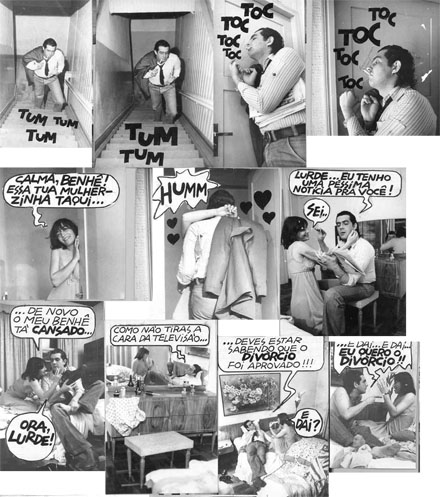
Com King Kong não há quem possa, pelo menos em termos de Oscar de efeitos especiais. No filme original de 1933, King Kong sobe no Empire State Building. Na versão de 1976, o gorila foge com sua amada e vai se refugiar naquele que foi o World Trade Center. Quando esta refilmagem estreou no Brasil, em 1977, foi lançado em Curitiba “O neto de King Kong”, quando o macaco trepou na torre da Telepar.
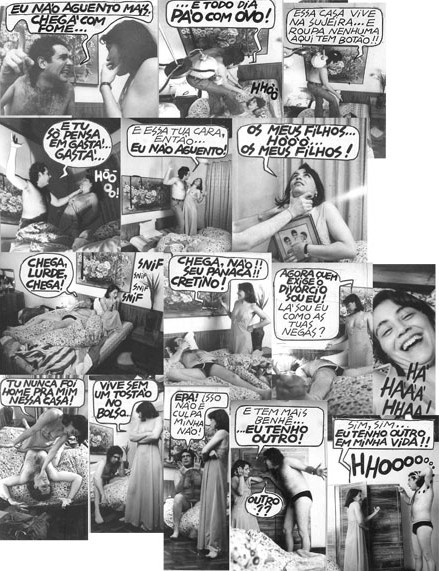
Foi um espanto. Naquele ano de 1977, eu merecia o Oscar de “defeitos especiais”. No meu roteiro e direção, King Kong tem uma amante no Alto da Rua XV. Quando o marido chega em casa, a mulher revela que está apaixonada por outro, abre o armário, e eis a assustadora paixão: o neto do King Kong. A fera toma a bela nos braços e primeiro sobe na Caixa dââ?¬â?¢ígua do Alto da XV. King Kong foge do cerco da polícia e do marido, toma o ônibus Rua XV – Vicente Machado, desce na Praça Osório e, sempre com a morena nos ombros, escala a torre da Telepar, onde foram felizes para sempre.
Enquanto o King Kong de Jessica Lang formava filas no Cine Vitória,
“O neto de King Kong” teve estréia exclusiva para os leitores deste O Estado do Paraná numa fotonovela de página inteira. Interpretando a fera, Moisés (Mussão) Assis; no papel de Jessica Lang, uma bela morena que na época namorava um conhecido jornalista; quem fazia o marido traído era o ex-ator e jornalista Fernando Alexandre, hoje escritor e editor em Florianópolis; as fotografias eram do repórter fotográfico Irmo Celso.
A máscara do neto do King Kong foi emprestada pelos divulgadores do filme e, depois de uma noite de “filmagens” na minha própria casa, o cuecão branco do neto de King Kong foi editado e montado numa página inteira, em preto e branco, com ajuda de tesoura, cola, guache e tinta nanquim.
Tempos divertidos aqueles, quando a computação gráfica não existia nem na imaginação do Flash Gordon.


Desvendando a estratégia da Microsoft
Paraná-Online (para usuários cadastrados)
Diogo Dreyer [08/03/2006]
2006 promete ser um ano e tanto para a gigante Microsoft. Além do aguardado Windows Vista – o sucessor do XP, que deve ser lançado até o fim do ano – a empresa inaugura também seu setor de “Web 2.0″, o Office Live. O jargão, criado para designar os serviços onde o usuário utiliza programas via internet, na prática significa que as empresas de software irão gradativamente deixar de vender seus produtos em caixas e nas lojas para disponibilizá-los na internet, onde o usuário irá pagar pelo serviço toda a vez que precisar utilizar.
“A vantagem do Office Live é que a pessoa não precisará mais pagar quantias elevadas pelos softwares e irá utilizar sempre a versão mais atualizada”, explica Roberto Prado, gerente de estratégias de mercado da Microsoft Brasil. O executivo deu uma entrevista exclusiva a O Estado para contar um pouco da estratégia da empresa para esses aguardados lançamentos, sobre a profissionalização dos setores de TI no meio empresarial e sobre software livre.
Sobre o Vista, Prado afirma que o novo sistema operacional terá foco na facilidade e segurança. “O usuário vai deixar de ser o administrador de sua máquina, para evitar que as pessoas executem programas maliciosos. Evidentemente, será possível tomar as rédeas do sistema, mas estamos preparando algo menos traumático, que não exija muito conhecimento técnico para ser usado com segurança”. Além disso, explica o executivo, o tempo de inicialização será dramaticamente reduzido e a maneira que o usuário lidará com a interface será muito mais intuitiva.
Ficando para trás
Prado admitiu que grande fatia do mercado, principalmente corporativo, ainda não acompanha essas inovações. É o panorama diário de diversas empresas no País que ainda utilizam computadores rodando Windows 98. “É claro que a Microsoft espera que os programas obsoletos sejam atualizados, mas nem por isso deixamos de lado esses clientes”, afirma. Tanto é assim que a empresa está realizando um roadshow pelas principais cidades do Brasil apenas para mostrar para seus grandes clientes maneiras de utilizar melhor as ferramentas de programas como o Word ou o Excel.
“Mesmo falando nos últimos lançamentos, como o Vista e o Live, ainda tem muita gente que não conhece funcionalidades que podem ajudar muito a melhorar o rendimento nas empresas em programas mais antigos que ainda são muito utilizados”, explica.
Prado também é um entusiasta da tecnologia no meio corporativo. “No ano passado, a Harvard Business Review publicou um dos textos mais provocadores já escritos sobre tecnologia da informação, intitulado “TI não importa mais”. Ali afirmavam a TI se tornou uma commodity como eletricidade. Como seu uso se generalizou, deixou de ter importância estratégica”, diz Prado. “Mas discordo totalmente disso. Um outro estudo do MIT provou que as empresas que utilizam de forma adequada a tecnologia em seus processos têm lucratividade 17% maior que as concorrentes que não utilizam a tecnologia.” O raciocínio é que mesmo que sua empresa tenha softwares ultrapassados, caso bem utilizados, eles representam maior lucratividade.
Software livre
Um dos maiores questionamentos dos usuários é que, se existem programas e plataformas gratuitas, por que usar os produtos Microsoft? “Estudos mostram que, no final, a estrutura Linux (mais conhecido sistema operacional livre) é mais onerosa para o usuário”, contrapõe o executivo. “Nosso cliente paga a licença de utilização, mas tem acesso a uma rede de suporte e a uma família de programas e ferramentas que não vai encontrar se utilizar somente software livre”, diz.
Prado também afirma que a Microsoft oferece uma série de programas para download gratuito, além de ferramentas para o desenvolvimento de novas aplicações, que podem ser distribuídas para outros usuários. “Além disso, é um erro pensar que software livre é gratuito. Poucas versões são livres de licença. A maioria é melhorada por alguma empresa que passa a cobrar por isso.”
========================================================================
O Sonho do Rei
Há mais de dois mil anos que aconteceu esta história ou outra parecida com a que eu vou contar. Mais de dois mil de anos depois, vai-se lá saber.
O rei Nabucodonosor, imperador dos caldeus, senhor da Babilônia, conquistador do Líbano, dominador da Fenícia, protector da Judéia, cobria com o seu manto e mando meio mundo. Ou quase…
Os muitos escravos, que trouxera das suas expedições guerreiras, eram a sua ostentação, quando o cortejo real percorria as ruas e alamedas da Babilónia, ladeadas de lanças, ramos de palmeiras e aclamações. Escolhera-os um por um, de entre os mais jovens, nobres e bem apanhados. Vestidos com túnicas debruadas a ouro, pareciam príncipes. Mas eram escravos.
Um deles, proveniente da Judeia, chamava-se Daniel. Os companheiros devotavam-lhe uma grande amizade e respeitavam-no como o melhor de todos, porque ele era o mais inteligente e o mais generoso.
Aconteceu que, numa manhã tempestuosa, o rei acordou em cólera. Tinha tido um sonho esquisito e apavorante, que se desvanecera, í luz do dia. Do que se tratava? Donde viera? Como findara? Do que se tratava? Donde viera? Como findara? O rei tentava a todo o custo recordar-se, mas sem sucesso.
Estava convencido que o sonho lhe trazia um aviso urgente. Mas qual? Por mais esforços que fizesse, o rei não conseguia lembrar-se.
Mandou chamar os sábios do reino e exigiu-lhes:
– Digam-me que sonho sonhei, na noite passada, e o que significa.
Por mais sábio que se seja, ninguém pode adivinhar os sonhos alheios. Foi isto, tal e qual, o que disseram os sábios.
Enfureceu-se o rei:
– Mando cortar-vos a cabeça se até amanhã, ao raiar do sol, não descobrirem a charada do meu sonho.
Os sábios saíram dos aposentos do rei, de cabeça baixa, como se já a oferecessem ao machado do carrasco.
Durante o dia, não se falou de outra coisa no palácio.
Daniel, condoído com os velhos sábios, pediu ao Deus da sua crença que lhe iluminasse o sono com um sonho igual ao do rei.
Na madrugada seguinte, Daniel, mal acordou, pediu para ser recebido por Nabucodonosor. Trazia-lhe o sonho para contar.
– Vós vistes no vosso sonho uma estátua colossal – começou Daniel.
– Sim, agora me recordo que era uma estátua de um tamanho nunca visto – reconheceu o rei, cheio de atenção.
Daniel prosseguiu:
– O colosso tinha a cabeça moldada em ouro maciço, os braços e o peito eram de prata, o ventre e as coxas de bronze, as pernas de ferro e os pés…
– … de barro! – exclamou o rei, dando uma pancada na testa. – Agora me lembro que atiraram uma pedra í estátua.
A pedra caiu nos pés de barro, que se partiram em cacos. A estátua vacilou e desmoronou-se no chão. E depois?
Daniel concluiu o sonho:
– Depois, o ouro, a prata, o ferro e o bronze despedaçaram-se e desfizeram-se em pó, que o vento varreu.
Nada valeu í gigantesca estátua, porque tinha pés de barro…
– O que é que me quis anunciar o sonho? – indagou, com voz trémula, Nabucodonosor.
– Grande e nobre rei, senhor de um império colossal, o sonho anunciou-te o que tu já pressentiste. Todo o poder tem pés de barro. Toda a grandeza é perecível. Toda a majestade há-de transformar-se em pó.
Nabucodonosor despediu com um gesto o escravo Daniel e escondeu a cabeça debaixo do manto, apavorado. Pela primeira vez na vida teve medo de ser rei.
(A partir de Dn 2)

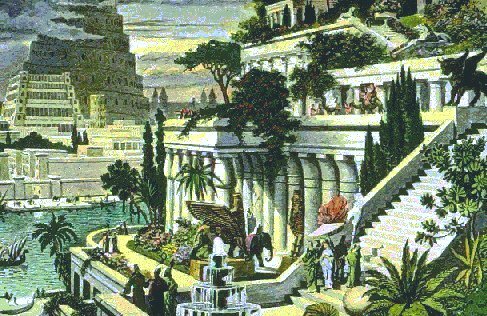
Suspenderam os jardins da Babilônia
E eu prá não ficar por baixo
Resolvi botar as asas prá fora, porque
Quem não chora dali, não mama daqui, diz o ditado
Quem pode, pode, deixa os acomodados que se incomodem
Minha saúde não é de ferro não
Mas meus nervos são de aço
Prá pedir silêncio eu berro, prá fazer barulho eu mesma faço, ou não
Mas pegar fogo nunca foi atração de circo
Mas de qualquer maneira
Pode ser um caloroso espetáculo, então
O palhaço ri dali, o povo chora daqui, e o show não pára
E apesar dos pesares do mundo
Vou segurar essa barra
(Rita Lee, Babilônia, 1978)

Gatos egípcios mumificados em louvor í Deusa Bastet
íustria detecta vírus da gripe aviária em gatos
Mais de 150 gatos estão vivendo no abrigo na íustria
A íustria informou que detectou o vírus H5N1, causador da gripe aviária, em vários gatos vivos.
A descoberta no estado de Styria, no sul do país, ocorre depois da confirmação da presença do vírus em um gato morto na Alemanha, na semana passada.
O caso era considerado o primeiro exemplo, fora da ísia, do vírus sendo transmitido de uma espécie para infectar um mamífero.
Mas, segundo a correspondente da BBC Ania Lichtarowicz, é pouco provável que o vírus esteja se espalhando entre gatos e a chance de ser transmitido para humanos é insignificante.
Abrigo
Autoridades da íustria afirmaram que os três gatos com o vírus H5N1 estavam em um abrigo para animais, perto de Graz, que também abrigou aves infectadas em fevereiro, quando o vírus foi detectado pela primeira vez no país.
Todos os gatos no abrigo Arca de Noé foram colocados em quarentena e o abrigo foi fechado até segunda ordem.
===============================================
Got a cat? No need for bird flu panic
By Philippe Naughton
The news that a German cat has died after contracting the H5N1 bird flu virus should not unduly worry pet-owners in the UK or elsewhere.
A virologist recently tested 629 village dogs in a province in central Thailand and found that 160 of them showed H5N1 antibodies, suggesting either that they were infected by the virus or had been infected.
That study is continuing, but there has not been any evidence that dogs or cats in Thailand or other countries where the virus is endemic have been acting as vectors in transmitting the disease to humans – although they may be passing it on between bird populations and among themselves.
Mark Johnson, spokesman for the British Small Animal Veterinary Association, described as “worrying” the news that a cat found dead on the Baltic island of Ruegen had been infected with the H5N1 virus, blamed for more than 90 deaths in Asia and Turkey.
But he stressed that given the number of cats that eat wild birds thoughout the world, the incidence of cats becoming infected is “extremely low”.
He said: “There is no reason for cat owners to start having their cats put to sleep. The virus has not jumped from poultry to humans in western Europe and it is not likely to do so with cats.
“But if a cat has flu symptoms owners should consult a vet. Cats do get flu but it is a different strain from H5N1. Cats are vaccinated against flu but there are still a few cases each year.”
Vets have already been warned to step up surveillance of cats and dogs and to be on the lookout for any unusual flu symptoms. Cats can already suffer from an entirely separate feline influenza, although this is covered by vaccinations and is rare.
In a letter to the Veterinary Record this week, two British researchers point out that there are a wide range of mammal species that can contract the H5N1 virus, including not just cats and dogs but pigs, mice, rabbits and ferrets too.
In fact it is the risk of transmission to pigs that most worries public health experts. Pigs, much closer to humans in their susceptibility to disease, have proven in the past to the “mixing vessels” when avian flu mutates.
Dr Freda Scott-Park, president of the British Veterinary Association, said: “The virus has been in Asia since 1997 and to our knowledge there hasn’t been much evidence of dogs and cats being killed by it. That gives us some hope that it will not happen in this country.
“When the bird flu arrives, we will then need to be looking at our advice to pet owners. But it’s a difficult one because you can’t really keep pets indoors all the time. It may well be that if the disease is diagnosed and you’re in a protectin zone, pet owners will have to take care and only let their pets out on leads.
“But the last thing we want to happen is for pet-owners to say, ‘Right, I want my cat or my dog put down now because it might have bird flu.’ We have to keep a sense of perspective: we haven’t got the disease in the UK, it’s a disease of birds and it really does seem to be inefficient at infecting non-bird species.”

NYC: 24_08_05
Photo by corvid73 – é All rights reserved

Egídio Rocci, Caçapava-SP, 1960
Sem Título, Escultura, 2005

Egídio Rocci, Caçapava-SP, 1960
Sem Título, Escultura, 2005
Egídio Rocci, Caçapava-SP, 1960
Sem Título, Escultura, 2005
——————————————————————–
Museu de Arte Contemporânea do Paraná
Rua Desembargador Westphalen, 16
Centro, Curitiba-PR
www.pr.gov.br/mac
Fotos: Mathieu Bertrand Struck

Baseado na perspectivas de recombinação de imagens, audio e textos previstas nos projetos da Orquestra Organismo (e coletivos em comum) , principalmente com a convergência de 2 projetos este ano:
“Cozinhando Puros Dados” ( http://hackeandocatatau.arquiviagem.net/?p=1297 )
e “Mimosa” ( http://turbulence.org/Works/mimoSa/ )
Estou fazendo uma convocação geral para coleta de um acervo “bruto” para recombinação chamado
“Monolito Puros Dados”
a ideia é simples e fácil de executar ->
Todos que estão lidando com produção cultural no computador nos últimos anos, certamente ja acumularam pilhas de backups de material que nem sabem quando e como e pra que vão servir, ou mesmo obras acabadas que foram pra gaveta sem encontrar um ” contexto” onde se inserir… Que tal botar tudo isso num liquidificador, o mais rápido possível?
Junte todos os backups que você tem nos últimos anos e separe arquivos seus e de grupos que você colabora para serem recombinados ( importante* não faz diferença se você julga o arquivo um ” obra terminada” o importante é que vamos usar esta textura na recombinação e ela finalmente terá um destino).
Seu grande e definitivo esforço será o seguinte: Ao invés de gastar dias fazendo upload disso, pedimos que o mais rápido possível você compile DVDs ou CDs com este material e mande para o nosso endereço. Porque? Justamente porque não precisamos ( e não queremos) que você fique selecionando o material, TUDO que você tem interessa para a recombinação, a ideia é criar um HD aberto em nosso servidor, onde é possivel buscar arquivos por tipo ( imagem, video, audio, texto, partituras * ) e por autor ou grupo colaborador e além disso uma interface automatizada que irá gerar impensadas combinações. Assim que o primeiro HD estiver cheio, vamos deixá-lo online num sistema onde voce poderá interagir com outros materias e colocar “tags” neles facilitando a segunda parte do projeto onde implementaremos uma busca mais refinada.
Envie seus CDs e DVDs para:
Orquestra Organismo ( a/c Glerm Soares )
Rua São Leopoldo, 194 – Seminário
CEP 80310-580 Curitiba-PR
* todos seus dados ficarão disponiveis sobre licença Creative Commons de Atribuição ao Autor, Compartilhamento, Sem uso Comercial.
Detalhes sobre a licença em: http://creativecommons.org/licenses/by-nc-sa/2.5/
::favor espalhar esta mensagem…
I Leilão de Artes Organismo, 04/03/06
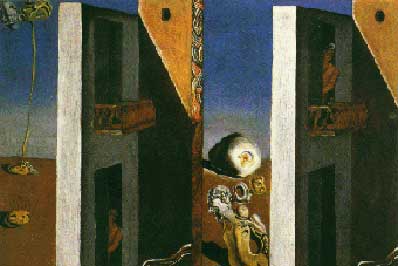
Salvador Dalí
Homme d’une complexion malsaine, écontant le bruit de la mar
1929, Âleo s/ Madeira, 23,5 x 34,5 cm
Lance Inicial: 1.000 (hum mil) dracmas
Winner’s curse
From Wikipedia, the free encyclopedia
The Winner’s curse is a phenomenon akin to a Pyrrhic victory that occurs in common value auctions with incomplete information. In such an auction, the goods being sold have a similar value for all bidders, but players are uncertain of this value when they bid. Each player independently estimates the value of the good before bidding.
The winner of an auction is, of course, the bidder who submits the highest bid. When each bidder is estimating the good’s value and bidding accordingly, that will probably be the bidder whose estimate was largest. If we assume that on average the bidders are estimating accurately, then the person whose bid is highest has almost certainly overestimated the good’s value. Thus, a bidder who wins after bidding what they thought the good was worth has almost certainly overpaid.
More formally, this result is obtained using conditional probability. We are interested in a bidder’s expected value from the auction (the expected value of the good, less the expected price) conditioned on the assumption that the bidder won the auction. It turns out that for a bidder bidding their true estimate, this expected value is negative, meaning that on average the winning bidder is overpaying.
Savvy bidders will avoid the winner’s curse by bid shading, or placing a bid that is below what they believe the good is worth. This may make it less likely that the bidder will win the auction, but it also protects them from overpaying in the cases where they do win. A savvy bidder knows that they don’t want to win if it means they will pay more than a good is worth. To minimize bid shading, many auctions such as eBay have the bidder pay the price of the highest losing bid. (Note, however, that this lessens but does not necessarily eliminate the winner’s curse, because the highest losing bid may still be above the good’s value.)
The severity of the winner’s curse gets stronger as the number of bidders increases. This is because the more bidders there are, the more likely it is that some of them have greatly overestimated the good’s value. In technical terms, the winner’s expected estimate is the value of the first order statistic, which increases as the number of bidders increases.

Claude Monet
Marine França
1880-1890, Âleo s/ Tela, 65 x 91 cm
Lance Inicial Organismo: 1 (um) talento de prata
A Terceira Margem do Rio, João Guimarães Rosa
Nosso pai era homem cumpridor, ordeiro, positivo; e sido assim desde mocinho e menino, pelo que testemunharam as diversas sensatas pessoas, quando indaguei a informação. Do que eu mesmo me alembro, ele não figurava mais estúrdio nem mais triste do que os outros, conhecidos nossos. Só quieto. Nossa mãe era quem regia, e que ralhava no diário com a gente ââ?¬â? minha irmã, meu irmão e eu. Mas se deu que, certo dia, nosso pai mandou fazer para si uma canoa.
Era a sério. Encomendou a canoa especial, de pau de vinhático, pequena, mal com a tabuinha da popa, como para caber justo o remador. Mas teve de ser toda fabricada, escolhida forte e arqueada em rijo, própria para dever durar na água por uns vinte ou trinta anos. Nossa mãe jurou muito contra a idéia. Seria que, ele, que nessas artes não vadiava, se ia propor agora para pescarias e caçadas? Nosso pai nada não dizia. Nossa casa, no tempo, ainda era mais próxima do rio, obra de nem quarto de légua: o rio por aí se estendendo grande, fundo, calado que sempre. Largo, de não se poder ver a forma da outra beira. E esquecer não posso, do dia em que a canoa ficou pronta.
Sem alegria nem cuidado, nosso pai encalcou o chapéu e decidiu um adeus para a gente. Nem falou outras palavras, não pegou matula e trouxa, não fez a alguma recomendação. Nossa mãe, a gente achou que ela ia esbravejar, mas persistiu somente alva de pálida, mascou o beiço e bramou: ââ?¬â? “Cê vai, ocê fique, você nunca volte!” Nosso pai suspendeu a resposta. Espiou manso para mim, me acenando de vir também, por uns passos. Temi a ira de nossa mãe, mas obedeci, de vez de jeito. O rumo daquilo me animava, chega que um propósito perguntei: ââ?¬â? “Pai, o senhor me leva junto, nessa sua canoa?” Ele só retornou o olhar em mim, e me botou a bênção, com gesto me mandando para trás. Fiz que vim, mas ainda virei, na grota do mato, para saber. Nosso pai entrou na canoa e desamarrou, pelo remar. E a canoa saiu se indo ââ?¬â? a sombra dela por igual, feito um jacaré, comprida longa.
Nosso pai não voltou. Ele não tinha ido a nenhuma parte. Só executava a invenção de se permanecer naqueles espaços do rio, de meio a meio, sempre dentro da canoa, para dela não saltar, nunca mais. A estranheza dessa verdade deu para. estarrecer de todo a gente. Aquilo que não havia, acontecia.
(continue a ler aqui “A terceira margem do rio”, de João Guimarães Rosa)
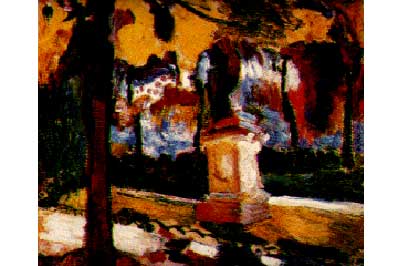
Henri Matisse
Le Jardin de Luxembourg França
1903
Âleo s/ Tela
Lance Inicial Organismo: 5.000 (cinco mil) sestércios
Determinacy from elementary considerations
Familiar real-world games of perfect information, such as chess or tic-tac-toe, are always finished in a finite number of moves. (It is an instructive exercise to figure out how to represent such games as games in the context of this article.)
If such a game is modified to assign a draw to a particular player (for example, if we say that Black wins draws at chess), such games are always determined. The condition that the game is always over in a finite number of moves (“over” in the sense that all possible extensions of the finite position result in a win for the same player) corresponds to the topological condition that the set A giving the winning condition for GA is clopen in the topology of Baire space.
The proof that such games are determined is rather simple: Player I simply plays not to lose; that is, he plays to make sure that player II does not have a winning strategy after I’s move. If player I cannot do this, then it means player II had a winning strategy from the beginning. On the other hand, if player I can play in this way, then he must win, because the game will be over after some finite number of moves, and he can’t have lost at that point.
This proof does not actually require that the game always be over in a finite number of moves, only that it be over in a finite number of moves whenever II wins. That condition, topologically, is that the set A is closed. This fact–that all closed games are determined–is called the Gale-Stewart theorem. Note that by symmetry, all open games are determined as well. (A game is open if I can win only by winning in a finite number of moves.)
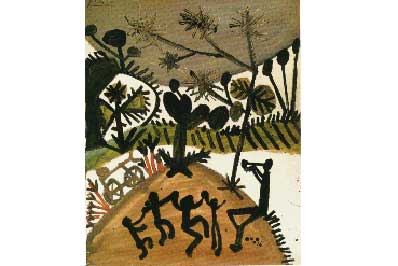
Pablo Picasso
La Dance
1956, Âleo s/ Tela, 100 x 81 cm
Lance Inicial: 50.000 (cinqüenta mil) pedras de mó da Melanésia, com furo ou sem furo (sortida).
Axiom of choice
In mathematics, the axiom of choice, or AC, is an axiom of set theory. It was formulated in 1904 by Ernst Zermelo. While it was originally controversial, it is now used without embarrassment by most mathematicians. However, there are still schools of mathematical thought, primarily within set theory, that either reject the axiom of choice, or even investigate consequences of axioms inconsistent with AC.
Intuitively speaking, AC says that given a collection of bins, each containing at least one object, then exactly one object from each bin can be picked and gathered in another bin – even if there are infinitely many bins, and there is no “rule” for which object to pick from each.
================================================
Druga obala.
Misli lako prelaze
ostatke mosta.
The other bank.
thoughts easily cross
the remains of the bridge.
L’ autre rive.
Les pensées facilement
franchissent les ruines du pont.
Das andere Ufer.
Gedanke überschreiten leicht
die Reste der Brücke.
Tão simples! tão simples! e você vai continuar achando que eu só quero te vender alguma coisa… foda-se a marca, importante é a IDÉIA -> preste atenção:
LEMBRE-SE: FODA-SE OS NOMES e MARCAS, NÃO PRECISA COMENTAR ISSO – EU JA SEI. pense nas implicações pra você.
PRESTE A ATENÇÃO NA IDEíA. É SIMPLES.
Ação temática sobre propriedade (autoria – espaço privativo – domicílio) infra-estrutura elétrica, localidade (especificidades do lugar e história da casa), queima (expendidure) reciclagem e meta-reciclagem
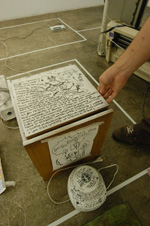
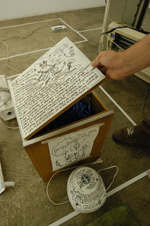
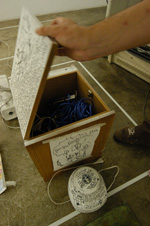
Robert Amorim e keila Kern
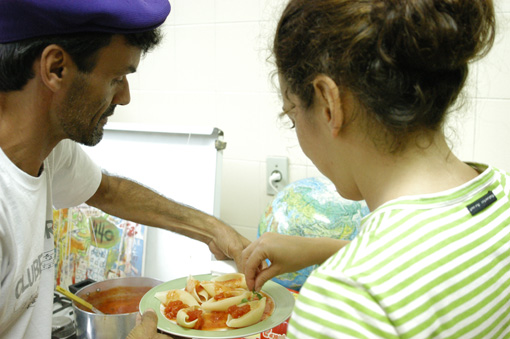
Cooking Pure Data: Blenders and Electric-Appliances for Collective Modelling
Working with the formation of a group open to any kind of participation, mediated only by the intersection of social and aesthetic searches, whose actions develop according to the convergence of collective networks (mainly by Internet), the “Orquestra Organismo” group has a way of production where the process of “molding speeches” is taken from the beginning as the real “object” to be generated. Group work is the “product of actions modulating through time” where the intentions of interacting individuals (as well as their function as catalysts of relational dynamics) are the object “on scene”, operating as a live search for equilibrium between group performance and individual being (beyond any artistic or social analysis). Pieces are interactively built and sculpted through processes that foster a mutation of meanings produced through actions that seek to function as part of a space molded by institutionalizations like “music”, “theater”, “film”, “galleries”, “bar”, “home” or “streets”; while always reinforcing the lucid situation that stimulated human relationships than all those generated as “objects” or “signs”.
The purpose of “Cooking Pure Data” should be seen as a continuation of Orquestra Organismo and their most recent performances – “Desafiatlux” and “A justa Razao aqui Delira” – and has its genesis in the actions of “Surface Tension_Curitiba”. These ideas stem from recognizing that we live in an age of overloaded information and possibilities of connection over networks formed by shared speech that is beyond territorial and linguistics borders. On the other hand, the Cartesian and systematic organization of this DATA tends to be dissolved into the space where it takes form by institutionalized functions (from arts to engineering; from activism to social theory). Nevertheless, those flowing identities are touched by subjectivity before they lose strength – through this process of intervening within such functions and spaces they will produce contradictions even while acquiring an “institutional” meaning. Our effort is for all “DATA-processed-speeches” to be perceived as a chaotic dance of entities, sculpted into symbolic rituals, “cruelty theaters” and aesthetics of direct action, leading forms of practice and ethics to an immediate perception of human dimension. This is the ambition of making projects.
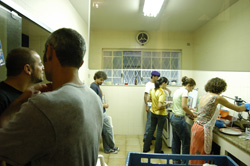
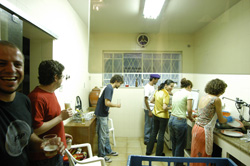
In “Cooking Pure Data” we work in the kitchen of the exhibition space, which will be connected to other participants through Internet anywhere in the planet. The kitchen functions to incubate the anthropological concept of the “Raw and Cooked” worked out by Lí¨vi-Strauss: the creation of ritual processes that marks the dialogic way in which “raw” DATA that at first is without “function” becomes able to assume (at the end of the meeting) various meanings, as long it helps to converge the intention of multiple “cooks”. The kitchen should be emphasized as a space where we always get together in rituals of “feeding” (and all our processes are about “feedback”). Using this meaning, we aim to build a metaphor of the kitchen as a space of alchemy where dialetics boils the collectivist intentions and the “starvation” (or gluttony) is the anxiety that brings us back to the human dimension.
Plans for staging events:
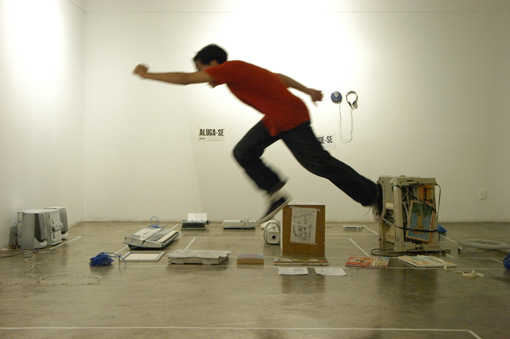
1. The installation should be built in the kitchen of the exhibition place, with drafts, drawings, annotations, personal audio/video recordings, mainly objects brought from “home”, included as participants, the organizers and visitors who wish to interact. This has to be done without turning the kitchen into a “gallery”, the focus rather is to collect material so as to generate “DATA cooking”. This procedure may transform the kitchen into a common space for the participants, for informal meetings that will facilitate bringing them to a “temporary autonomous zone” inside the space where data are “boiled”.
2. Simultaneously to the place of exhibition, we intend to articulate similar structures in various cities of Brazil: Curitiba, Belo Horizonte, Sao Paulo, Rio de Janeiro, Salvador, Campinas, Belem, Porto Alegre, Recife, Brasilia and Florianopolis, and possibly cities in other countries. This action will be scheduled over Internet, being sensitive to its process of articulation as an important part of the “data recipe” scope.
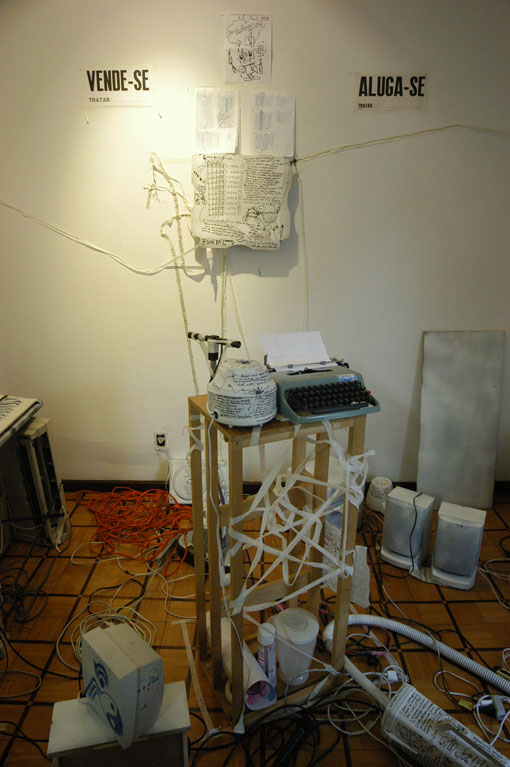
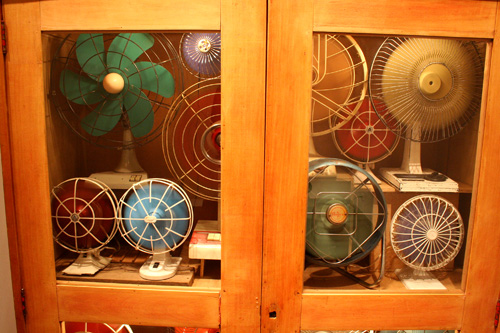
3. Deconstructing the perception of “home”, we will make music with electric appliances such as blenders, vacuum cleaners, fans, multiprocessors and others that should be painted as a canvas and covered with diagrams, annotations, poetry and impressions about the actions. The appliances should be traded between places to reside in different kitchens. These appliances will be controlled by participants remotely through a website.
4. Cooking “Rituals” will be scheduled at the same time, where participants prepare food as the action is recorded on video, sound media, drawings, and streamed through Internet, interacting with people doing whatever they want in the space, recombining feedbacks of data from other kitchens at the same time. This “feed-back” and mirroring of data will cause the sensation of simultaneous presence and the kitchens will become a place passing through geographic borders taking the repertoires as a common database for reality constructions. This will influence direct action and relationships through the network. The processes caused by the “kitchen” should also be registered and reprocessed in new rituals and future ideas.
5. Season as you like and put it in the stove.
6. We stimulate the rhythmic use of the kitchen, spoken words, musicalization of cooking acts. We ask for the use of different languages and accents as you cook this data. After the dinner, one should digest the data and expend the consequent energy through direct actions in the streets.